Can Starlink Keep the City Customers It Wins?
By Dalton Skach · 4 min read
A household in a city may already have an internet connection and still want a better deal. That is the business opportunity behind reports of Starlink attracting customers from cable and fixed wireless. Can SpaceX win those households at a price that supports reliable service and lasting profits?
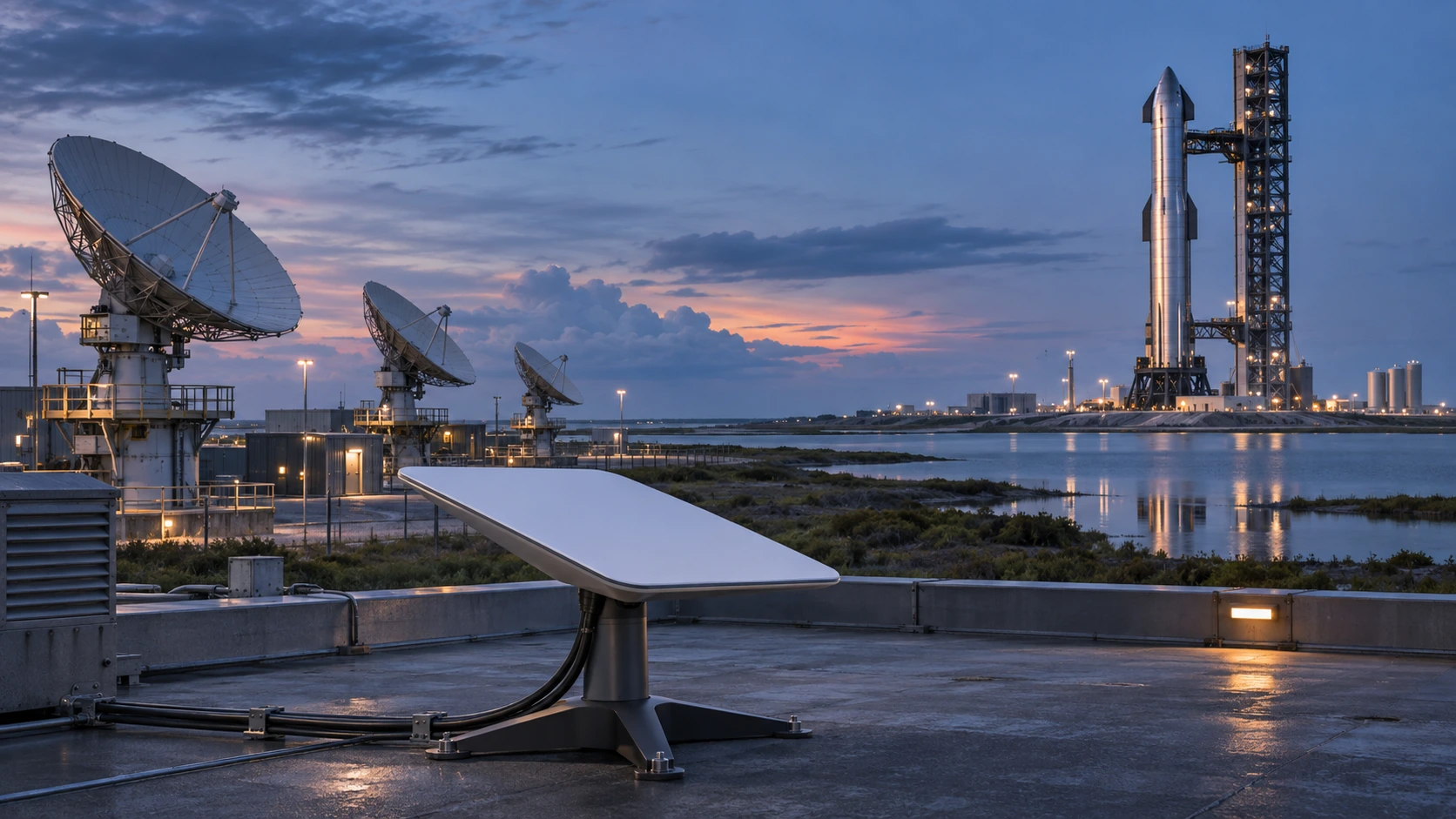
Starlink is SpaceX’s satellite internet service. A terminal at the customer’s home communicates with satellites, offering another route online alongside telephone lines, cable networks and terrestrial wireless towers.
PCMag has published an article titled “Not Just DSL: Starlink Is Attracting Cable and Fixed Wireless Customers.” Its search listing reports 73% year-over-year growth in urban Starlink users running Speedtests in the first half of 2026. That supports investigating a broader customer base, but it is not a count of all new subscribers.1
What the reported growth actually measures
The news summary supplied for this article says rural growth was 33% and that nine in ten new U.S. Starlink subscribers came from DSL, cable or fixed wireless rather than fiber. We located the matching PCMag article and an Ookla report, but could not retrieve their full text. Those comparisons remain provisional, including the switching sample and its stated Q4 2025 through Q3 2026 measurement window.2
That qualification changes the conclusion. More people testing a connection can signal growing use, but it does not establish the size of the subscriber base or the number who canceled another provider. Without the methodology, we also cannot tell how closely the observed switchers represent all customers.
A household buys a useful connection
DSL carries internet over telephone lines. Cable uses the network originally built for cable television. Fixed wireless connects a home to a tower on the ground. Fiber brings data over optical cable. Each offers a different combination of availability, price and performance at a particular address.
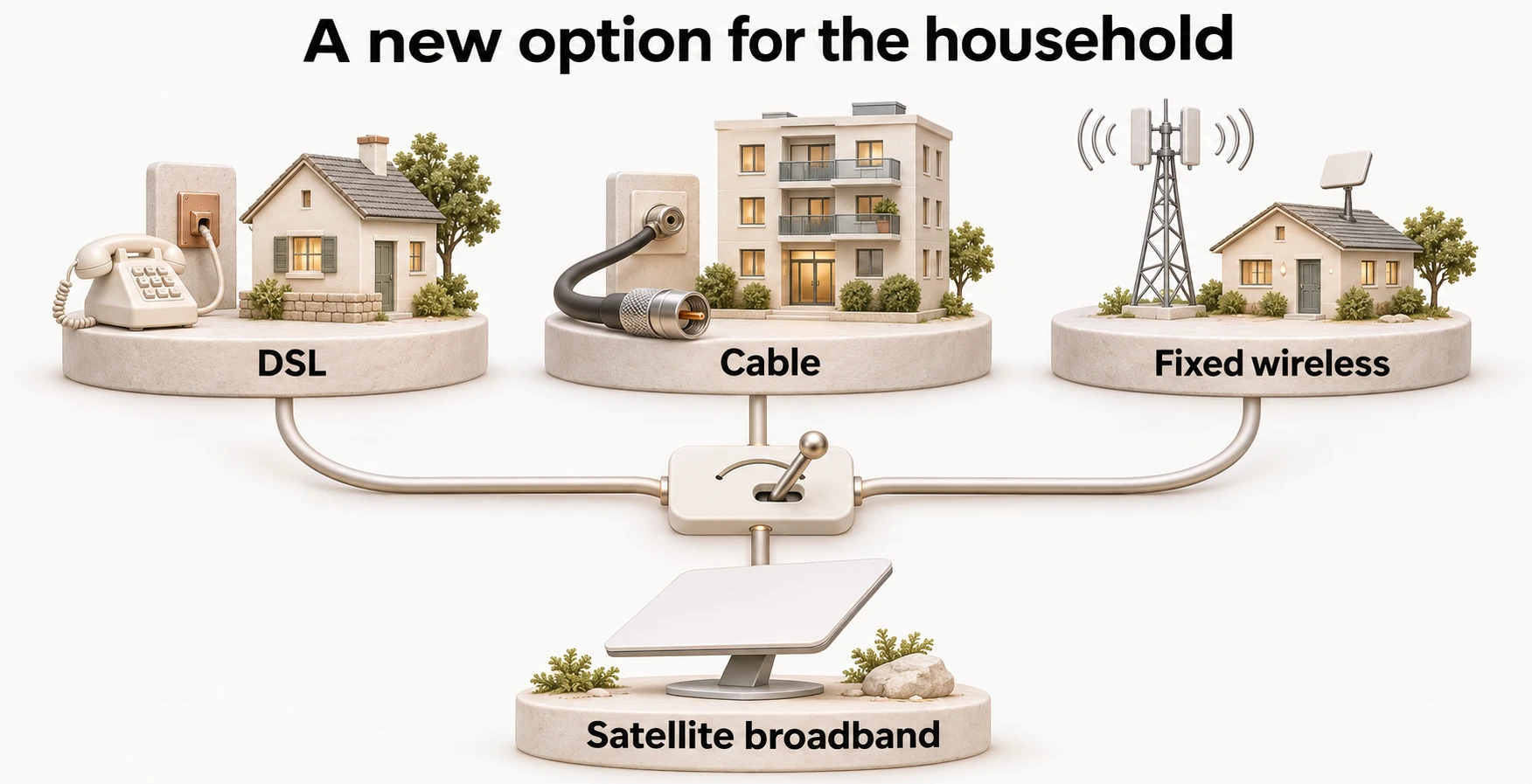
A family does not need the fastest available connection if a less expensive one reliably handles its ordinary needs. As a hypothetical example, a household might accept lower peak download speeds in exchange for a lower monthly bill. Another might pay more to avoid interruptions during video calls. Neither decision can be explained by download speed alone.
The supplied summary attributes urban growth to a cheaper Residential 100 Mbps plan and promotions. That explanation is plausible, but we have not verified the offer terms or evidence that the promotions caused customers to switch. Even a confirmed promotion would establish what SpaceX offered, not why every household chose it.
More demand creates a capacity test
For SpaceX, additional customers create recurring payments. The operator’s challenge is to serve those customers when many want to use the network at once. A discount can help sell unused capacity; it can also become costly if the resulting demand requires substantial new equipment or leaves customers dissatisfied.
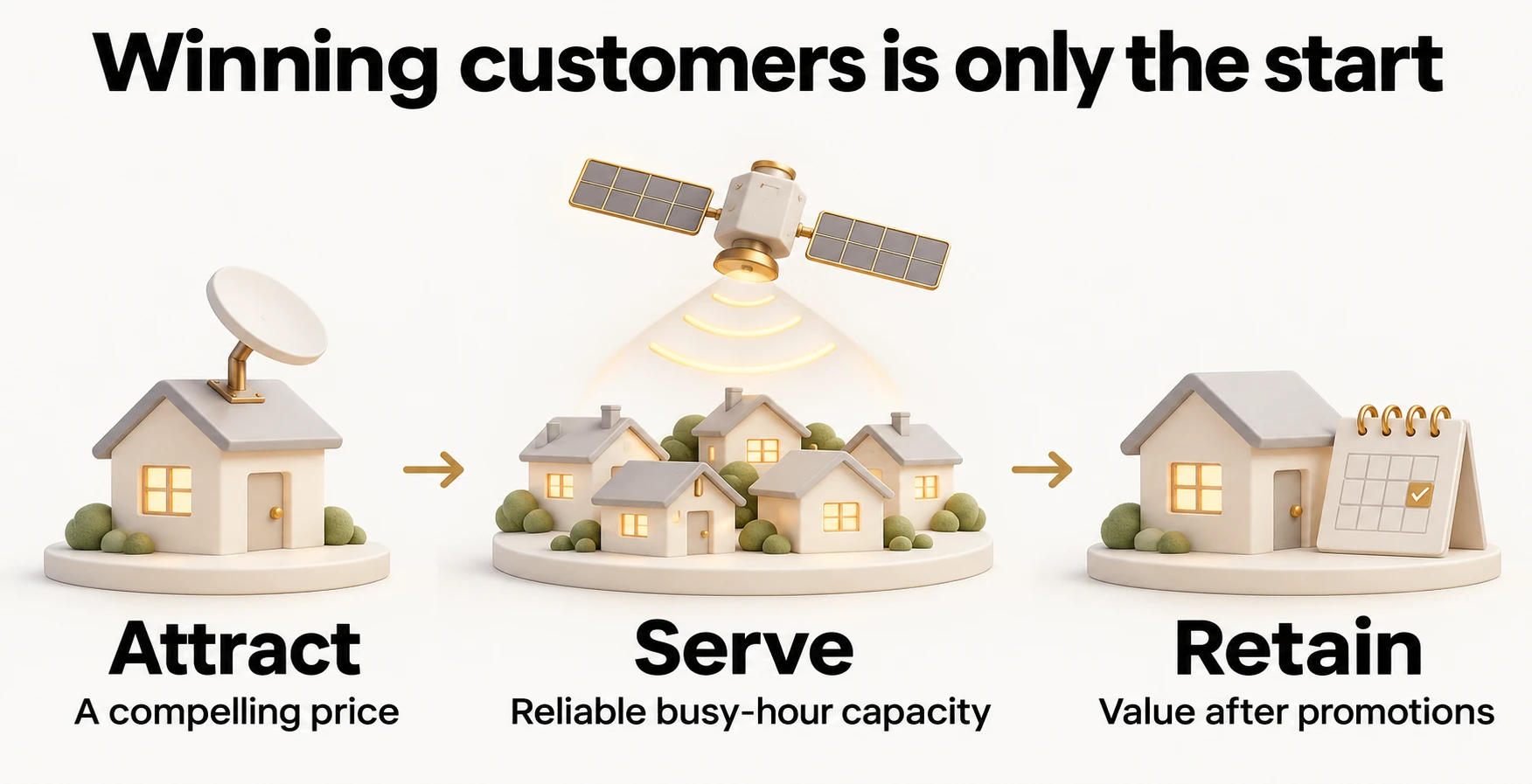
The relevant comparison is therefore the money customers keep paying against the full cost of attracting and serving them. Installation support, network operation and eventual equipment replacement all matter. Growth is more valuable when customers stay and the cost of serving each household remains manageable.
The speed headline needs two directions
Ookla’s indexed report excerpt describes upload speeds rising from 14.63 to 20.73 Mbps, about 42%. Uploads send information from the home, including video-call footage. Downloads bring information in. Improvement in one direction does not establish improvement in both.3
The supplied summary says median downloads remained around 120 Mbps and fell in 16 states and Washington, D.C. Those details remain unverified here. They should not become a blanket claim that Starlink has become significantly faster. Nor would a flat national median, on its own, prove congestion: changes in plans, locations or who runs tests could also affect it.
The next test is whether households stay
The reported urban interest makes Starlink’s opportunity worth examining beyond homes with few alternatives. It does not yet establish how large or profitable that opportunity is.
The stronger evidence would be sustained paid customer growth, retention after promotions, dependable performance during busy hours and customer revenue that covers the cost of service. Rising cancellations or discounts needed to keep households would weaken the case. The question is whether Starlink can remain a good household choice after the introductory appeal wears off.
This article reflects Dalton Skach’s views as of November 11, 2026. It provides general research and does not offer personalized investment advice or recommend buying, selling, or holding a security. As of November 8, 2026, Dalton owns shares in SpaceX. Editorial Standards & Disclosures · Terms of Use
Sources and calculations
- PCMag, Not Just DSL: Starlink Is Attracting Cable and Fixed Wireless Customers. URL and indexed excerpt located November 11, 2026. Full article, author and publication date not verified. The excerpt specifies urban Speedtest users and first-half 2026 growth, not total subscribers. ↩
- User-supplied news summary, received November 11, 2026, attributed by the user to PCMag quoting Ookla. The 33% rural growth, nine-in-ten switching share, Q4 2025–Q3 2026 switching window, plan/promotional explanation, flat downloads and 16-state-plus-D.C. decline were not independently verified. These are explicitly provisional in the article. The 4.1 million U.S. subscriber estimate attributed to Deutsche Bank is omitted; no underlying bank report was obtained. The claim that SpaceX has never disclosed U.S. subscribers is also omitted. ↩
- Ookla, Starlink’s U.S. Speeds Rise Amid SpaceX IPO. URL and indexed excerpt located November 11, 2026; full report access was blocked. Excerpt identifies 14.63 Mbps in first-half 2025 and 20.73 Mbps in first-half 2026. Arithmetic: (20.73 ÷ 14.63 − 1) × 100 = 41.70%, rounded to 42%. Publication date, full methodology and whether this report contains the later switching window remain unconfirmed. ↩
This is analysis of a reported development, not a verified subscriber census. Business mechanisms and the household example are BTF analysis, not measured causal findings. No ticker, valuation or filing-based financial claim is used.
The hero, thumbnail and two sculpted-model illustrations are original AI-generated conceptual artwork, not photographs of actual installations or engineering diagrams. Generation prompts and source-review notes are retained with the draft. Holdings use Dalton’s standing November 8, 2026 confirmation of SpaceX ownership, not a new reconfirmation.
Go deeper: The Future of Wireless
Explore the network capacity and competitive economics behind SpaceX’s broader wireless opportunity.
Go deeper: 51 Percent
How could additional capacity change the number of customers Starlink can serve?