Why Starlink’s Next Step Is on the Ground
By Dalton Skach · Published 5 min read · Updated
A phone service has to work after you walk indoors. SpaceX’s proposed purchase of nationwide airwaves from Grain Management is a step toward that everyday requirement. Can Starlink turn a network in space into a service people rely on throughout the day?
What SpaceX is buying
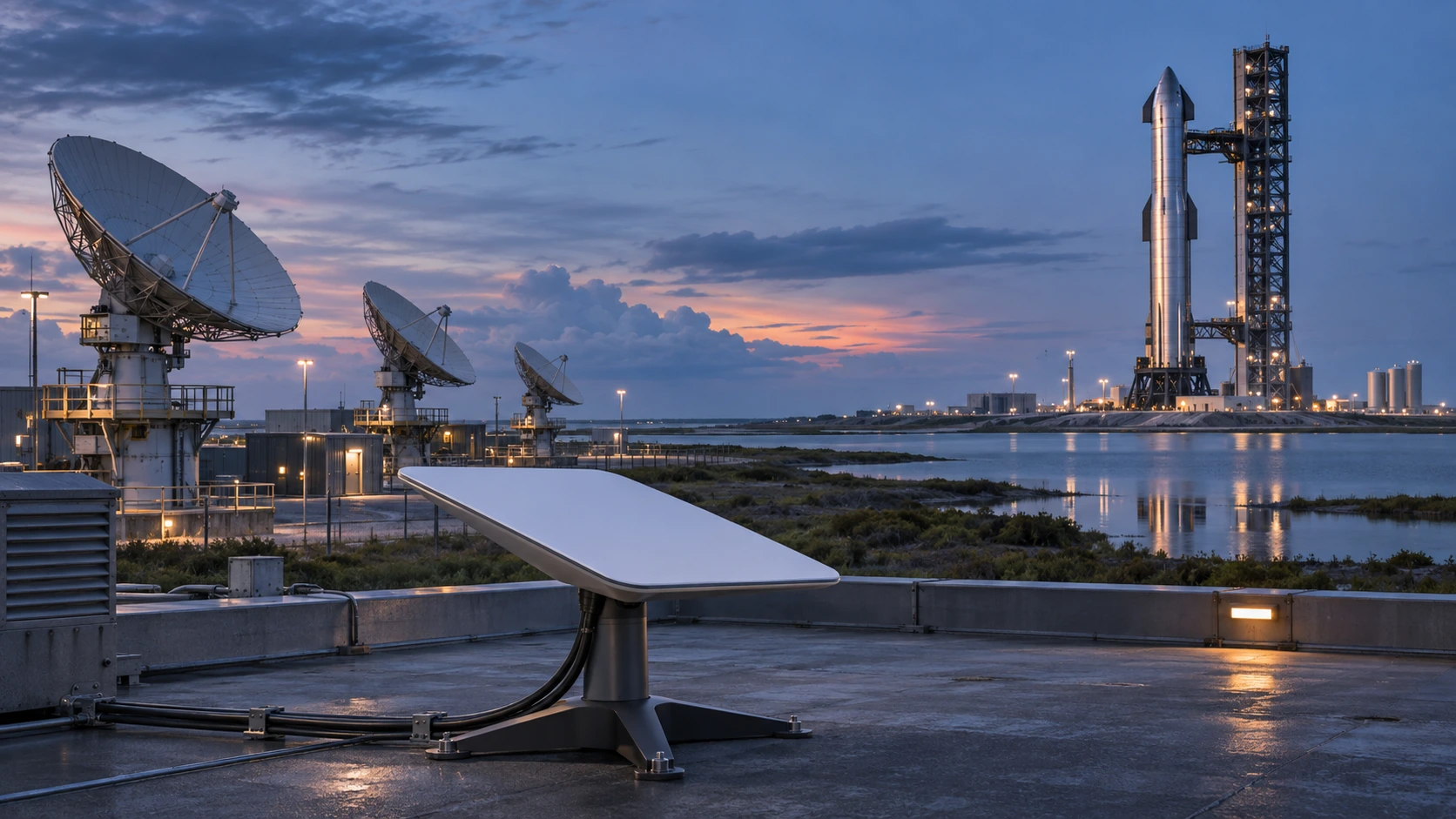
Starlink is SpaceX’s satellite communications business. Alongside its internet service, which uses a dedicated terminal, the company is developing Starlink Mobile to connect directly to ordinary mobile devices.
On October 8, Grain announced an agreement to sell SpaceX its nationwide portfolio of 800 MHz spectrum licenses. Grain is an investment firm focused on communications infrastructure. It acquired the portfolio from T-Mobile in August. The announced sale requires Federal Communications Commission approval and other closing conditions.1
On November 10, the FCC accepted the transfer applications for filing and opened them to public comment. They cover 546 paired 800 MHz licenses. Comments and petitions are due December 1, with oppositions due December 8. The purchase still needs final approval.2
Spectrum is the range of radio frequencies that carries wireless signals. A license gives an operator permission to use particular frequencies in a particular area, under specified rules. It does not supply the radios, buildings or customers needed to run a network.
The proposed purchase includes up to 14 MHz of paired spectrum in the 800 MHz band. Those numbers describe different things: 800 MHz identifies the part of the radio spectrum; 14 MHz describes the maximum amount of bandwidth being acquired. “Paired” means separate frequency ranges for the two directions of communication.3
The new notice describes licensed areas across all 50 states, Washington, D.C., Puerto Rico and the U.S. Virgin Islands, covering approximately the entire U.S. population. That is the reach of the licensed areas, not evidence that a new Starlink network already serves everyone in them.2
Why a satellite company wants ground radios
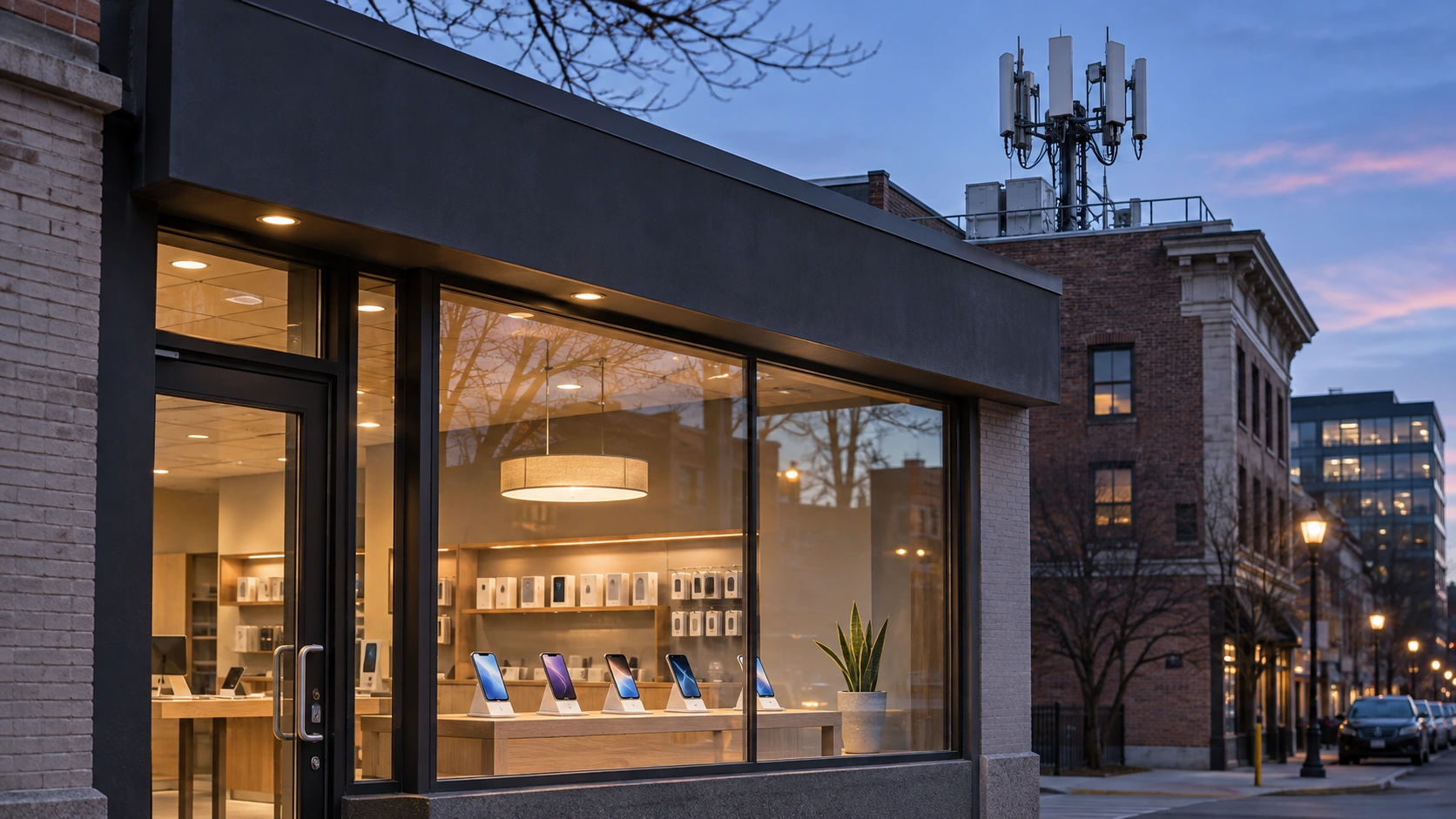
SpaceX’s application describes a combined satellite and ground network. For the ground portion, it plans radios connected to antennas on towers, rooftops and other structures. The company says the 800 MHz band’s ability to travel long distances and penetrate buildings makes it useful for extending coverage.4
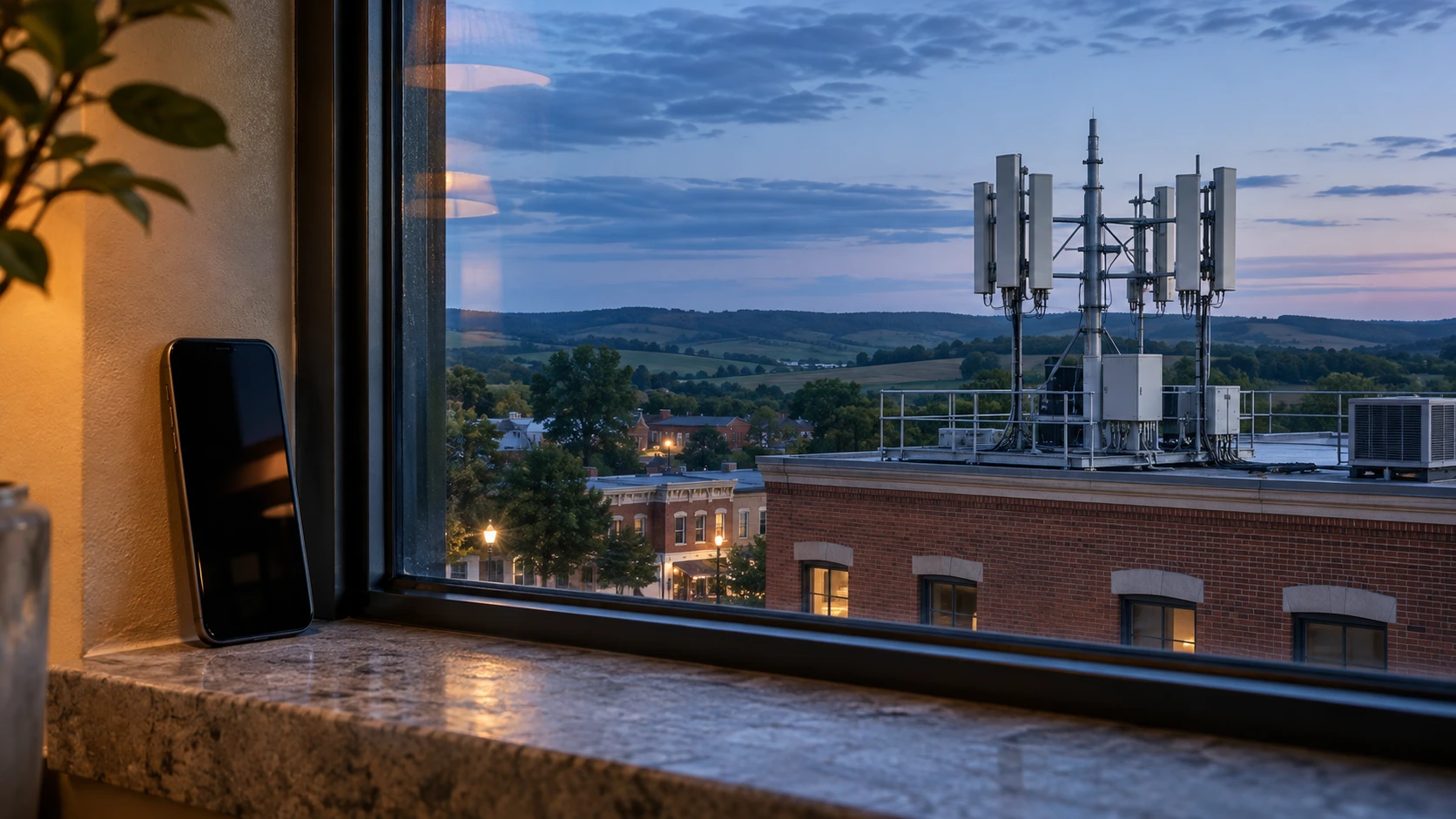
That is the practical reason for the purchase. A satellite connection can extend service beyond ground networks. An everyday mobile service must also work where customers spend much of their time, including inside homes and offices.
SpaceX says this low-frequency band would provide a coverage layer alongside its 2 GHz spectrum, which it describes as supplying higher-bandwidth capacity. It also says most existing mobile devices already support the 800 MHz band. That could reduce one barrier to adoption, although band support alone does not establish that every phone will work with every part of the planned service.5
The commercial opportunity is broader than helping someone send a message from a remote trail. Reliable service throughout a normal day could give customers a reason to choose Starlink for their main phone connection. That is the business implication of the proposed architecture, not an outcome the spectrum purchase guarantees.
Reaching a phone is only half the job
Coverage answers where a phone can connect. Capacity answers how much traffic the network can carry. A signal reaching every apartment in a building does not establish that everyone can stream video at the same time.
Think of an entrance to a busy station. Making it accessible from more streets helps people reach it. The station still needs enough room to handle the crowd.
In a mobile network, carrying more traffic can require additional spectrum, more radio sites or more efficient use of the equipment. Operators can reuse frequencies in different places, but those sites must be planned so they do not overwhelm one another with interference.
SpaceX’s proposed ground deployment therefore brings familiar operating work: securing locations, installing equipment, supplying power, connecting it to the wider network and maintaining it. Satellite coverage may change where ground sites are most valuable. It does not remove the need to make those investments pay.
The filing identifies the types of structures SpaceX intends to use. It does not provide a nationwide site count, construction budget or measured indoor performance for this proposed 800 MHz network. Those missing details prevent a credible estimate of its cost per customer from this application alone.4
Permission comes before deployment
Acceptance for filing lets the public review advance. It does not approve the transfer or authorize every proposed use of the frequencies.
SpaceX’s October application says the licenses are ready for terrestrial mobile broadband use under existing rules. The FCC’s new notice confirms that SpaceX filed a separate request on October 27 to add these frequencies to its satellite operating authority. That request and the accompanying waivers remain pending. Buying the licenses and obtaining satellite permission are distinct parts of the plan.6
There are also obligations to put the spectrum to work. The FCC’s July order set deployment requirements for the portfolio, with a terrestrial path and a conditional satellite path. The new notice says those conditions would apply to SpaceX if the transaction is approved. Ownership comes with service obligations, not simply the option to hold the airwaves indefinitely.7
The test is an ordinary day
The Grain deal would give SpaceX an important ingredient for serving phones indoors and across wider areas. The next question is how much ground infrastructure it needs to turn that ingredient into dependable service.
Evidence of working indoor coverage, usable speeds during busy hours and smooth transitions between ground and satellite connections would strengthen the case. So would a deployment plan showing how construction and running costs can be supported by paying customers.
If those costs prove high, or the network struggles where people use their phones most, nationwide spectrum rights will have solved only part of the problem. Starlink becomes a stronger alternative when customers can rely on it at home, at work and on the road, at a price that also makes the network worth operating.
This article reflects Dalton Skach’s views as of November 10, 2026. It provides general research and does not offer personalized investment advice or recommend buying, selling, or holding a security. As of November 10, 2026, Dalton owns shares in SpaceX. Editorial Standards & Disclosures · Terms of Use
Sources and calculations
Updated November 10, 2026: added the FCC’s acceptance notice, license count, geographic scope and comment deadlines, and confirmed that the separate satellite application remains pending.
- Grain Management, definitive sale agreement announcement, October 8, 2026, opening paragraphs and acquisition-history paragraph. Confirms agreement for the entire portfolio, August acquisition from T-Mobile, and FCC approval and customary closing conditions. Event date: October 8; this analysis is dated November 10. ↩
- FCC public notice DA 26-1218, released November 10, 2026, WT Docket 26-313. Page 1 accepts the October 9 transfer applications for filing: ULS 0012212612 (lead) and 0012212635, covering 546 paired 800 MHz licenses. Comment/petition deadline: December 1, 2026; opposition deadline: December 8, 2026. Page 2 describes up to 14 MHz in 173 Economic Areas, encompassing 3,224 counties in all or parts of 730 cellular market areas, across the 50 states, D.C., Puerto Rico and the U.S. Virgin Islands, covering approximately 100% of the U.S. population. Initial acceptance is not final approval; footnote 2 reserves the right to return defective applications. ↩ ↩ Footprint
- FCC, T-Mobile–Grain Memorandum Opinion and Order, DA 26-653, adopted and released July 1, 2026, WT Docket 25-178, paragraphs 3 and 11. The earlier transaction covered 4.85–14 MHz across 3,224 counties, in all or parts of 730 cellular market areas, covering approximately 100% of the U.S. population. Paragraph 3 identifies 817–824 MHz paired with 862–869 MHz. At the maximum: (824 − 817) + (869 − 862) = 7 + 7 = 14 MHz total, not 14 MHz in each direction. Width varies by area. Licensed population is not active service coverage or a customer count. ↩
- SpaceX public-interest statement, section IV.D, printed pp. 9–10: ground radios, sectorized antennas, towers, rooftops, other structures and stated propagation advantages. The absence of a nationwide site count, construction budget and measured indoor performance is scoped to this document. Coverage/capacity explanation, station analogy, potential operating costs and the commercial test are BTF analysis, not disclosed projections. ↩ ↩ Costs
- SpaceX Updates, Starlink Mobile spectrum acquisition announcement, October 2026 entry beginning “This week marked two major milestones,” read November 10, 2026. Describes up to 14 MHz at 800 MHz, indoor coverage, the 2 GHz capacity layer and existing-device support. These are the company’s plans and technical claims, not independent measurements or a guarantee of universal handset compatibility. ↩
- SpaceX public-interest statement, section IV.B, printed pp. 7–8, and section III, pp. 3–5, on terrestrial permissions and the separate satellite modification. FCC DA 26-1218, page 1, footnote 1, confirms the satellite modification and waiver requests were filed October 27, 2026, under ICFS SAT-MOD-20261021000406, for supplemental coverage from space at 817–824 MHz and 862–869 MHz. Both remain pending as of the notice. ↩
- FCC order DA 26-653, paragraphs 44–48, technology-flexible deployment requirements and conditional satellite pathway. This order approved T-Mobile’s transfer to Grain; it does not approve Grain’s subsequent sale to SpaceX. DA 26-1218, footnote 4, continued on page 2, says those conditions would apply to SpaceX if the transaction is approved. ↩
Research scope: the acceptance notice and underlying company filings establish the procedural status and proposed network architecture. They do not establish a service-launch date, measured nationwide performance or operating economics. No approval probability, purchase-price estimate or revenue forecast is assigned.
Artwork: the photographic hero and thumbnail and the two sculpted-model illustrations were generated for this article on November 10, 2026. They depict imagined equipment, places and network concepts, not actual SpaceX facilities, engineering plans or measured coverage. Prompts and original images are retained with the draft.
Holdings: SpaceX ownership follows Dalton’s standing instruction confirmed November 8, 2026. It is not described as a new confirmation.
Go deeper: The Last Piece of the Puzzle
How do spectrum purchases, ground radios and carrier negotiations fit together in SpaceX’s wireless expansion?