The Last Piece of the Puzzle
Why Elon Musk Wants to Be Your Phone Company
View contents
Prologue: Twenty-Seven Floors
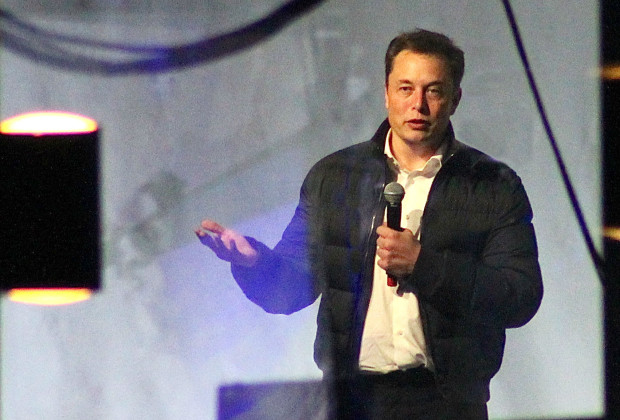
On a Friday evening in January 2015, Elon Musk stood alone on a stage at Seattle Center in a black insulated jacket and a white shirt, facing about four hundred engineers he hoped to hire. No press was allowed. Someone in the audience filmed it anyway, and the video, later transcribed in full by the Seattle tech site GeekWire, turns out to be one of the more revealing documents in the history of his companies. Not because of what he promised that night, but because of what he said he would never need to do.
He had come to open a satellite office. SpaceX, he explained, was going to build a constellation of roughly four thousand satellites in low orbit around the Earth. “In the long term,” he said, “it will be like rebuilding the Internet, in space.” Then, when someone asked how much it would cost to use, he explained what the whole thing was really for.
This is intended to generate a significant amount of revenue, and help fund a city on Mars. So in looking in the long term, and saying what’s needed to create a city on Mars, well one thing’s for sure: a lot of money. So we need things that will generate a lot of money.
Elon Musk, Seattle, January 16, 2015
A few minutes later, someone asked about spectrum, the invisible lanes of radio frequency that every wireless device needs government permission to use. Musk drew a distinction that would turn out to matter more than almost anything else he said that night. The kind of spectrum that beams from a satellite to a dish on your roof, he said, is plentiful. The kind that spreads out in every direction and passes through walls, the kind your phone depends on, is not. “For spectrum that is omnidirectional and wall-penetrating, that spectrum is extremely rare, and limited,” he said. “There is high scarcity for cellular bandwidth.”
He went further. Asked about Teledesic, the satellite venture backed by Bill Gates and the wireless pioneer Craig McCaw that had collapsed years earlier, Musk said one of its mistakes was trying to talk to phones. Signals from orbit, he explained, simply can’t reach a phone inside a building. “If you’re in a skyscraper, it’s got to go through 27 floors to reach you,” he said. “It’s not going to happen.” Nothing short of a neutrino, he joked, would make it through. And he left his future employees with a warning: assume that the networks on the ground will keep getting better, because forgetting that was one of the ways Teledesic died.
Hold on to those three ideas: the money for Mars, the rarity of spectrum that goes through walls, and the folly of trying to reach phones from space. Over the next eleven years, Musk would reverse himself on the second and the third, and lean harder than ever on the first.
On October 8, 2026, SpaceX agreed to buy a nationwide set of licenses in the 800 megahertz band, a thin slice of low-frequency spectrum prized for exactly one quality above all others. It goes through walls. That afternoon, Musk posted a single sentence on X: “This is the last critical piece of the spectrum puzzle needed for SpaceX to provide complete phone coverage in America.”
This piece sets out to answer a simple question. Why would the man who once said satellites couldn’t serve phones spend tens of billions of dollars to become a phone company? The popular answer is that he wants to beat AT&T, Verizon and T-Mobile. The answer the evidence points toward is more interesting than that, and pieces of it have been hiding in plain sight since that night in Seattle.
I. An Earthquake, If You Understand It
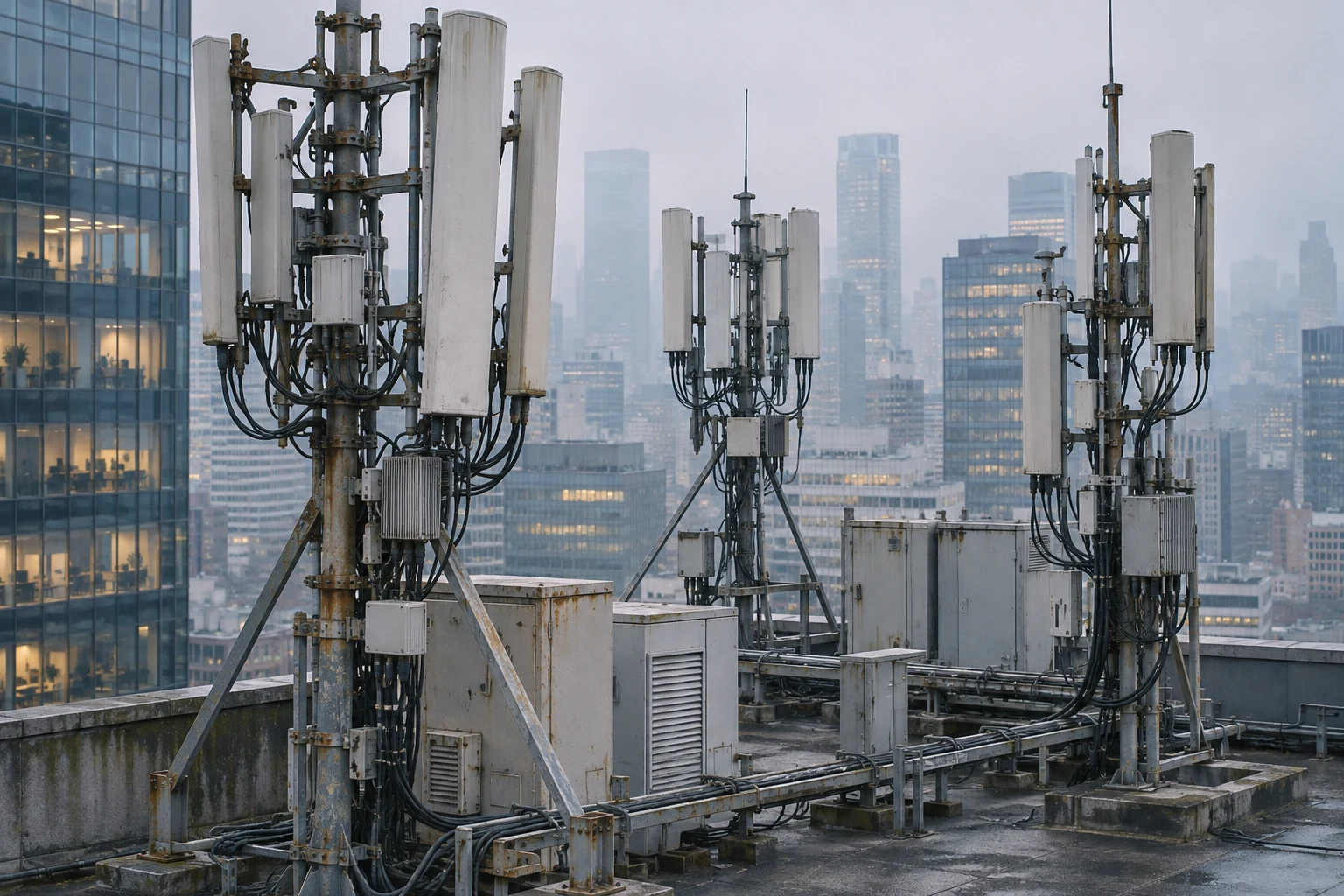
The stock market understood that something had happened, even if most people didn’t know what. On October 9, the first trading day after the 800 MHz announcement, T-Mobile’s shares fell about 13 percent, AT&T’s nearly 10 percent and Verizon’s close to 9 percent. By one analysis, it was Verizon’s worst day in more than two decades. Together, the three companies that carry most of America’s phone calls lost something like $57 billion in market value in a single session. AST SpaceMobile, a smaller company that sells satellite-to-phone service through those same carriers, fell too.
Musk, replying to the investor Chamath Palihapitiya, explained the reaction in his own terms. “To the casual observer, this won’t seem like much,” he wrote. “To those who understand the spectrum wars, it’s an earthquake.”
To understand the earthquake, you have to understand the ground. Every wireless signal, whether it’s your phone, your car radio or your home Wi-Fi, travels on a particular frequency, the way radio stations sit at particular spots on the dial. In the United States, the government controls the dial. The Federal Communications Commission licenses slices of it, called spectrum, to companies that pay enormous sums for the exclusive right to use them. Not all slices are equal. Lower frequencies, like 800 MHz, travel farther and slip through walls, trees and windshields. Higher frequencies can carry more data, but they fade quickly and bounce off obstacles. A real phone network needs both: low bands for reach, higher bands for capacity.
The three big carriers have spent decades, and hundreds of billions of dollars, accumulating both kinds. SpaceX, until 2025, had almost none of the kind phones use. Its famous Starlink internet service, the flat white dishes on rural rooftops and on the decks of ships and the tops of airliners, works on high-frequency bands pointed straight at the sky. That is the plentiful, “laser beam” spectrum Musk described in Seattle. Phones need what he called the “flood light.”
What happened between 2015 and 2026 is, in large part, the story of a rocket company methodically acquiring the flood light. To see why, you have to start where Musk always starts: with the money.
II. The Money Machine
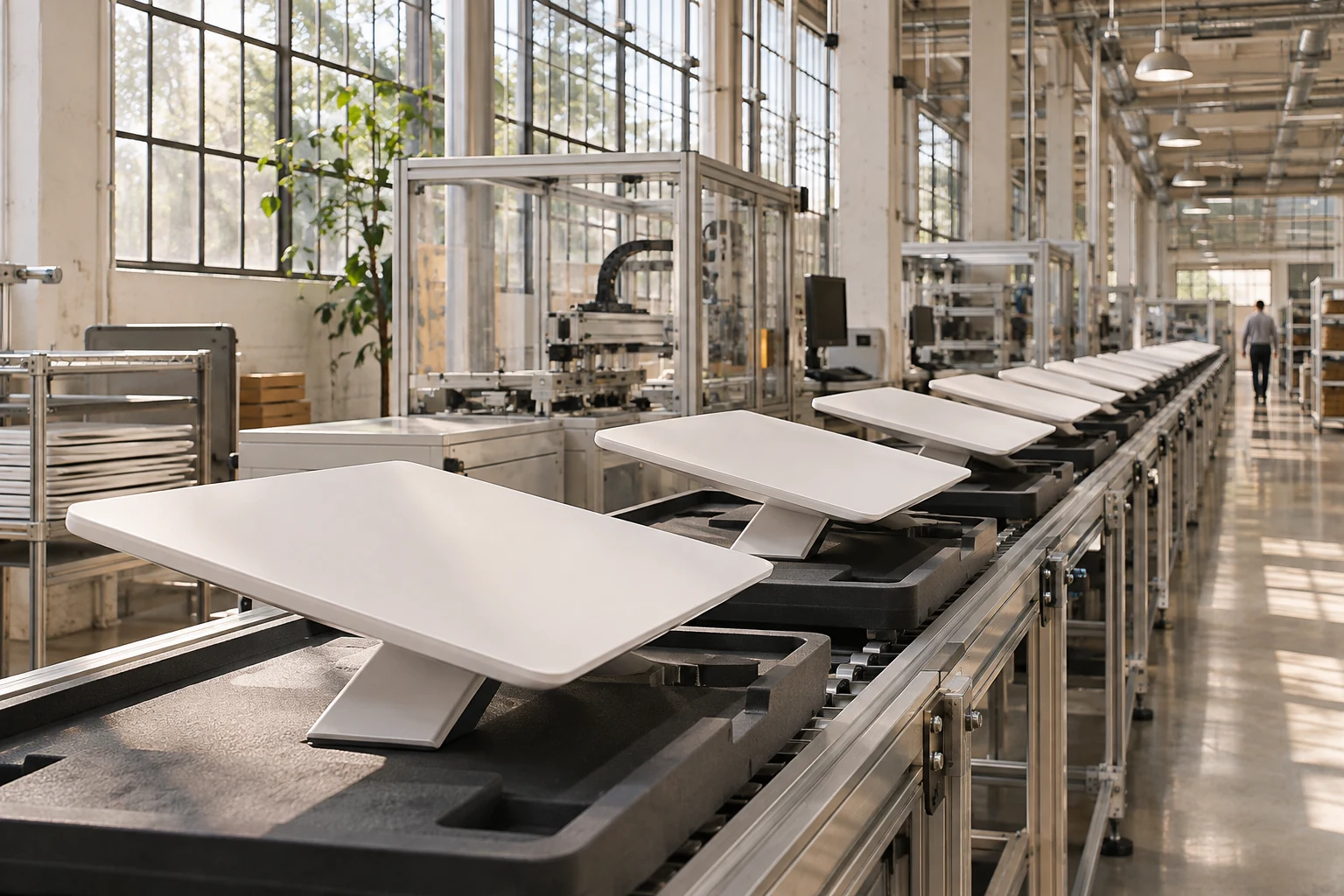
Musk has never been subtle about what Starlink is for. In 2015 he said it would help fund a city on Mars. A decade later, it is doing roughly that, or at least funding the company that is trying to build one.
When SpaceX went public in June 2026, in what Reuters described as a record $75 billion offering priced at $135 a share, its prospectus gave outsiders their first full look at the company’s books. Starlink, which SpaceX reports as its Connectivity segment, was plainly the engine. By the third quarter of 2026, according to CNBC’s reading of the company’s results, Starlink accounted for about a third of SpaceX’s revenue but roughly 85 percent of its operating profit. Rockets, for all their glamour, are a business that spends heavily while it builds the future. Starlink is the business that pays the bills. The prospectus is unusually frank that this is a method, not an accident. It lays out what it calls a “repeatable business model” in seven principles. Two of them could serve as a summary of everything that follows in this story.
5. Vertically integrate all the way to the end customer … 7. Generate significant cash flow and reinvest in the future.
SpaceX IPO prospectus, June 2026
Read those two lines with telecom in mind, and the first theory of Musk’s wireless push practically writes itself. Starlink was SpaceX’s second act: a consumer business stacked on top of a launch business, using the company’s cheap rides to orbit to deliver something people pay for every single month. A phone service would be the third act. The same satellites, many of the same customers, and a product that nearly every adult in the country already buys.
SpaceX’s president, Gwynne Shotwell, made the size of that prize explicit on the company’s first earnings call as a public company, in August 2026. “The Big Three in the United States, AT&T, Verizon and T-Mobile, roughly between them $600 billion a year,” she said, “and I anticipate us to be able to acquire quite a few of their customers because I think our service will be better.” Her figure was generous; the three companies’ reported revenue over the past year adds up to something closer to $360 billion, much of it from things other than phone plans. But the point she was making was not about precision. It was about scale. The American wireless market is one of the largest recurring consumer businesses in the world, and SpaceX already has a network circling over every customer in it.
There is a reason SpaceX’s leaders talk this way. Starlink’s own growth has made them believers in scale. The broadband service ended June 2026 with about 12 million subscribers, double the number a year earlier. On the August call, Musk said the company’s new, much larger V3 satellites would each carry roughly ten times the capacity of the last generation, and that SpaceX would launch roughly ten times as many. “Even if our monetization per bit dropped by a factor of 10,” he said, “that would still mean a 10x increase in the revenue of Starlink.” Then he went further. “It’s not out of the question that at some point, Starlink will deliver a majority of the world’s Internet.” In Seattle in 2015, he had predicted Starlink might eventually carry about 10 percent of local consumer and business traffic. Now he talks about a majority. A company that thinks that way about its pipes doesn’t see a natural ceiling at the edge of the phone market.
So the revenue-engine theory has real support, in the company’s own words. But it comes with a complication, and it’s a large one. A phone network isn’t a cash machine at the start. It’s a furnace. Joe Madden, an analyst at Mobile Experts, told Axios he expects SpaceX to spend at least $100 billion building its combined satellite and ground network, spectrum included. Verizon’s chief executive, Dan Schulman, put the cost of a full rival network at $300 billion to $500 billion over most of a decade. Tim Höttges, who runs T-Mobile’s German parent, Deutsche Telekom, said at least 200 billion euros. Those are competitors talking their own book, and they have every reason to make the hill look steep. But even the friendliest estimates dwarf the roughly $16 billion that all of Starlink took in over the past year.
There is a second complication. Starlink is no longer SpaceX’s only engine. In February 2026, SpaceX absorbed Musk’s artificial-intelligence company, xAI, and with it the social network X. Since then, the AI business has become the company’s fastest-growing source of revenue, renting out computing power to other companies at prices that management says pay back the cost of the hardware in under a year. If all Musk wanted was the next money machine, he already has one that returns its investment faster than any cell tower ever will.
Money, in other words, is part of the answer. But it doesn’t explain the timing, or the urgency, or the shift in tone that happened over the course of 2026. Something made Musk decide that working alongside the phone companies was no longer enough. To see what changed, you have to go back to the first time he stood on a stage with one of them.
III. No More Dead Zones

In August 2022, Musk and T-Mobile’s chief executive, Mike Sievert, appeared together at Starbase, SpaceX’s rocket site on the southern tip of Texas, to announce a partnership they called “Coverage Above and Beyond.” The idea was simple to describe and extraordinarily hard to build: satellites that could talk to an ordinary, unmodified phone, the one already in your pocket, with no special dish or antenna.
Engineers call this direct-to-cell, or direct-to-device. The easiest way to picture it is as a cell tower in the sky. The difference is that this tower is hundreds of miles up, racing around the planet at roughly 17,000 miles per hour, and the phone it’s talking to has a tiny antenna and a battery meant to last a day. The trick is a very large, very sensitive antenna on the satellite that can pick out a phone’s faint signal from orbit and answer it. “The important thing about this is that it means there are no dead zones anywhere in the world for your cell phone,” Musk said at the event.
Notice what the satellites were for in that arrangement: the empty places. SpaceX would borrow a sliver of T-Mobile’s spectrum and fill in the gaps where towers don’t reach, the canyons and back roads and stretches of open water. SpaceX began launching the satellites in January 2024. The commercial service, branded T-Satellite, went live in July 2025, starting with text messages and location sharing. By that September, a reviewer was making WhatsApp video calls from a remote beach in Northern California, and Musk was reposting the review with a promise attached. The next generation, he wrote, “will be much better.”
Around the world, the partnership model worked. By the end of September 2026, SpaceX said Starlink Mobile had more than 22 million monthly users, through carriers ranging from SoftBank and NTT Docomo in Japan to operators in Uganda, Kazakhstan and Costa Rica. In Ukraine, Shotwell said in March, a partnership with the carrier Kyivstar had signed up about three million customers in roughly two months. And when storms knocked out towers, the satellites became something else: insurance. “Starlink provides backup connectivity to cell towers, ensuring that your phone works when you most need it,” Musk wrote in June 2026, sharing news that a Caribbean carrier would use Starlink to keep its network online during hurricanes. This was a wholesale business, selling capacity to phone companies rather than competing with them, and it was growing fast. Which makes what happened next in the United States all the more striking.
For a while, partnership was the official line. When SpaceX agreed to buy its first big block of phone spectrum in September 2025, a deal we’ll come to shortly, the company said its next satellites would be “used in partnership with Mobile Network Operators to augment high capacity terrestrial 5G networks.” Shotwell told a conference in Paris that month that SpaceX was “working with chip manufacturers to get the proper chips in phones,” and, as one outlet quoted her, that the company wanted to work with the carriers, “almost providing capacity and wholesaling capacity to their customers.”
In March 2026, SpaceX executives took the stage at Mobile World Congress in Barcelona, the telecom industry’s biggest annual gathering. They renamed the direct-to-cell business Starlink Mobile and pitched it to the carriers in the audience as a helper, not a threat. “Satellite is complementary to terrestrial networks,” said Michael Nicolls, the Starlink senior vice president. “It cannot provide the data density that terrestrial networks have, but it can augment terrestrial networks in the places where terrestrial networks cannot reach.” Deutsche Telekom announced the same day that it would use the next generation of the service in ten European countries. SpaceX’s own prospectus, filed a few months later, said the company expected “to continue to partner with mobile network operators globally.”
Five months after Barcelona, on that first earnings call, the tone had changed completely. Shotwell named the three American carriers and said she expected to take their customers. “The spectrum that we purchased from EchoStar does have terrestrial components,” she said. “So, we definitely intend to build out the terrestrial component.” By October, SpaceX’s chief financial officer, Bret Johnsen, was telling investors the company would use its spectrum to “become a major mobile carrier” in the United States.
Partner in March. Rival by August. What happened in between? Part of the answer lies in a fight over airwaves that had been building for more than a year, one that reveals another side of how Musk operates.
IV. The Spectrum Wars
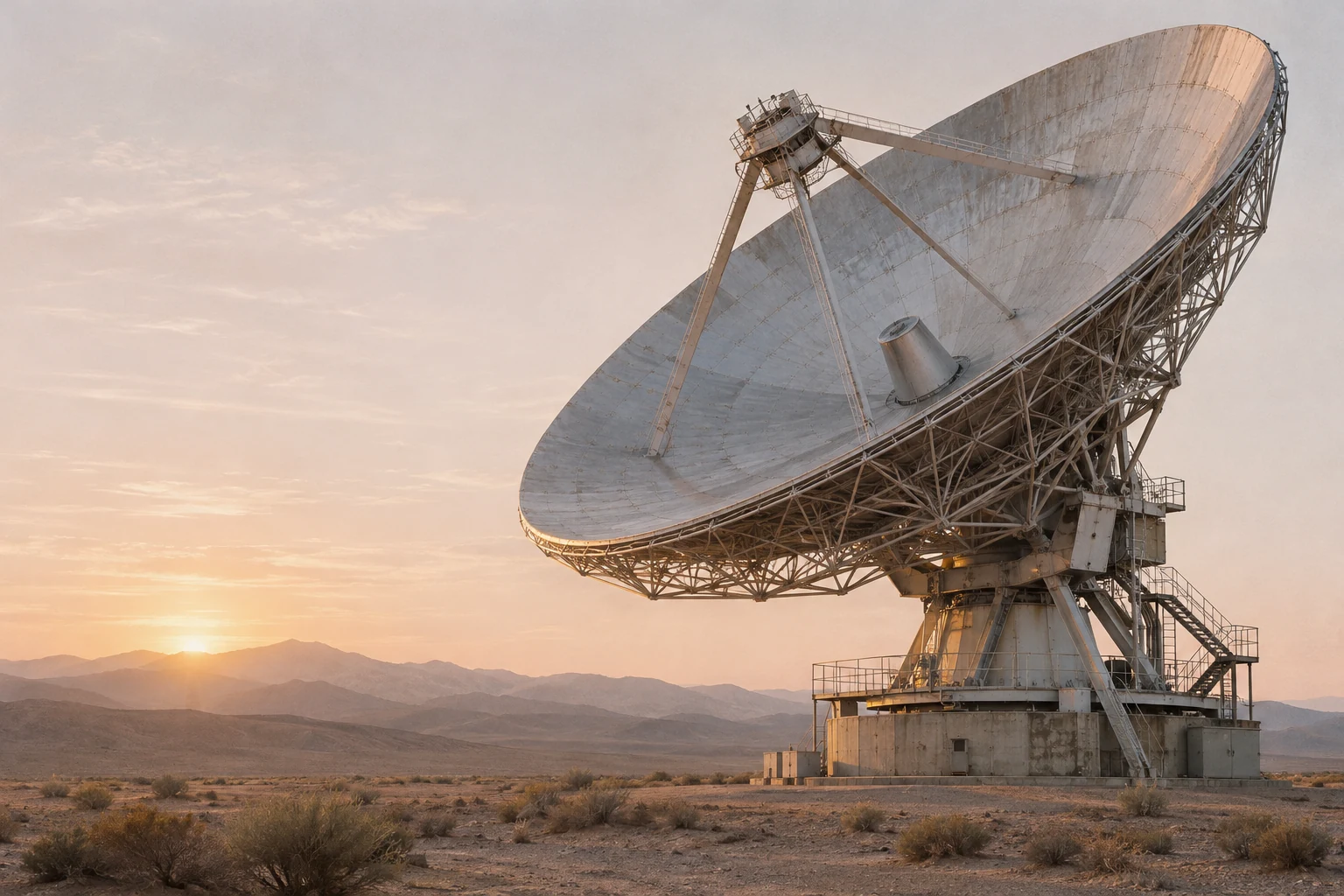
Charlie Ergen is one of the great survivors of American telecom. The founder of the satellite TV company Dish Network spent years quietly accumulating spectrum licenses, and for a time he had a government-blessed shot at becoming the country’s fourth national wireless carrier. When T-Mobile bought Sprint in 2020, regulators required the merged company to sell Sprint’s prepaid business, Boost Mobile, to Dish, along with spectrum and access to T-Mobile’s network while Dish built its own. Dish did build a 5G network and said in 2023 that it had met its requirement to reach 70 percent of Americans. But building a fourth carrier from scratch turned out to be brutally expensive, and the business struggled.
Among Ergen’s holdings were licenses in the 2 GHz band that had originally been set aside for mobile satellite service. That is precisely the kind of spectrum a company that wanted to beam signals from space to ordinary phones would covet, and SpaceX coveted it out loud. It told the FCC that Dish “barely uses” the band and urged the agency to make it available to others.
In May 2025, the FCC’s chairman, Brendan Carr, took up the complaint. “I have directed agency staff to begin a review of EchoStar’s compliance with its federal obligations to provide 5G service throughout the United States per the terms of its federal spectrum licenses,” he wrote to Ergen, whose company, by then renamed EchoStar, held the licenses. Ergen replied that EchoStar had “met or exceeded all of the commitments we have entered into with the FCC to date.” But the threat of losing the licenses was enough. EchoStar skipped interest payments, weighed bankruptcy, and began selling.
In August 2025, AT&T agreed to buy a large block of EchoStar’s spectrum for about $23 billion. On September 8, SpaceX announced its own deal: EchoStar’s nationwide AWS-4 and H-block licenses, for about $17 billion, half in cash and half in SpaceX stock, plus roughly $2 billion of EchoStar’s interest payments. The agreement was later expanded to include another slice, known as unpaired AWS-3. Shotwell said the deal would “advance our mission to end mobile dead zones around the world.” As part of the arrangement, EchoStar’s Boost Mobile customers would get access to SpaceX’s next-generation satellite service.
The FCC approved the transfer on May 12, 2026, giving SpaceX permission to use the airwaves for satellite service, ground-based service, or a mix of the two. The licenses now sit in a trust until the deal formally closes, which both companies are targeting for November 30, 2027. When it does, SpaceX will hold about 65 megahertz of mid-band spectrum, a large and internationally coordinated band that Shotwell calls “a foundational competitive advantage for Starlink Mobile.”
This is a pattern worth naming, because it complicates the image of Musk as a pure builder. He builds, certainly. But he also argues, loudly and in front of regulators, that resources held by slower incumbents should be handed to someone who will use them better. SpaceX complained that EchoStar was sitting on spectrum. The regulator agreed. The spectrum moved. In November 2026, speaking by video with the investor Ron Baron, Musk applied the same logic to the biggest carriers in the country. SpaceX, he said, “could just acquire that legacy telco and use their spectrum, you know, ten times more effectively.” In Musk’s worldview, spectrum isn’t so much property as a scarce public resource that belongs with whoever wrings the most out of it, and he intends to be that person.
There is an irony buried in the deal’s structure. Because SpaceX paid for much of the spectrum in stock, Ergen’s company is set to become one of SpaceX’s larger outside shareholders, and those shares soared after the IPO. Analysts at LightShed Partners estimated in November 2026 that the roughly $11 billion of SpaceX stock EchoStar is due to receive was by then worth more than $35 billion. The man whose dream of a fourth national carrier ended under regulatory pressure now has a very large financial stake in Musk’s attempt at the same thing. Boost stores already resell Starlink equipment, and Boost customers have a promise of access to SpaceX’s next satellite service. When Musk and Ergen sat down in October, they were less adversaries across a table than partners with overlapping interests.
The EchoStar deal gave him the mid-band spectrum. It didn’t give him a way into buildings, and it didn’t give him the thing every new carrier needs on the first day it opens for business: coverage. For that, he went knocking on doors. Every one of them stayed shut.
V. Nobody Would Sell Him a Seat
The quickest way into the phone business isn’t to build a network. It’s to rent one. Dozens of cellphone brands that most people think of as carriers, from discount prepaid services to the mobile plans sold by cable companies like Comcast and Charter, own no towers at all. They buy capacity wholesale from one of the big three and resell it under their own name. The industry calls them mobile virtual network operators, or MVNOs. For SpaceX, an MVNO deal would have been the obvious bridge: sell customers a Starlink phone plan that rides on a big carrier’s towers in cities and switches to satellites everywhere else, while the company builds out its own ground network over time.
According to The Washington Post, Musk personally approached the heads of America’s largest telecom companies in 2026 and asked for exactly that. “Verizon, T-Mobile and AT&T all told SpaceX no,” the Post reported. AT&T and T-Mobile didn’t comment publicly, but Verizon’s chief executive left no doubt about his position. “I see absolutely no benefit whatsoever to extending an MVNO deal to any satellite provider,” Schulman told analysts in October. And in case anyone was thinking of sneaking in through a smaller reseller, he added: “There are no back doors to any of our MVNO agreements.”
From the carriers’ side, the refusal is perfectly rational. Why hand the keys to a company that has said publicly it wants your customers? Their wager is that satellites will stay a niche, useful for the hiker, the rancher and the hurricane, but no substitute for a dense web of towers in the cities and suburbs where they make nearly all their money. “Their service just can’t compete with a terrestrial network,” Schulman said in October, according to a widely shared account of his remarks. Stankey of AT&T had been blunter in September: Starlink, he said, “doesn’t get through buildings very well.” Light Reading summed up the carriers’ strategy as an effort to contain Starlink to serving the 2 percent or so of the time customers are out of range of their own networks.
The carriers did something else, too. In May 2026, the three rivals announced a joint venture to pool their spectrum for satellite-to-phone service in hard-to-reach areas, an arrangement analysts described as a way to reduce their reliance on any single satellite supplier, which in practice meant SpaceX. The venture became official on October 1, with a longtime industry executive, Paul Roth, as its interim chief. Industry observers called it a shot across the bow.
For anyone who has followed Musk’s career, this moment looks familiar. When he set out in the early 2000s to send a small greenhouse to Mars, he discovered that buying a rocket would cost a fortune. So he did the math himself. “I tend to approach things from a physics framework,” he told Wired in 2012. “Physics teaches you to reason from first principles rather than by analogy.” He concluded that the raw materials in a rocket were a tiny fraction of its price, and he started building his own. A decade later, when electric cars had nowhere to charge on a road trip, Tesla didn’t wait for gas stations to install plugs. In September 2012 it unveiled its own Supercharger network, which it had, in the words of its press release, “constructed in secret.” And in November 2022, shortly after he bought Twitter, Musk was asked what he would do if Apple and Google pulled the app from their stores. “I hope it does not come to that but, yes, if there is no other choice, I will make an alternative phone.”
The rule that emerges from these episodes is simple. When a gatekeeper says no, Musk tends to build a way around the gate. The carriers’ refusal didn’t create SpaceX’s wireless ambitions, which go back years. But it does appear to have changed their shape, from a company that sells capacity to carriers into one that competes with them.
That is the light in which to read the news about Boost Mobile. On November 2, The Washington Post reported that SpaceX had held talks with EchoStar about acquiring Boost or gaining access to its network arrangements, and that Musk had spoken directly with Ergen in October. On its face, the logic is obvious: Boost has around seven million customers and coverage across most of the country. But Boost owns no towers. Its customers ride on networks leased from AT&T and T-Mobile, and those leases come with strings. EchoStar’s own filings say its agreement with AT&T restricts reselling the service to certain “restricted parties,” a category that includes “certain large technology companies.” The T-Mobile arrangement expires in mid-2027. Analysts at LightShed Partners put it bluntly: SpaceX “cannot simply acquire Boost Mobile and inherit its MVNO agreements with AT&T and T-Mobile.” As of this writing, no deal has been announced or filed, and neither company has confirmed the talks.
So the Boost talks may be less a prize than a probe, a test of whether there is a side door into a building whose front door is locked. Musk, for his part, seems unbothered by the wait. When Schulman told investors it would take SpaceX four to six years to build a competitive network, Musk replied on X in five words: “Will take 2 or 3 years.”
If nobody will rent him a network, and the side door may be locked too, he has to build one. And what he is building looks less like a traditional phone company than like something new.
VI. A Radio on Every Roof
Strip away the jargon, and the network SpaceX has described has three layers. The top layer is in orbit. SpaceX has permission from the FCC to launch up to 15,000 next-generation phone satellites, which it calls Mobile V2, and plans to begin flying them on its giant Starship rocket in 2027. These satellites will use the mid-band EchoStar spectrum, which Shotwell expects to carry most of the traffic. Outdoors, under open sky, the goal is a connection that, in Nicolls’s words, should “look and feel like you’re connected to a high-performing, 5G terrestrial network.” Musk wrote that the new constellation will enable “more than 100 times the bandwidth” of the first generation.
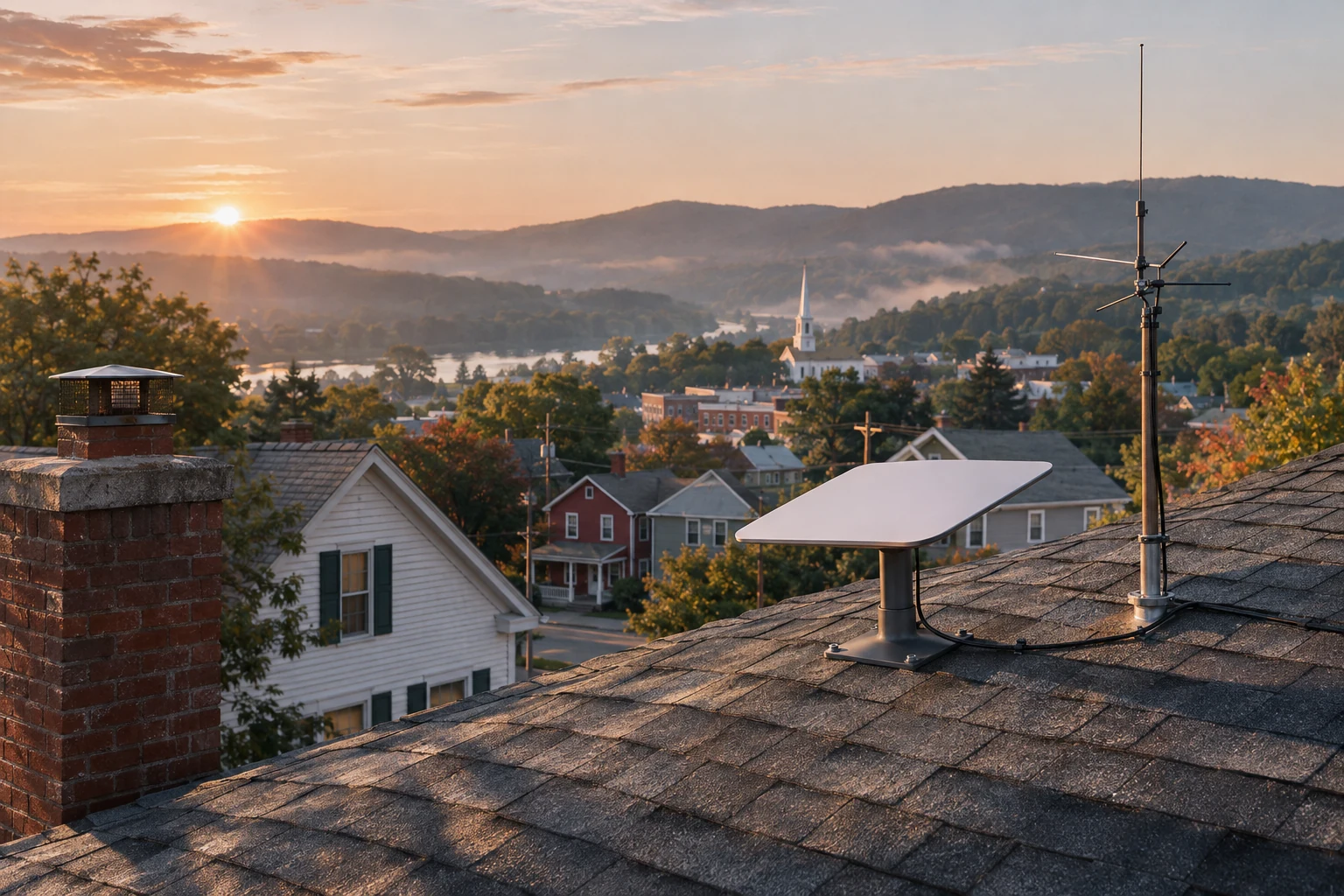
The bottom layer is on the ground, and it is where SpaceX’s thinking has moved fastest. On the August earnings call, Shotwell offered what she called “a little hint.” Instead of building towers, she said, “you could put a base station, a cellular base station, on the gear that holds a Starlink broadband dish.” Musk jumped in to underline the point.
Instead of having to deploy these very expensive and difficult-to-locate, large cellular base stations, we feel reasonably confident that we can deploy a large number of small stations. Essentially, they’re really just Starlink dishes, that also provide connectivity in the mobile spectrum bands and have them be all over the place. The Starlink antennas are located on the roofs of houses and businesses.
Elon Musk, SpaceX second-quarter 2026 earnings call
It’s a characteristically Musk idea: turn millions of existing customers’ rooftops into a cell network, using hardware SpaceX already makes by the million. Critics were unimpressed. The analysts at MoffettNathanson called SpaceX’s mobile ambitions “quixotic.” Tim Farrar, a longtime satellite industry consultant, pointed out that the rooftop concept was “a direct copy” of a plan Ergen himself floated in 2013. But the idea says something about how SpaceX sees its own assets. Every Starlink dish on a roof is not just a customer. It’s a potential piece of infrastructure.
The middle layer is the one that makes the 800 MHz deal so important. Those licenses have a strange history. They once belonged to Sprint, passed to T-Mobile in the 2020 merger, and were sold in 2026, under a government merger condition, to the investment firm Grain Management, which then agreed to sell them to SpaceX. The Wall Street Journal reported the price at about $8 billion. The licenses cover nearly the entire country, though the amount of spectrum varies by county, and the deal still needs FCC approval, which SpaceX expects in the first half of 2027. What they offer is reach. When an analyst asked about the mix of spectrum in October, Shotwell explained it plainly: “You need the low-band spectrum, the 800 megahertz spectrum, to basically penetrate buildings.”
Musk’s “last critical piece” post that afternoon was a reply to an account on X that had set two statements side by side. The first was the claim, attributed to AT&T’s chief executive, that Starlink Mobile wouldn’t be able to penetrate walls. The second was SpaceX’s announcement that the new spectrum would allow Starlink Mobile “to provide better indoor coverage, including signals that can penetrate walls and other obstacles.” The account added: “People are underestimating Starlink Mobile.” The 800 MHz deal, in other words, wasn’t only an engineering decision. It was an answer to the carriers’ single most persuasive argument against him.
Eleven years after Musk said nothing short of a neutrino could get a signal from space to a phone on the 27th floor, his company had gone out and bought the one thing he said was rare: spectrum that goes through walls. He wasn’t wrong in 2015. He was describing the problem he would eventually have to solve.
The newest clue arrived on November 4, 2026. Qualcomm, best known for the chips inside most of the world’s smartphones, announced that SpaceX had chosen its Dragonwing equipment to power the radios and signal processing in “tens of thousands” of cell sites for Starlink Mobile’s nationwide 5G network, with deployment starting in 2027. Qualcomm described it as its largest 5G infrastructure deal ever. “It’s like a clean sheet of paper,” said Durga Malladi, the Qualcomm executive who briefed reporters. Nicolls, in the announcement, said SpaceX was “building the first fully-integrated nationwide satellite and terrestrial network that will keep people connected no matter where they are.” Two weeks earlier, Bloomberg had reported that SpaceX was in talks to secure access to at least 80,000 cell sites, including with Crown Castle, one of the country’s largest tower owners.
It’s worth being precise about what the Qualcomm deal is. It is not about the chips in your phone. It is about the equipment on the towers: the radios that send and receive signals and the processors that make sense of them. That distinction matters, because it tells you something about SpaceX’s plans. Madden, the Mobile Experts analyst, told Axios that the deal signals a commitment to traditional, high-powered cell sites rather than relying mainly on small radios attached to rooftop dishes. In other words, SpaceX isn’t just sprinkling femtocells across suburbia. It’s planning a real ground network, the kind the carriers spent decades building, with its satellites overhead to fill the gaps and, according to PCMag, to carry traffic back from the towers.
All of which brings us to the indoor question, which sits at the heart of one of the most common theories about Musk’s motives: that satellites can’t serve people inside homes, hotels, offices and factories, so he needs a ground network to finish the job. The carriers agree that indoors is where the fight is. AT&T’s chief executive, John Stankey, told investors in October that in Chicago “somewhere between 40% to 45% of the traffic on any given day is traffic that’s originated from inside of a building,” and that AT&T’s low-band spectrum “exists on every indoor building system and high-rises in hospitals and stadiums.” He urged analysts not to “over-rotate” on what he called “one carrier of low-band spectrum,” noting that AT&T runs six to eight depending on the city.
But Shotwell made a counterpoint on SpaceX’s own October call that complicates the indoor theory in an interesting way. “The vast majority of mobile connectivity is actually WiFi, right?” she said. “I think it’s something between 85% and 93% is done through WiFi. And keep in mind, Starlink Broadband does a lot of WiFi work as well.” Inside a home, in other words, a phone mostly talks to the router on the wall, and millions of those routers are already plugged into Starlink. The ground network isn’t really there to replace Wi-Fi. It’s there to cover the gap between the satellite outside and the Wi-Fi inside: the street, the lobby, the parking garage, the car, the walk from the train.
And who, exactly, spends their life in that gap? Increasingly, the answer isn’t a person.
VII. The Machines Are Coming
On the August earnings call, before he said a word about phones, Musk talked about bits per second. A human being, he observed, produces very little data over the course of a day. Computers produce billions of bits every second, around the clock. Then he connected the thought to the products his companies are racing to build.
With the advent of AI and humanoid robotics and vehicle robotics and just a massive number of robots, the appetite of bandwidth will be much greater than it has been in the past … And really, I think Starlink is the only internet that can actually service that bandwidth.
Elon Musk, SpaceX second-quarter 2026 earnings call
Later on the same call, Morgan Stanley’s Adam Jonas asked Shotwell why she had once described robotics as an underappreciated part of the SpaceX story. “I think robotics, especially robotics tied to AI, like for autos and humanoid robots, will dramatically increase the demand for connectivity,” she said. “Dramatically.” In October, Musk went further, predicting that “in three to five years, there’s probably a demand for 1,000x more bandwidth than there is currently because AI or SI agents will on a per agent basis, use far more bandwidth than a person, and there will be far more agents than there are people.” Shotwell, in her prepared remarks, put it in a single sentence: “Connecting cars, robots and the adoption of Super Intelligence will increase communication demands, not in percentages, but in many orders of magnitudes.”
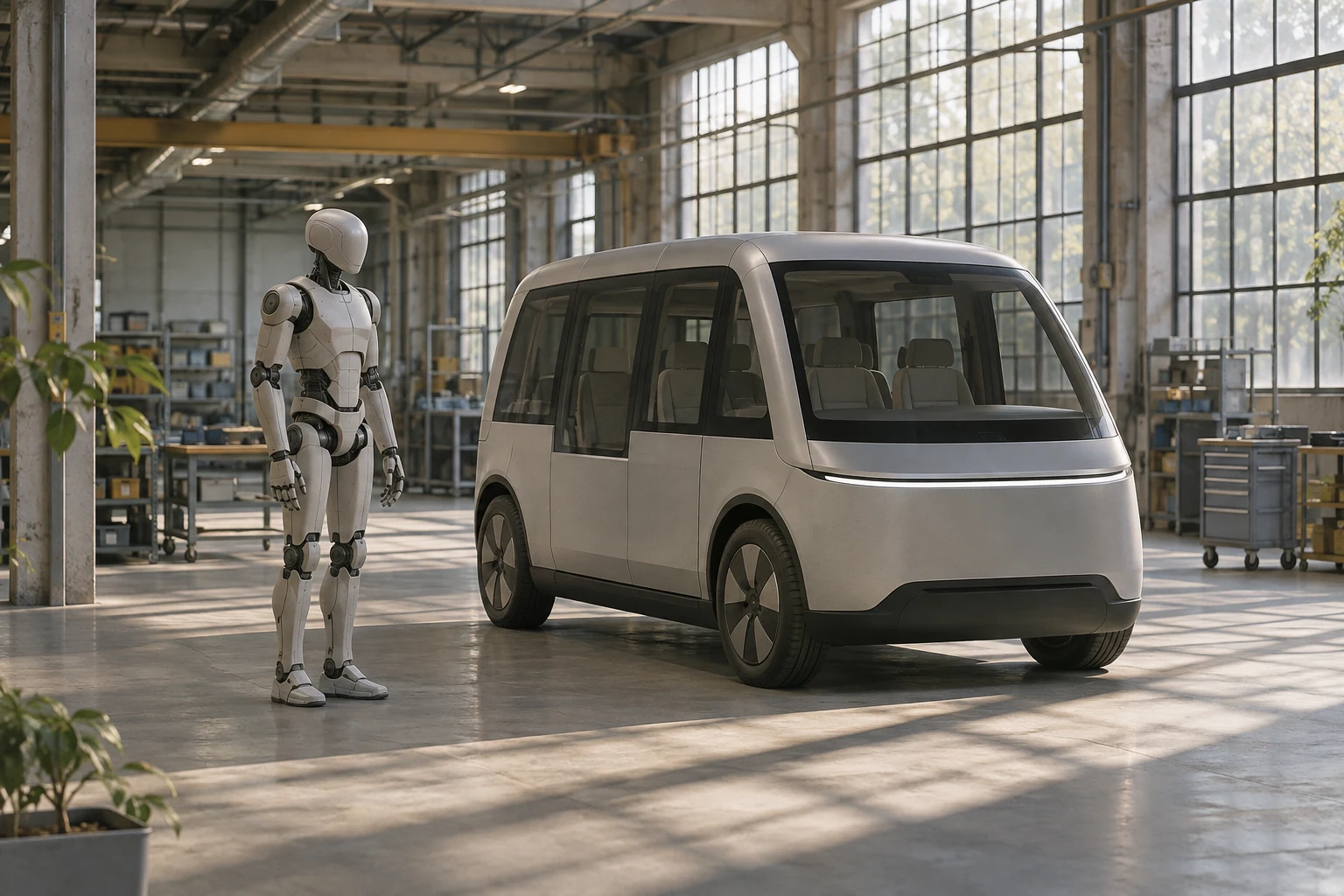
The cars are the clearest case. On Tesla’s earnings call in July 2026, Musk said Starlink would be built into all of the company’s vehicles in markets where Starlink operates. “Because for a Robotaxi situation, you need to have coverage everywhere,” he said. “There are many places, even in Silicon Valley, where the cellular coverage is terrible or sometimes non-existent.” A few weeks later, Tesla showed off its first Cybercab, the two-seat robotaxi with no steering wheel or pedals, with a Starlink antenna built into the roof. Musk posted: “All cars will have Starlink in the future. It’s the only way to get super high bandwidth to billions of vehicles.”
The robots are the more ambitious case. Tesla’s humanoid robot, Optimus, is meant to work in factories and, eventually, in homes. Speaking with Ron Baron in November, Musk suggested that tens of millions of capable humanoid robots could match the productive output of the entire United States, and that Tesla would probably rent them rather than sell them. A rented robot is a robot you manage remotely, update constantly and watch over as a fleet. That is a connectivity business as much as a hardware one. So the theory that telecom is the nervous system for Musk’s machines has real support. He and Shotwell keep saying so, Tesla is physically building Starlink into its robotaxi, and the timing of SpaceX’s ground network lines up with the moment Tesla’s robotaxi and robot programs are supposed to scale.
But here is the complication, and it deserves the reader’s full attention. A self-driving car does not drive over the network. It thinks for itself, on chips inside the vehicle. That is the whole point of Tesla’s custom AI chips, and of Terafab, the enormous chip-making project Tesla and SpaceX are planning in Texas, which SpaceX’s prospectus says will make one kind of chip “to be used primarily in Tesla’s Optimus robots and vehicles.” When Tesla unveiled the Starlink-equipped Cybercab, its vice president of AI software, Ashok Elluswamy, was careful to say the connection isn’t essential to the vehicle’s safe operation. “Connectivity is primarily meant for navigation, customer service and, in general, fleet management,” he said.
There are two more wrinkles. First, the Cybercab uses a Starlink dish, the same broadband technology that already works today, not the new phone network. If all Musk needed was to connect his cars, he wouldn’t need 800 MHz spectrum or Qualcomm radios to do it. Second, a robot working inside a factory or a home will, like a phone inside a home, most likely spend its day on Wi-Fi. The network matters to the fleet, for updates, monitoring, remote help, uploading data to train the next model, and keeping passengers entertained. It is the nervous system, not the brain.
It’s also notable what SpaceX has and hasn’t put in writing. The prospectus, the most legally scrutinized document the company has ever produced, sizes the Starlink Mobile market at $740 billion based on phones and other connected devices around the world. It talks about vehicle fleets, “including trucking, rail, public safety vehicles, and autonomous systems,” and about the tens of billions of connected sensors and appliances expected by the early 2030s. It does not mention humanoid robots in its case for connectivity at all. The robot story lives on earnings calls and in Musk’s posts. It has not yet made it into the numbers.
The most revealing moment came on the October call. Kutgun Maral, an analyst at Evercore, asked directly how much of SpaceX’s connectivity focus was on “traditional retail wireless versus what could be a massive physical AI opportunity.” Shotwell answered with spectrum. Musk answered with a tease.
I think we probably should do a longer presentation on the game plan for Starlink connectivity and why we think it will ultimately be a business that generates several hundred billion dollars in revenue a year because you are missing some of the pieces that we know about internally.
Elon Musk, SpaceX third-quarter 2026 earnings call
He didn’t say what the missing pieces were. But earlier on the same call, he dropped a clue that may matter more than anything else in this story. Asked about the possibility of merging SpaceX with Tesla, an idea now being examined by special committees of independent directors at both companies, Musk listed the reasons he thought it could make sense: “super intelligent software, chip design, the Terafab, obviously, robotics, mass to orbit with the Starmind constellation.” Shotwell interjected with one word. “Connectivity.” Musk repeated it: “Connectivity.”
That exchange is worth sitting with. As long as Tesla and SpaceX are separate companies, the network is something one sells to the other. If they were ever combined, the network would stop being a vendor and become plumbing, the same way SpaceX’s rockets became plumbing for Starlink. Musk was careful to say that no deal has been agreed, that it may never happen, and that it would need the approval of a majority of all Tesla shares, a high bar. But the instinct is plain. He sees the cars, the robots and the network as parts of one machine.
The robots may well become some of the most important customers of the network SpaceX is building. But they aren’t the only reason Musk wants to own one. To see the rest, look at what else SpaceX has become.
VIII. One Company, One Stack
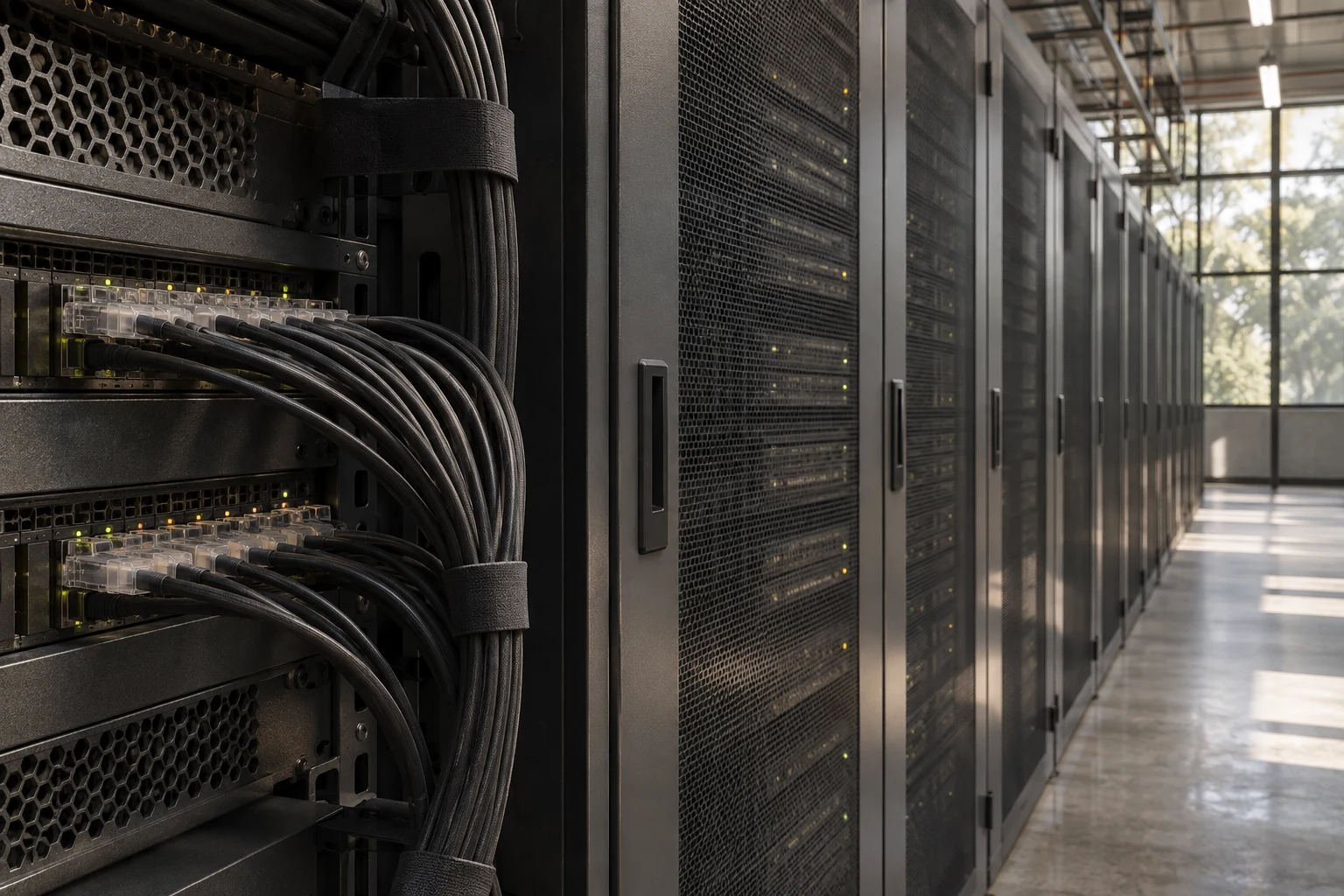
SpaceX in late 2026 isn’t a rocket company in any ordinary sense. It launches the large majority of the world’s mass to orbit. It runs the largest satellite internet service on the planet. Since February, it has owned xAI, the maker of the Grok chatbot, and X, the social network. In August it closed its acquisition of Cursor, the AI coding company. It operates some of the largest AI data centers in the world, is planning to put AI computers into orbit with a constellation it calls Starmind, and is working with Tesla and Intel on Terafab. Its prospectus describes the result as “the most ambitious, vertically integrated innovation engine on (and off) Earth.”
Musk’s instinct, once he owns the pieces, is to bundle them. In October 2026, SpaceX announced a single subscription that combines Grok, its AI assistant products, the Cursor coding tools and X Premium. Listen again to how Musk described the phone service at the All-In Summit in 2025: one Starlink account that works with the dish at home and the phone in your pocket. It isn’t hard to imagine where that logic leads, one bill for the internet at home, the connection on the go, the AI and the apps, all from the same company, delivered over the same satellites. That isn’t a phone plan in the old sense. It’s a relationship with the customer that no carrier, app store or phone maker sits in the middle of.
Seen that way, a phone network isn’t a detour. It’s a missing layer. Think about what stands between a person and Musk’s AI today. The satellites, the rocket that launched them and the dish on the roof may all be his. So may the AI model, the social app and, since July 2026, the payments service, X Money, which launched for paying X subscribers with a Visa debit card. But the connection to the phone in your hand, and the phone itself, belong to someone else: a carrier, and Apple or Google.
That gap matters more as AI moves from answering questions to doing things. In October and November 2026, Musk spent much of his feed promoting AI agents that act on a user’s behalf, including ones that can call a dentist’s office or a restaurant on the phone and book an appointment. An assistant that acts in the world needs to be reachable, and to reach things, everywhere. Musk’s prediction that there will be “far more agents than there are people” is, among other things, a prediction about network traffic.
The device question is murkier, and Musk has sent mixed signals. In early 2026, when a user on X said a Starlink phone “would be so sick,” Musk replied, as Light Reading reported: “Not out of the question at some point. It would be a very different device than current phones. Optimized for running max performance/watt neural nets.” Days later, after Reuters reported that SpaceX had discussed making a phone, he flatly denied it. “We are not developing a phone,” he wrote. Both things can be true. Musk may not be building a phone today while keeping the option open, the same way he kept the option of building an “alternative phone” open in 2022. Tim Farrar, the satellite consultant, suggested in 2025 that one real purpose of SpaceX’s spectrum was leverage over Apple. “This gives them the opportunity to pressure Apple,” he said. Owning the airwaves means the phone makers have to come to SpaceX to support them.
It’s worth being honest about which popular theories don’t hold up. There’s no evidence that X Money, or X as an everything app, needs SpaceX to own a phone network. They run on any internet connection, and X Money launched on Visa’s payment rails. The stronger version of the idea is about control. A company that owns the pipe, the device chips, the AI and the app can’t be throttled, de-prioritized or shut out by a gatekeeper. That was precisely the fear that prompted Musk’s “alternative phone” post in 2022.
There are other customers in the picture, too. SpaceX’s government business is growing fast; the company said its enterprise and government revenue nearly doubled over the past year, helped by its military satellite program, Starshield. In May 2026, the Space Force awarded SpaceX a $2.29 billion contract to build the backbone of a secure military data network connected to the Golden Dome missile defense effort. Shotwell has also argued that a network with satellites overhead is simply more resilient. “It will be better during any sort of natural disaster,” she said in August, “because, surprisingly, even though space movies make space look super dangerous, it is a pretty quiescent environment.” None of that proves the phone network is a defense play. But a hybrid network that keeps working when towers fail is the kind of thing governments pay for.
And then there is Mars. In Seattle in 2015, Musk said the same satellite technology SpaceX was building for Earth could one day be put in orbit around Mars, “because Mars is going to need a global communication system, too, and there’s no fiber-optics or wires or anything on Mars.” He has not tied Starlink Mobile to Mars directly, and it would be a stretch to say he is building American cell towers for Martian colonists. But it is fair to notice that a network designed from scratch around satellites and small ground radios, with no legacy wires to protect, is closer to what another planet would need than anything the carriers run today.
Which brings us back to the question most people ask first.
IX. Is This About Beating AT&T?

The popular reading of all this is that Musk wants to take down the phone companies. There is plenty of evidence for it, and it would be wrong to wave it away. SpaceX’s own executives have said they want to “acquire quite a few” of the carriers’ customers and become “a major mobile carrier.” The carriers’ stock prices, their joint venture, their trade group’s objections at the FCC and Schulman’s promise to be “ferociously competitive” all suggest they believe it. When Musk tells an investor conference that SpaceX could buy a legacy carrier and use its spectrum “ten times more effectively,” it isn’t hard to hear a threat.
But the competitive story doesn’t explain the shape of the moves. Musk himself, in September 2025, went out of his way to say the opposite. Speaking at the All-In Summit just after the EchoStar deal, he was asked whether the goal was a single global carrier called Starlink. “That would be one of the options,” he said. “To be clear, we’re not going to put the other carriers out of business. They’re still going to be around because they own a lot of spectrum.” What he described instead was a bundle: an account with Starlink that works with the Starlink antenna at home and on your phone, “a comprehensive solution for high bandwidth at home and for high bandwidth direct to cell.” In the same conversation, one of the hosts asked whether SpaceX might simply buy Verizon. “Not out of the question,” Musk said. “I suppose that may happen.”
Now line up the sequence. From 2022 to early 2026, SpaceX was a partner, renting carriers’ spectrum and filling in their dead zones. In 2025 and 2026, it bought spectrum of its own, at first describing it as a way to augment the carriers. In 2026 it asked the carriers to rent it their networks. They refused. Only then did the language turn openly competitive, and only then did SpaceX start buying wall-penetrating spectrum, talking to tower companies and ordering radios for tens of thousands of cell sites. Competition looks less like the starting goal than the consequence of being told no. The carriers became rivals when they became gatekeepers.
The fight also has a cost abroad, which suggests how much Musk values winning it at home. Outside the United States, SpaceX still sells Starlink Mobile through carriers, and depends on their goodwill and on foreign regulators to use its new spectrum. After the August call, Tim Farrar wondered aloud whether SpaceX’s confrontational stance in America would affect Deutsche Telekom’s willingness to support Starlink Mobile’s access to spectrum in Europe. Höttges, Deutsche Telekom’s chief, said he takes SpaceX’s plans “super serious.” A company that only wanted to be the world’s wholesaler of satellite capacity wouldn’t pick this fight in its most important market. A company that wants to own the customer would.
That doesn’t make the competition unimportant. The American phone market is the largest, richest proving ground available for a network Musk wants to put everywhere, and its customers would help pay for it. But beating AT&T is better understood as a means than an end. Schulman, the Verizon chief, offered the outsider’s view: SpaceX might eventually become “the sixth, not the fourth, the sixth competitor in the market.” It’s hard to imagine Musk losing sleep over the ranking. The prize he keeps describing is not market share in phone plans. It’s a network that reaches every person and every machine, everywhere, that pays for the rest of his ambitions and that nobody else can switch off.
That is a big vision. It is also, as the carriers keep pointing out, a very expensive and very uncertain one.
X. What Would Have to Be True
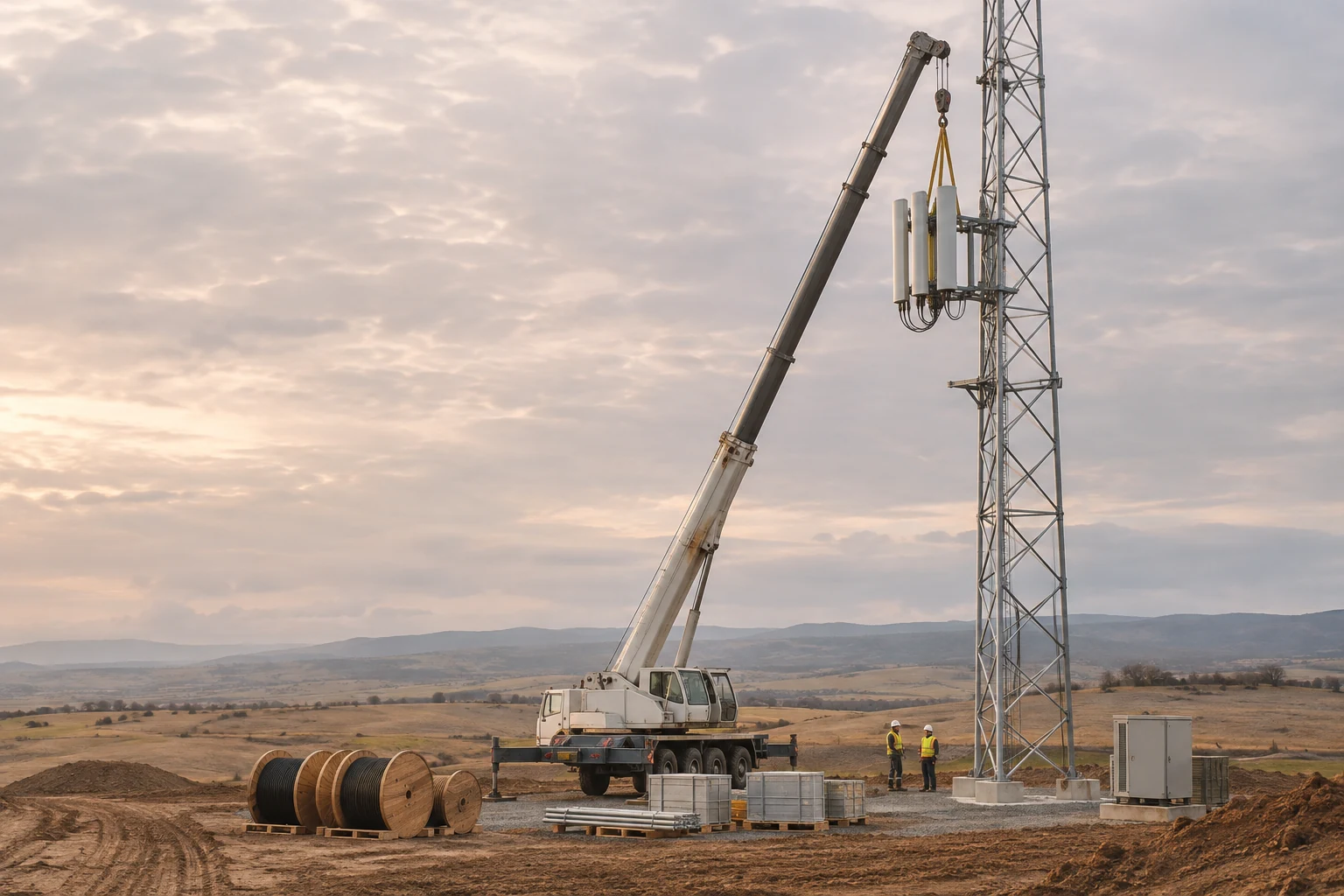
For all the momentum, the gap between what SpaceX has announced and what it has built is wide, and a fair reader should hold both in mind.
Start with the calendar. At Mobile World Congress in March, SpaceX said its next-generation phone service was expected in mid-2027. In August, Shotwell said service would begin at the end of 2027. In October she said “early 2028,” without explaining the change. The EchoStar spectrum doesn’t formally transfer until late 2027. The 800 MHz licenses still need FCC approval. The new satellites depend on Starship flying often and reliably, which it has only just begun to do. And phones need new chips to use SpaceX’s spectrum at all, which Musk said in 2025 would take roughly two years.
Then there is the spectrum itself. Höttges, the Deutsche Telekom chief, estimated that SpaceX would hold about 76 megahertz of spectrum, against roughly 400 for T-Mobile. By other counts, each of the big three holds three hundred to four hundred megahertz. SpaceX’s bet is that satellites, rooftop radios and a modern network built from scratch can make up the difference. It may also simply keep buying. Its prospectus warns that the EchoStar licenses may not be “sufficient to meet our growing need for spectrum licenses,” and the FCC voted in late October to consider opening as much as 482 more megahertz to satellite-to-phone service, over the objections of the carriers’ trade group.
There is politics, too. Musk’s relationship with Washington has swung wildly in recent years, and much of SpaceX’s wireless strategy depends on decisions by the FCC. Axios noted after the Boost reports that approval of any deal “is far from a foregone conclusion” if Musk’s businesses are drawn into a regulatory quagmire after the midterm elections. And investors are not uniformly convinced. SpaceX’s shares lost about a fifth of their value in the month before Musk’s November appearance with Ron Baron, amid a broader slump in technology stocks.
And there is Musk’s own record on schedules, which he acknowledged that night in Seattle. “In the past I’ve been a little optimistic on schedule,” he told the room, to laughter. Then he predicted that the first useful version of Starlink would be active in about five years. Starlink began serving customers in 2020, almost exactly on that timeline. Musk is often late. He is not always late. And he has a habit of arriving at destinations that experts had declared unreachable.
The clues to watch over the next year are concrete.
Whether the FCC approves the 800 MHz purchase, and on what conditions.
Whether SpaceX names a tower partner and starts putting Qualcomm radios on poles.
Whether a major phone maker announces support for SpaceX’s spectrum in its next models.
Whether a Boost deal, or any carrier deal, shows up in a filing with the Securities and Exchange Commission.
Whether the Tesla and SpaceX committees agree on terms.
Whether Musk delivers the “longer presentation” on the connectivity game plan that he promised in October, the one meant to explain the pieces outsiders are missing.
Each of those would fill in part of the picture. None of them, on its own, would complete it.
Epilogue: The Picture on the Box
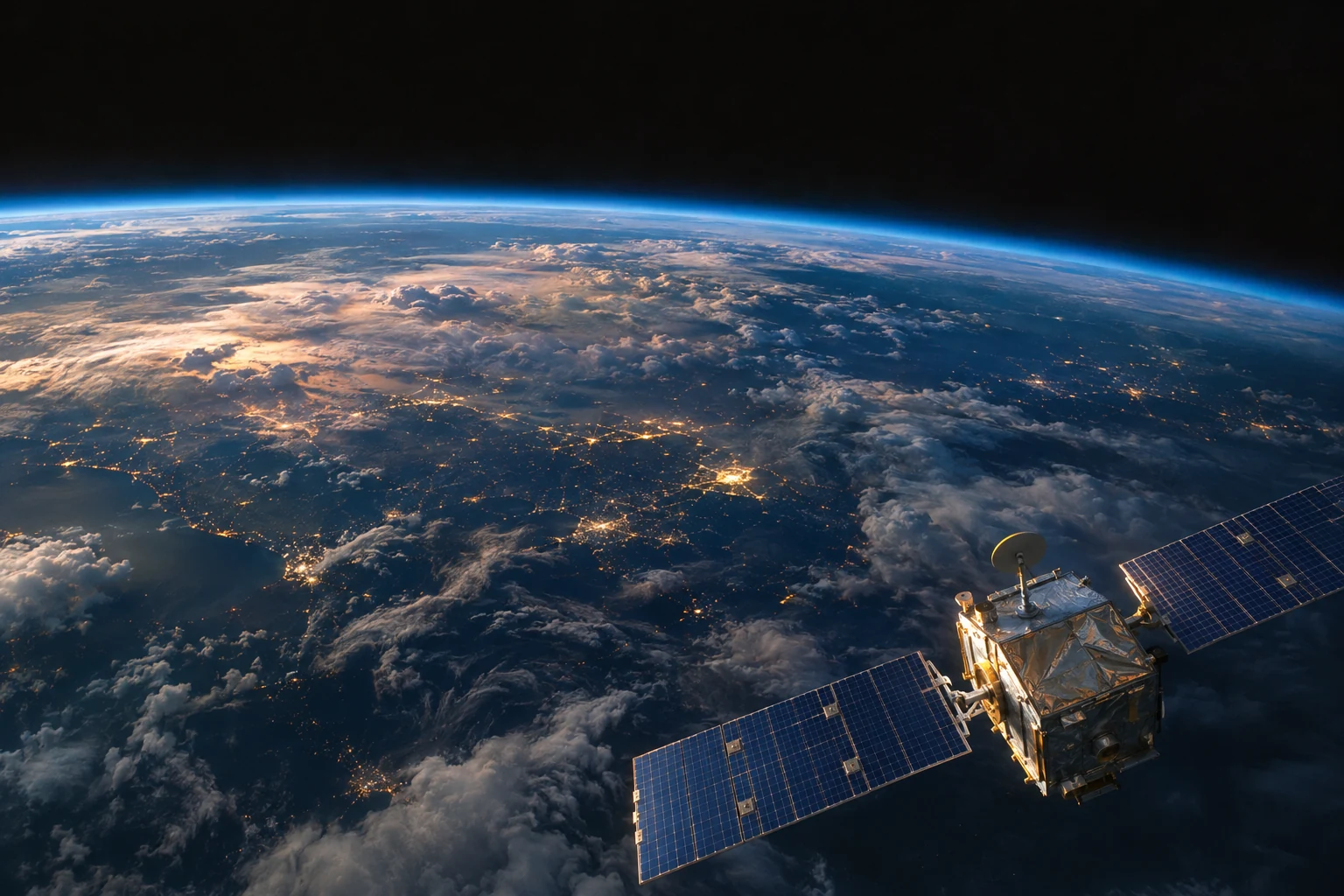
Go back, one last time, to that stage in Seattle, and to the three ideas Musk laid out in January 2015.
He said Starlink would generate a lot of money to fund a city on Mars. That idea has held, and grown. The network pays SpaceX’s bills today, and the phone business is meant to make that engine much larger.
He said spectrum that goes through walls is extremely rare. He was right, which is exactly why he bought some, and why he called it “the last critical piece of the spectrum puzzle.”
He said satellites can’t reach a phone on the 27th floor, and that anyone building a network should assume the ground networks will keep getting better. He was right about that too, which is why SpaceX is no longer trying to beat the ground networks from orbit. It is building one of its own.
Lay the pieces on the table. Satellites overhead, for everywhere under open sky. Spectrum low enough to reach indoors. Radios on rooftops and Qualcomm equipment on tens of thousands of towers. Wi-Fi in millions of homes, already connected to Starlink. A Starlink antenna in the roof of the Cybercab. Robots meant to be rented and managed as a fleet. An AI that makes phone calls on your behalf, a social network, a payments app, and a possible merger with the company that makes the cars and the robots. A set of phone carriers that wouldn’t rent him a seat. And a man who has spent twenty years building his way around anyone who says no.
None of those pieces, on its own, explains why Elon Musk wants to be your phone company. Together, they form a picture he hasn’t fully shown yet, and has promised to present. It isn’t a picture of a fourth carrier. It’s a picture of a single company that wants to own every layer between its machines and the world, and that has decided the airwaves are the one layer it can no longer afford to rent.
The pieces come together
- Sep 2012
Tesla unveils its own Supercharger network, built before anyone else would.
- Jan 2015
Musk opens SpaceX Seattle; says Starlink will help fund a city on Mars and that wall-penetrating spectrum is “extremely rare.”
- Aug 2022
SpaceX and T-Mobile announce satellite-to-phone partnership at Starbase.
- Nov 2022
Musk says he would make “an alternative phone” if app stores dropped Twitter.
- Jan 2024
SpaceX begins launching direct-to-cell satellites.
- May 2025
FCC chair Carr opens review of EchoStar after SpaceX complaints.
- Jul 2025
T-Satellite goes live for texting.
- Sep 2025
SpaceX agrees to buy EchoStar AWS-4 and H-block spectrum (about $17B).
- Feb 2026
SpaceX acquires xAI and X; Musk says “We are not developing a phone.”
- Mar 2026
At MWC, SpaceX pitches Starlink Mobile as “complementary” to carriers.
- May 2026
FCC approves EchoStar transfer; carriers announce satellite spectrum JV.
- Jun 2026
SpaceX IPO; prospectus says it expects to keep partnering with carriers.
- Aug 2026
First earnings call: SpaceX says it will build a ground network and take carriers’ customers.
- Oct 2026
800 MHz deal; “major mobile carrier”; reported talks for 80,000 cell sites; Verizon refuses MVNO.
- Nov 2026
Reported Boost Mobile talks; Qualcomm selected for tens of thousands of sites; Musk floats buying a “legacy telco.”
Sources
This report reflects Dalton Skach’s views as of November 10, 2026. It provides general research and does not offer personalized investment advice or recommend buying, selling, or holding a security. As of November 8, 2026, Dalton owns shares in Tesla and SpaceX. Terms of Use
Prologue: Twenty-Seven Floors
- Seattle remarks, Jan. 16, 2015 (“rebuilding the Internet, in space,” “help fund a city on Mars,” wall-penetrating spectrum “extremely rare,” “27 floors,” Teledesic, terrestrial networks improving, Mars communications, schedule optimism, five-year V1 estimate): GeekWire transcript of audience video, geekwire.com source
- “The last critical piece of the spectrum puzzle”: Elon Musk on X, Oct. 8, 2026, x.com source
- 800 MHz agreement: Grain Management release, Oct. 8, 2026, graingp.com source
- Opening photograph: GeekWire Photo. Elon Musk at Fisher Pavilion, Seattle Center, January 16, 2015. geekwire.com source
An Earthquake, If You Understand It
- One-day carrier share declines and roughly $57 billion combined loss (StockTitan calculation): stocktitan.net source
- “To those who understand the spectrum wars, it’s an earthquake”: Musk on X, Oct. 8, 2026, x.com source
- 800 MHz band details and history: Ars Technica, Oct. 2026, arstechnica.com source
The Money Machine
- IPO size and price: Reuters, June 11, 2026, reuters.com source
- SpaceX prospectus (Form 424B4), mission statement, “repeatable business model,” Starlink Mobile market sizing, partnering language: sec.gov source
- Starlink share of revenue (36%) and operating profit (85%) in Q3 2026: CNBC, Nov. 4, 2026, cnbc.com source
- Shotwell “$600 billion” and “acquire quite a few of their customers”: SpaceX Q2 2026 webcast transcript, Aug. 4, 2026, s21.q4cdn.com source
- Carrier revenue total (about $362 billion) and Starlink trailing revenue (about $16 billion): StockTitan, Nov. 10, 2026 (link above).
- Mobile Experts $100 billion estimate: Axios, Nov. 4, 2026, axios.com source
- Schulman $300–500 billion and four-to-six years; Höttges 200 billion euros and 76 Schulman $300 500 billion and four to six years; Höttges 200 billion euros and 76 MHz vs. about 400: StockTitan (above) and 24/7 Wall St., Nov. 7, 2026, 247wallst.com source
- Starlink subscribers (about 12 million at end of June 2026): Light Reading, Aug. 5, 2026, lightreading.com source ; Musk on V3 capacity, “monetization per bit” and “majority of the world’s Internet”: SpaceX Q2 2026 transcript (above).
- xAI acquisition (Feb. 2, 2026), including X: Drive Tesla Canada, driveteslacanada.ca source ; AI compute payback under one year: SpaceX Q2 and Q3 2026 calls.
No More Dead Zones
- “No dead zones anywhere in the world”: Android Central on the Aug. 25, 2022 event, androidcentral.com source ; T-Mobile newsroom, t-mobile.com source
- T-Satellite launch, July 23, 2025: The Verge, theverge.com source
- Musk on V2 “will be much better”: X, Sept. 17, 2025, x.com source
- “Used in partnership with Mobile Network Operators to augment”: SpaceX statement quoted by Ars Technica, Sept. 8, 2025, arstechnica.com source
- Shotwell on chip manufacturers: Bloomberg, Sept. 16, 2025, bloomberg.com source ; “wholesaling capacity” quote as reported by Notebookcheck, notebookcheck.net source
- 22 million monthly Starlink Mobile users and international partners: SpaceX Q3 2026 call, fool.com source ; SoftBank, NTT Docomo, Spark: SpaceX Q2 2026 transcript (above); Kyivstar: Fierce Network MWC report (below); “backup connectivity to cell towers”: Musk on X, June 18, 2026, x.com source
- MWC 2026 keynote and Nicolls “complementary” quote; mid-2027 timing: Fierce Network, Mar. 2, 2026, fierce-network.com source
- Shotwell “terrestrial component”: Q2 2026 transcript (above). Johnsen “become a major mobile carrier”: SpaceX Q3 2026 call, Oct. 20, 2026, fool.com source
The Spectrum Wars
- SpaceX “barely uses” complaint, Carr letter, Ergen response, AT&T $23 billion, SpaceX $17 billion terms: Ars Technica, Sept. 8, 2025 (above); FCC inquiry, Ars Technica, May 2025, arstechnica.com source
- Shotwell “end mobile dead zones”: Fierce Network, fierce-network.com source ; EchoStar release, ir.echostar.com source
- FCC approval, May 12, 2026 (DA-26-471): fcc.gov source ; flexible-use detail: Telecoms.com, telecoms.com source
- Trust transfer and Nov. 30, 2027 target: EchoStar 8-K, May 22, 2026, sec.gov source
- “Foundational competitive advantage”: Shotwell, Q2 2026 transcript (above).
- EchoStar’s SpaceX stock (about $11 billion, worth more than $35 billion per LightShed): Fierce Network, Nov. 2026, fierce-network.com source ; Boost stores reselling Starlink: Light Reading (Boost article, below).
- “Acquire that legacy telco”: Tesla North recap of the Baron Investment Conference, Nov. 6, 2026, teslanorth.com source
Nobody Would Sell Him a Seat
- Musk’s approach to carrier chiefs and “all told SpaceX no”: The Washington Post, Nov. 2, 2026, washingtonpost.com source (as quoted by StockTitan and TechCrunch).
- Schulman “absolutely no benefit” and “no back doors”: Verizon Q3 2026 call, via StockTitan (above) and Fierce Network, fierce-network.com source
- Schulman “just can’t compete with a terrestrial network”: as quoted in a post by Sawyer Merritt, Oct. 26, 2026, x.com source ; Stankey “doesn’t get through buildings very well”: Yahoo Finance, finance.yahoo.com source ; the 2 percent framing: Light Reading, Aug. 5, 2026 (above).
- Carrier joint venture: Reuters, Oct. 1, 2026, reuters.com source ; Broadband Breakfast, broadbandbreakfast.com source
- “Physics framework”: Wired, Oct. 2012, wired.com source
- Supercharger “constructed in secret”: Tesla release, Sept. 24, 2012, ir.tesla.com source
- “Alternative phone”: Vanity Fair, Nov. 26, 2022, vanityfair.com source
- Boost talks, MVNO restrictions, LightShed quote, T-Mobile agreement expiry: Light Reading, lightreading.com source ; TechCrunch, techcrunch.com source ; Boost subscriber count from EchoStar Q3 2026 10-Q via StockTitan (above).
- “Will take 2 or 3 years”: Musk on X, Oct. 26, 2026, x.com source
A Radio on Every Roof
- Post juxtaposing AT&T’s claim with SpaceX’s 800 MHz announcement, quoted by Musk: x.com source
- 15,000 Mobile V2 satellites, S-band carrying majority, 800 MHz to “penetrate buildings,” Wi-Fi 85–93%: SpaceX Q3 2026 call (above).
- “100 times the bandwidth”: Musk on X, Oct. 7, 2026, x.com source
- Rooftop base-station remarks: SpaceX Q2 2026 transcript (above). “Quixotic” and Farrar “direct copy”: Light Reading, Aug. 5, 2026, lightreading.com source
- 800 MHz price (about $8 billion, unconfirmed): The Wall Street Journal, Oct. 8, 2026, wsj.com source ; SpaceX FCC narrative, sxcontent9668.azureedge.us source
- Qualcomm selection, Dragonwing equipment, Malladi and Nicolls quotes, backhaul: PCMag, Nov. 4, 2026, uk.pcmag.com source ; Qualcomm release, businesswire.com source ; Selects Qualcomm to Accelerate Starlink Mobiles Nationwide 5G Network ; Madden comment: Axios (above).
- 80,000 cell sites and Crown Castle talks: Bloomberg via Yahoo Finance, Oct. 22, 2026, finance.yahoo.com source ; The Verge, theverge.com source
- Stankey on indoor traffic and “one carrier of low-band spectrum”: Wireless Estimator, Oct. 22, 2026, wirelessestimator.com source
The Machines Are Coming
- Musk on bits per second and robots; Shotwell on robotics: SpaceX Q2 2026 transcript (above).
- “1,000x more bandwidth” and Shotwell “orders of magnitudes”; Maral question and Musk “missing some of the pieces”; merger exchange and “Connectivity”: SpaceX Q3 2026 call (above).
- Tesla call quote on Starlink in all vehicles; Elluswamy quote; Cybercab integration: TechSpot, Aug. 11, 2026, techspot.com source
- “All cars will have Starlink”: Musk on X, Aug. 9, 2026, x.com source
- Optimus rental and productivity remarks: Tesla North (above).
- Terafab chips for Optimus and vehicles; IoT and fleet connectivity; $740 billion mobile market: SpaceX prospectus (above).
- Tesla–SpaceX special committees: TechCrunch, Oct. 20, 2026, techcrunch.com source
One Company, One Stack
- Cursor acquisition closing Aug. 14, 2026: SpaceX 10-Q, sec.gov source
- Single plan combining Grok, Grok Bot, Cursor and X Premium: Shotwell, SpaceX Q3 2026 call (above).
- X Money launch: PYMNTS, pymnts.com source ; AP, apnews.com source
- AI agents calling businesses: Musk on X, Oct. 18, 2026, x.com source ; Nov. 3, 2026, x.com source
- “N t t f th ti t i t” d “W t d l i h ” Li ht “Not out of the question at some point” and “We are not developing a phone”: Light Reading, Feb. 6, 2026, lightreading.com source ; Musk on X, Feb. 5, 2026, x.com source
- Farrar on Apple: Fierce Network, Sept. 10, 2025, fierce-network.com source
- Space Force $2.29 billion contract: Reuters, May 26, 2026, reuters.com source ; enterprise and government revenue growth: SpaceX Q3 2026 call (above).
- Shotwell on natural disasters: SpaceX Q2 2026 transcript (above).
Is This About Beating AT&T?
- All-In Summit remarks, Sept. 2025 (“not going to put the other carriers out of business,” “comprehensive solution,” “Not out of the question”): Fierce Network (above); full transcript, The Singju Post, singjupost.com source
- Schulman “ferociously competitive” and “the sixth competitor”: StockTitan (above).
- Farrar on Deutsche Telekom (re-check wording against the Light Reading piece before publishing): Light Reading, Aug. 5, 2026 (above); Höttges “super serious”: The Verge, theverge.com source
What Would Have to Be True
- Service date changes: Fierce Network (MWC, mid-2027), SpaceX Q2 transcript (end of 2027), SpaceX Q3 call (early 2028).
- Prospectus spectrum risk factor: SpaceX prospectus (above).
- FCC proposal on up to 482 MHz and CTIA objections: Light Reading, lightreading.com source ; Broadband Breakfast, broadbandbreakfast.com source
- Axios on regulatory risk after the midterms: axios.com source
- SpaceX share decline in prior month: 24/7 Wall St. (above).