Can SpaceX’s Lasers Connect Military Satellites?
By Dalton Skach · 4 min read
A satellite can spot a missile and still need help getting its information to the people who must act on it. SpaceX has won a small contract to study part of that connection.
The Space Development Agency awarded SpaceX about $9.9 million on November 9 to study its Plug and Play Laser, or Plaser. The Pentagon announced the award on November 10. It includes representative hardware and support for integration with missile warning and tracking systems.1
The question is whether technology developed for Starlink can become a useful connection for military sensing systems. For SpaceX, a successful answer could expand the market for equipment and services built around its network. This award pays for finding out, not for a fleetwide rollout.
The laser carries information
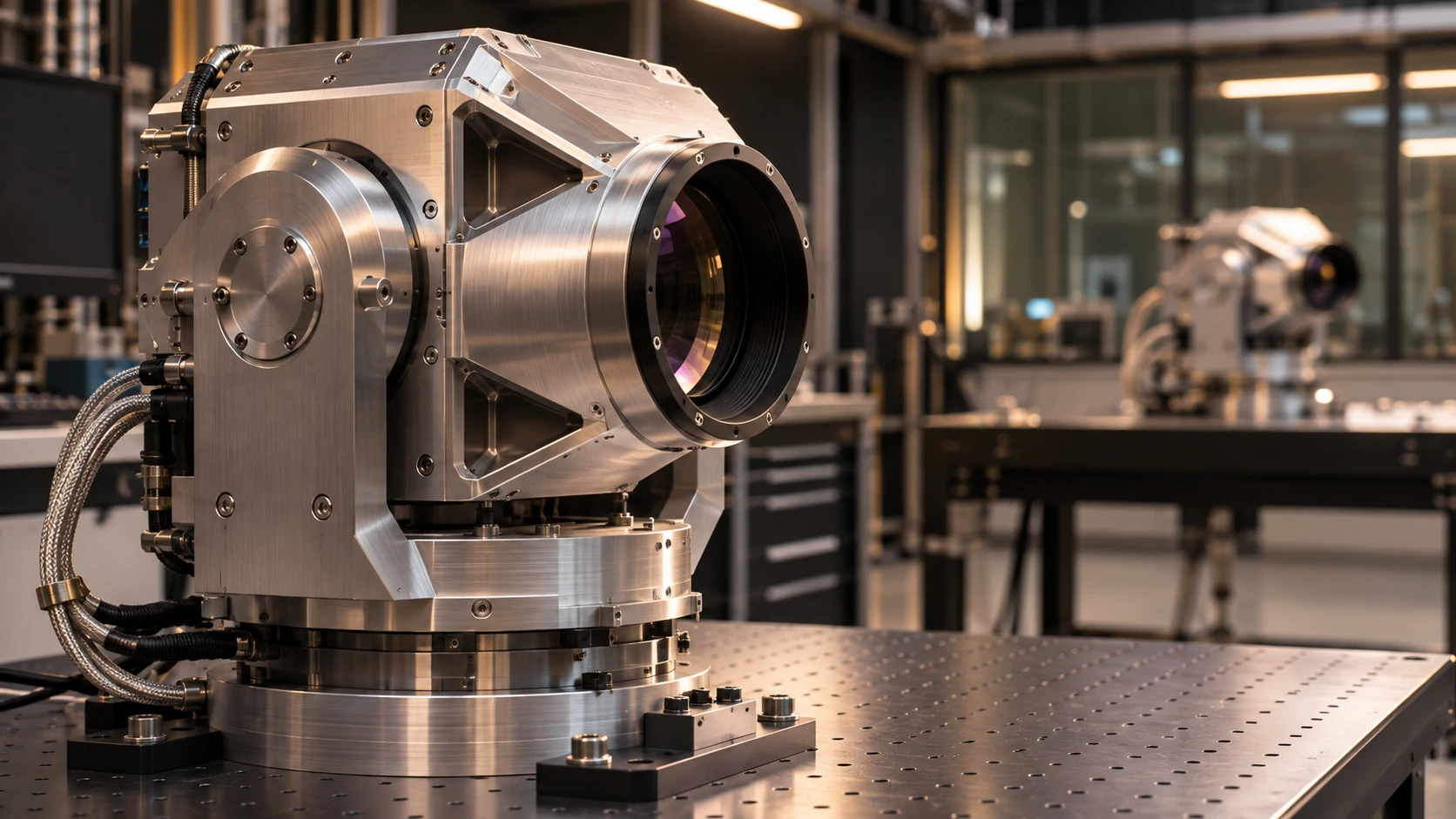
Plaser is a communications terminal, not a weapon. It sends information using light between spacecraft.
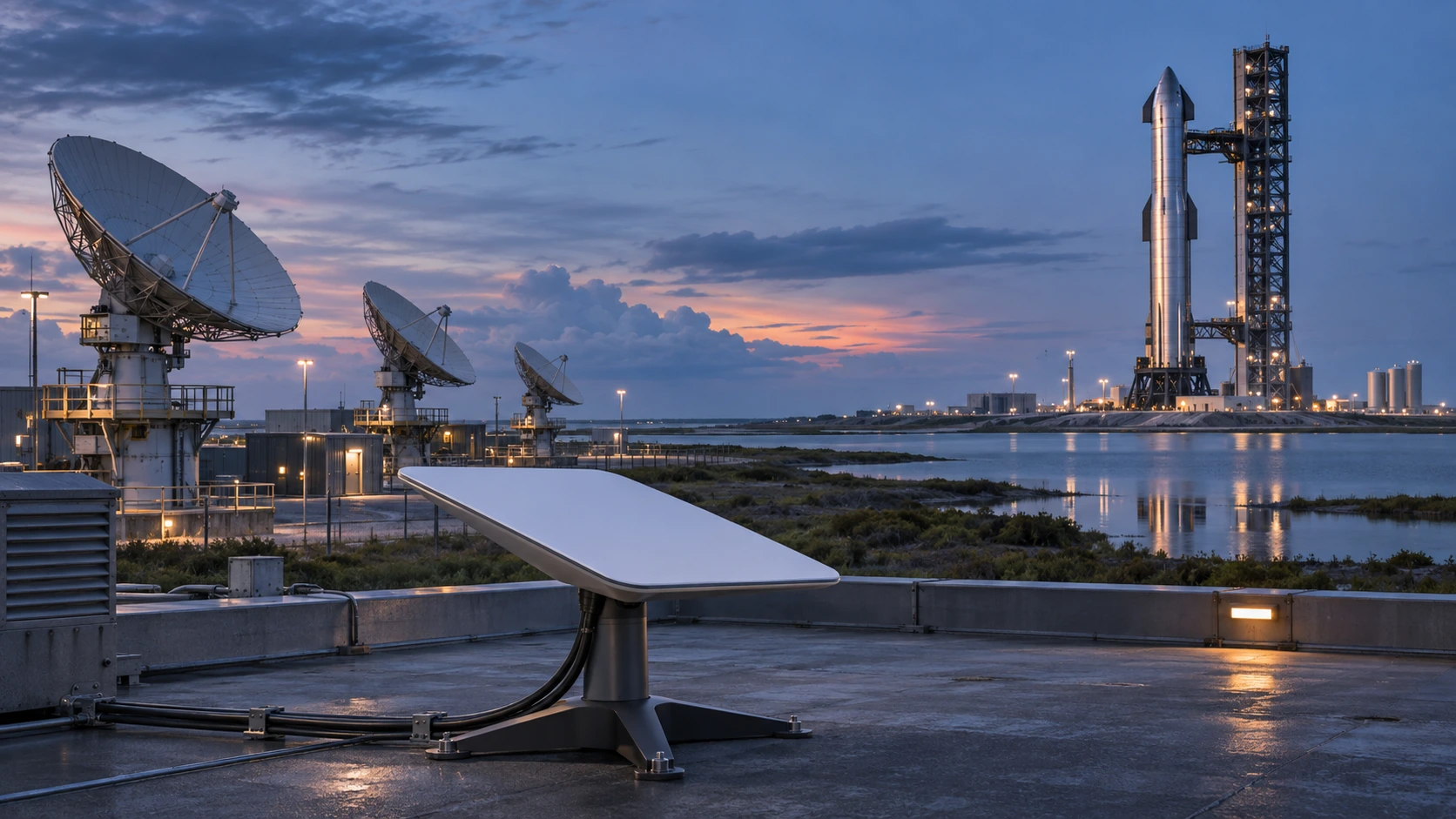
Starlink is SpaceX’s satellite communications network. NASA describes Plug and Plaser as a laser terminal coupled with an avionics bridge, the electronics that connect it to another spacecraft. That gives a satellite built by another company a way to use Starlink’s relay network.2
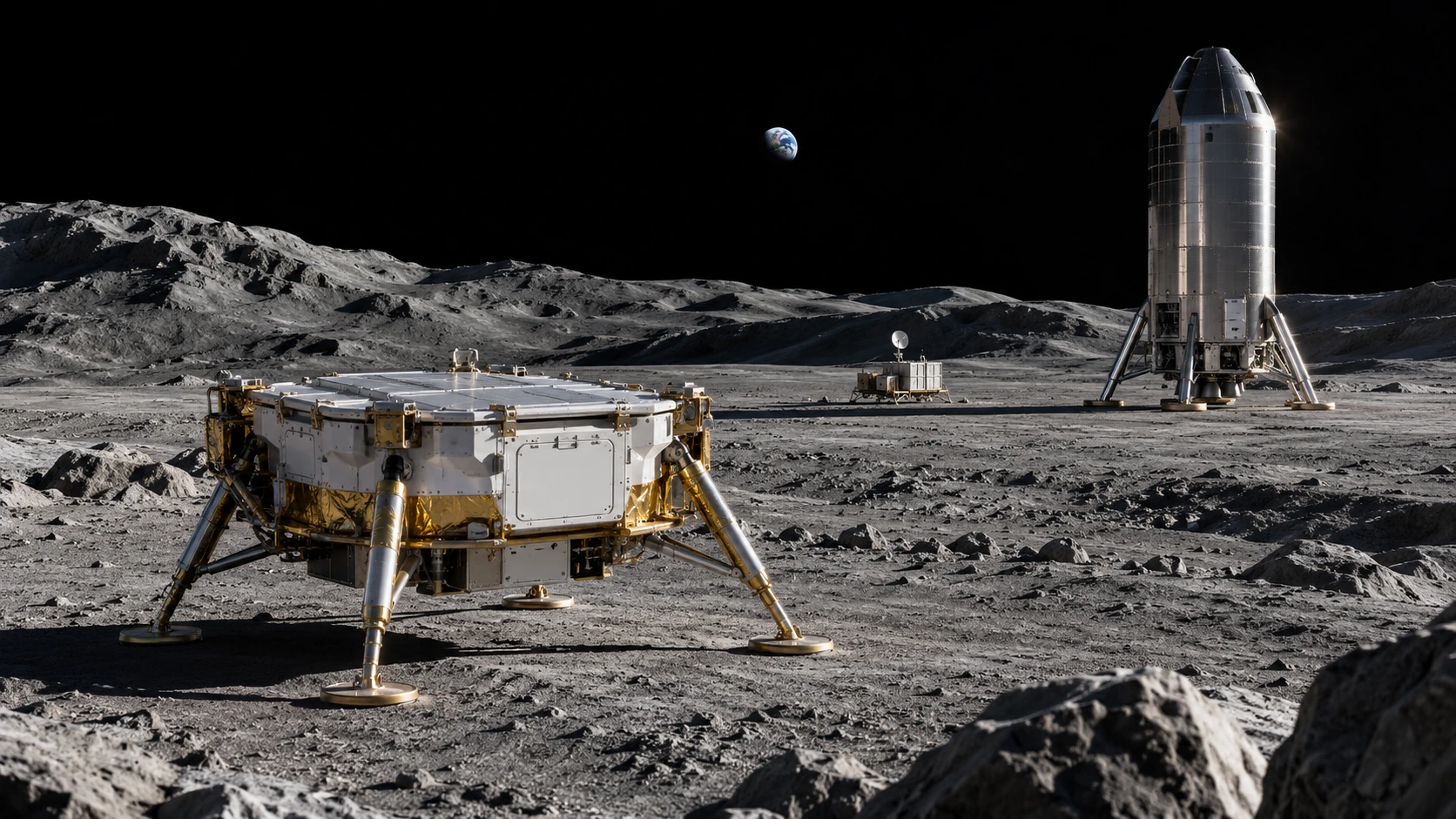
The military problem has two parts: sensors collect information about a missile, and a communications network carries that information onward. The sensing satellite and the relay must be able to establish a link and exchange usable data.
Two devices using lasers does not automatically mean they can communicate. Think of two people with clear telephone connections who speak different languages. A strong signal alone does not solve the problem.
Compatibility has to be demonstrated
The Space Development Agency has its own Optical Communications Terminal standard. It defines requirements intended to let equipment from different suppliers communicate across the agency’s network.3
That makes compatibility an engineering and purchasing question. A common standard gives the customer more choices of supplier. A separate commercial system may offer attractive capabilities, but connecting it can introduce extra hardware, software and testing work.
Space Intel Report’s reporting, republished by Kratos, said SpaceX had not submitted its commercial terminals to the agency’s interoperability testing as of late March 2024.4 That historical finding does not establish their compatibility today. The new award notice does not say whether the study tests compliance with the agency’s standard or uses another method of integration.
The practical difficulty is broader than agreeing on specifications. A February 2025 Government Accountability Office report described the precision needed to point, acquire and track laser links. It also documented how different interpretations of a standard could create interoperability challenges.5 Those are reasons to demand demonstrations, not evidence that this particular study will fail.
A study before a purchasing decision
The contract commits about $9.9 million in research funding, with options that could bring the total to about $12.7 million. Work in Hawthorne, California, and Redmond, Washington, is expected to finish by October 7, 2027.
Providing hardware matters because it gives engineers something concrete to work with. The useful result would be evidence about how a connection performs and what must change to make it usable.
The public notice does not identify a satellite batch, an installation design, a production quantity or a planned follow-on purchase. It also supplies no test thresholds. The study could support a later buying decision; it does not announce one.
SpaceX already has a larger network role
In May, the Space Force announced a separate $2.29 billion agreement with SpaceX for the Space Data Network Backbone. The official announcement calls for an operational prototype by the end of 2027 and says the network will work alongside the Space Development Agency’s Transport Layer.6
That makes the connection question commercially meaningful. SpaceX is already being paid to build communications capacity. Equipment that lets more spacecraft use such networks could create additional business, if customers choose it and it works economically.
That is the opportunity, not a revenue forecast. The November study does not identify itself as a contract to connect Plaser to that backbone, and the May announcement does not name Plaser. Treating the two awards as one confirmed integration program would go beyond those documents.
The operator’s tradeoff is straightforward: reusing a commercial technology can save development work, but adapting it may create new testing and maintenance obligations. Whether SpaceX gains a repeatable product or a costly custom project depends on how much adaptation each customer needs.
Watch for a working connection
The next useful evidence is a defined integration approach, a demonstrated exchange of data and a customer decision about operational use. A follow-on order with quantities would make the commercial opportunity more concrete. Extensive redesign or no subsequent adoption would weaken it.
For now, the award buys a closer look at whether SpaceX’s laser technology can do a military customer’s job. The important result will be a connection that works reliably enough to buy again.
This article reflects Dalton Skach’s views as of November 11, 2026. It provides general research and does not offer personalized investment advice or recommend buying, selling, or holding a security. As of November 8, 2026, Dalton owns shares in SpaceX. Editorial Standards & Disclosures · Terms of Use
Sources and calculations
- Department of War, Contracts for November 10, 2026. Air Force section, Space Exploration Technologies Corp. paragraph. Awarded November 9; announced November 10. Contract FA240127C0001. Base and obligated funding $9,921,992; maximum with options $12,666,379; difference $2,744,387. Expected completion October 7, 2027. Direct official page retrieved through Firecrawl after the initial browser fetch returned 403. ↩
- NASA, SpaceX Communications Services Project fact sheet. Page 1, Vision and SpaceX description. July 2024 file location. Supports third-party spacecraft connection, terminal and avionics bridge, and relay service purpose. Historical program description, not proof of the November 2026 study outcome. ↩
- Space Development Agency, Resources. Standards, Optical Communications Terminal versions 3.2.0 and 4.0.0. Retrieved November 11, 2026. Defines interoperability purpose; does not establish Plaser compliance. ↩
- Space Intel Report, republished by Kratos: Starlink terminals and SDA interoperability. Article discusses the March 2024 Satellite conference and states testing status as of late March. Used only as historical reporting. The current Defence Blog article, November 11, 2026, links to it; neither establishes present-day incompatibility through test results. ↩
- GAO-25-106838, Laser Communications. Published February 26, 2025. Background, pointing/acquisition/tracking discussion and Appendix II on the OCT standard. Used for engineering mechanisms and historical interpretation challenges, not a claim about current operational readiness. ↩
- Space Systems Command, Space Data Network Backbone announcement. Published May 26, 2026. Award paragraph, prototype deadline paragraph and final architecture discussion: $2.29 billion fixed-price OTA agreement delivery order, prototype by end 2027, working alongside SDA Transport Layer. Retrieved directly through Firecrawl. Does not name Plaser. ↩
Research cutoff: November 11, 2026. Space Exploration Technologies Corp. is the named awardee. No stock ticker, securities filing or accession is relied upon in this contract analysis. Amounts are rounded to one decimal million in prose. Obligations are committed funds, not evidence of cash payment.
The commercial opportunity, customer tradeoffs and evidence to watch are BTF analysis. No forecast, production selection or guaranteed network connection is asserted. Golden Dome attribution and claims that Plaser currently cannot communicate with specific military terminals are omitted because the primary records reviewed do not establish them.
Dalton’s standing SpaceX ownership disclosure was confirmed November 8, 2026 and remains applicable until changed. Artwork is original AI-generated conceptual photography and sculpted illustration, not documentary evidence or engineering drawings. Prompts and source captures are retained with the draft.
Go deeper: 51 Percent
How could optical links help Starlink turn satellite capacity into a larger network?