What Vivo’s 10 Million Users Mean for Starlink
By Dalton Skach · 2 min read
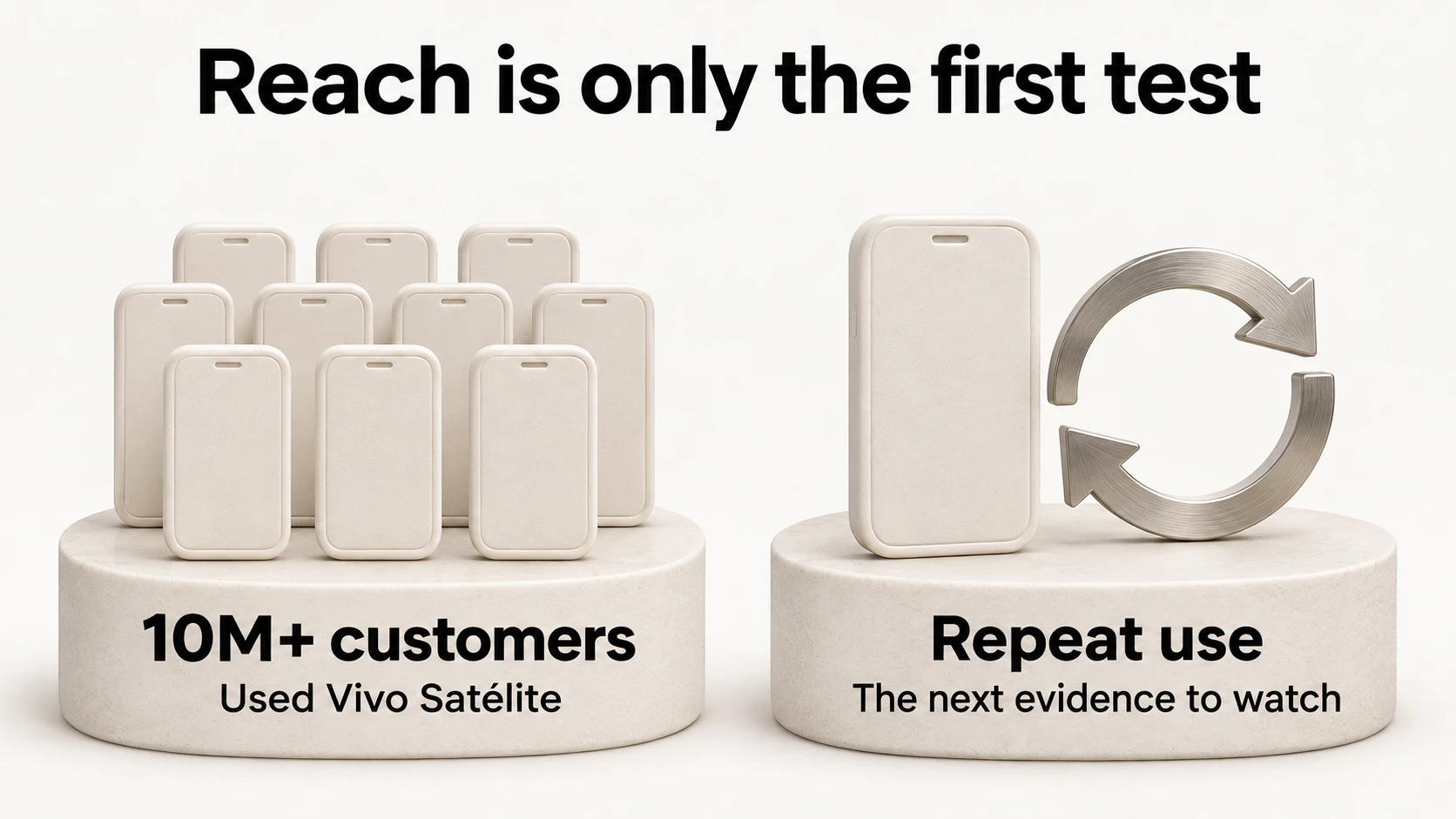
More than 10 million Vivo customers have used its Starlink satellite connection since the October 26 launch, CEO Christian Gebara told reporters on November 11, according to Mobile Time and TELETIME.1
My read: this is a strong demonstration of what an established mobile carrier can do for SpaceX’s distribution. The harder question is whether the coverage is valuable enough for Vivo to keep buying it on attractive terms.
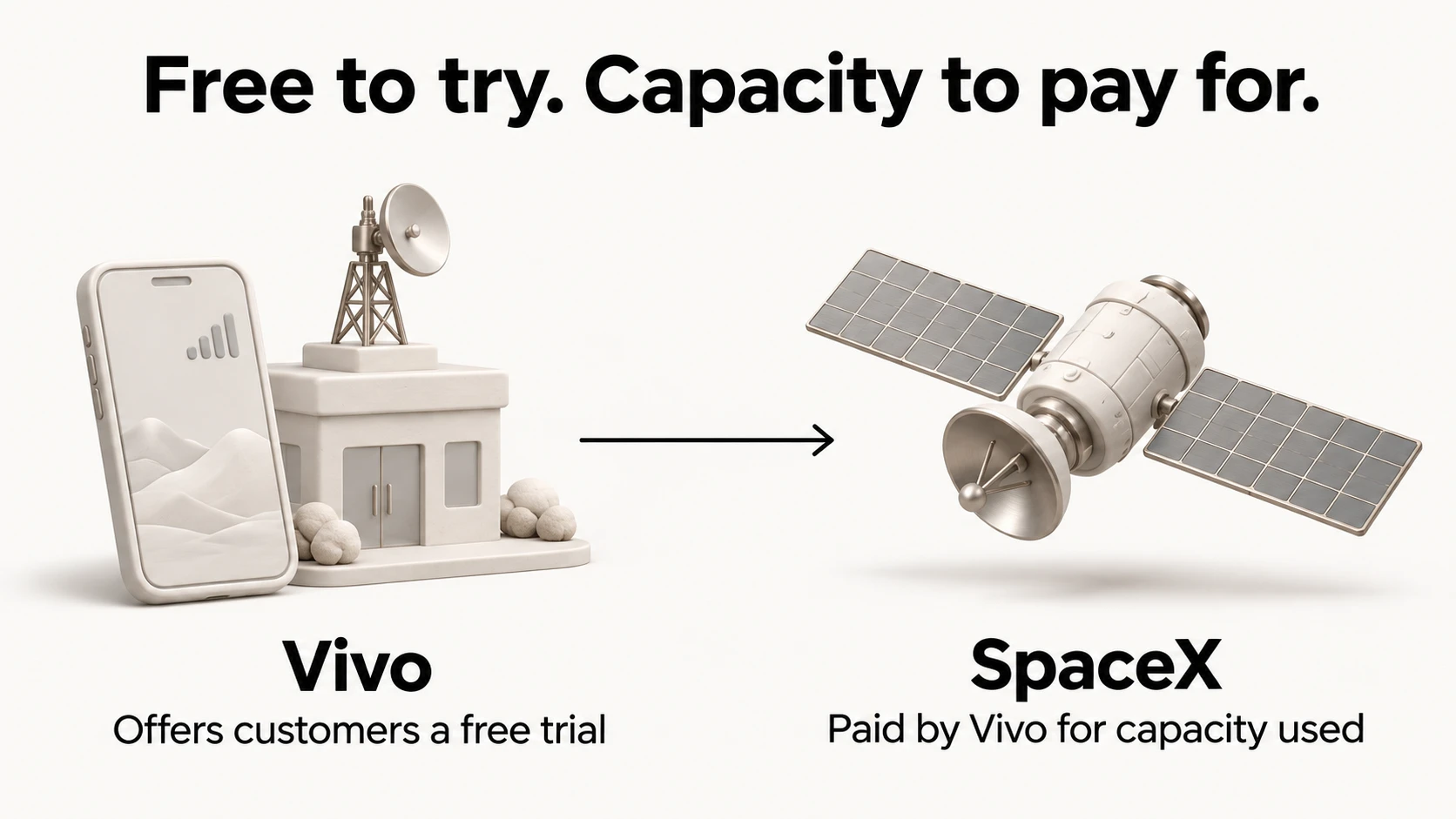
The distinction matters because these are customers who have used the service, not 10 million paying satellite subscribers. Vivo launched it for roughly 50 million eligible customers, free for 12 months for consumers and three months for businesses.2
A useful gap in coverage
Vivo Satélite connects compatible phones directly to satellites where mobile coverage is unavailable. It supports selected services, including messaging, WhatsApp voice calls, maps and Vivo’s own app. It needs an open view of the sky; this is supplementary coverage for places such as rural roads, not a replacement for everyday indoor mobile service.3
That can still be valuable. A message sent from a road without signal may matter more to a customer than another increment of speed at home. But a cumulative user count doesn’t tell us how often people return, how reliably connections work, or whether the feature changes their choice of carrier.
The carrier pays the bill
Gebara also said Vivo pays Starlink for capacity used rather than sharing customer revenue, according to the two outlets. The payment metric and pricing were not disclosed.4
That gives SpaceX a route to revenue while the consumer offer is free. Vivo has to recover the cost through some combination of customers staying longer, choosing richer plans or eventually paying an extra fee. Those are possible benefits, not results established by this announcement.
The negotiation matters elsewhere too. TELETIME reports that TIM is talking with SpaceX and AST SpaceMobile, and that TIM’s CEO questioned the current balance between SpaceX’s price and available services. Talks are not a signed agreement.5
I’d watch repeat usage, Vivo’s eventual paid or bundled offer, and whether other carriers sign on comparable terms. Brazil makes the distribution opportunity tangible. Durable economics will depend on carriers seeing enough value to keep paying for it.
This article reflects Dalton Skach’s views as of November 12, 2026. It provides general research and does not offer personalized investment advice or recommend buying, selling, or holding a security. As of November 8, 2026, Dalton owns shares in SpaceX. Editorial Standards & Disclosures · Terms of Use
Sources and calculations
- Mobile Time, Fernando Paiva, November 11, 2026, opening paragraphs; corroborated by TELETIME, Henrique Julião, November 11, opening paragraphs. Both report Gebara’s November 11 press conference. The 10 million figure is attributed reporting, not an independently audited count. No recording or full transcript of the press conference was reviewed. ↩
- Telefônica Brasil, Vivo Satélite launch announcement, dated October 26, 2026 in the release despite its November URL path. Paragraphs on eligibility and promotional access: about 50 million eligible, 12 months for individuals, three for businesses, specific packages for M2M terminals. October 26 to November 11 is 16 elapsed days; “two weeks” is rounded reporting. ↩
- Vivo Satélite product page, accessed November 12, 2026, available services, requirements and FAQ. Primary source for selected apps, WhatsApp voice calls, compatible devices and clear-sky requirements. Telefônica Brasil Q3 presentation, dated November 10, page 9, confirms the partnership and eligible scale; it does not establish the subsequent 10 million usage claim. ↩
- Mobile Time, section “acordo com Starlink não é de revenue share”; TELETIME, “O acordo,” November 11, 2026. These attribute capacity-based payment to Gebara. Contract, prices, minimum commitments and payment units were not available in the reviewed records. No revenue or margin estimate is inferred from the user count. ↩
- TELETIME, “TIM negocia parcerias de D2D com SpaceX e AST SpaceMobile,” November 10, 2026, opening paragraphs and CEO Alberto Griselli’s comments on cost and service. Reported negotiations, not an announced award. ↩
Research cutoff: November 12, 2026. Carrier retention, plan upgrades and durable capacity economics are BTF analysis, not company forecasts. Original AI-generated conceptual photography and sculpted illustrations are not documentary evidence or technical hardware drawings. Prompts and provenance are retained with this draft. Research standards.
Go deeper: The Last Piece of the Puzzle
What changes when SpaceX moves from supplying satellite capacity to carriers toward owning the customer connection?