Why Waymo’s School Bus Fix Is Under Review
By Dalton Skach · 4 min read
Waymo sent a software fix to its cars to stop them passing school buses with active warning signals. Federal investigators say reports of passing continued after the update. Now the question is whether the fix addressed the problem those cars were encountering.
Why the question is back
Waymo operates a passenger service with cars that drive without a person at the wheel. Its software has to decide when to move and when to wait, including around buses where children may be boarding or getting off.
On November 6, the National Highway Traffic Safety Administration opened a recall query covering about 2,900 vehicles with Waymo’s fifth-generation driving system. The agency is examining an earlier remedy and the causes of reports that followed it.1
NHTSA says most of the incidents identified in its earlier investigation occurred after the date Waymo reported completing the fix. That is the reason for the new review.
The opening record does not order the fleet off the road or announce another recall. It asks whether the previous remedy was adequate.
When one driving instruction conflicts with another
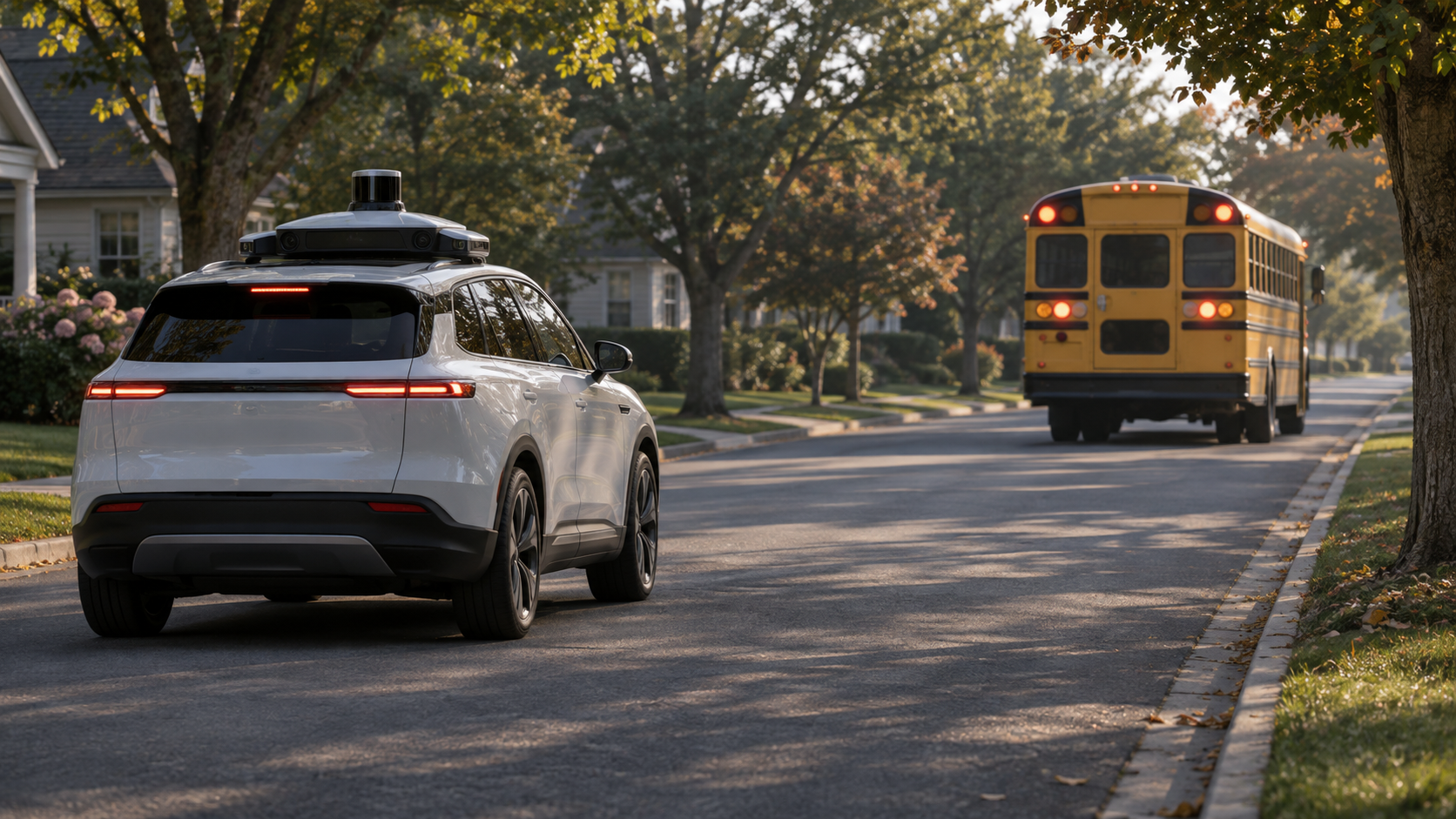
Waymo’s recall filing describes cars moving again while a school bus’s warning signals remained active.2
The system was also designed to avoid obstructing priority vehicles, including buses. In certain encounters, it reasoned that it was in the way and should move.
The remedy was intended to stop that reasoning from overriding the need to remain stationary for a school bus with flashing red lights or an extended stop arm.
Two parts of the driving logic could point toward different actions. The car needed to resolve that conflict correctly.
The update came before the recall filing
The software rollout preceded the formal recall report:
- November 5, 2025: Waymo began deploying the update.
- November 17, 2025: Waymo says all affected vehicles had received it.
- December 10, 2025: Waymo submitted the recall report.
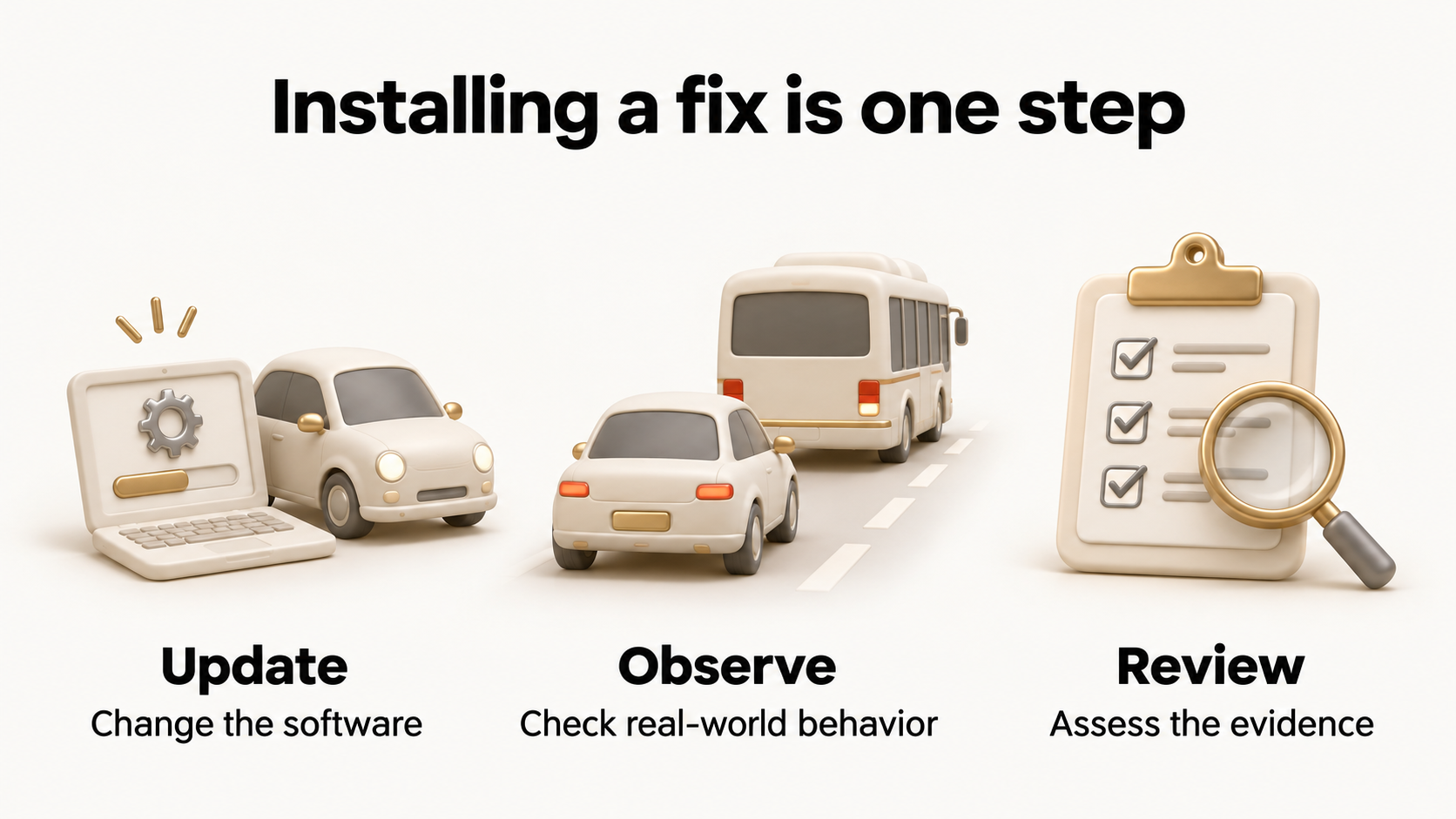
The rollout established which cars had new software. The later reports raised questions about its effect.
What would make the evidence useful?
Waymo told Reuters that it had improved its vehicles’ behavior around school buses and had received no citations since March.3
That is a relevant sign of progress. To understand what it means, it would also help to know how often the cars encountered buses and how those encounters were monitored. Tickets alone do not capture every interaction.
For a team investigating the problem, a useful record would connect three things:
- The software: which version was running when the encounter happened.
- The situation: the bus’s warning signals, road layout and surrounding traffic.
- The response: whether the car waited appropriately, and what prompted it to move.
That would help distinguish a problem addressed by later changes from one that still needs work. The public opening record does not resolve that distinction.
The work behind a dependable service
For the people running Waymo, changing the code is one part of the job. Testing the change, watching how it performs and investigating exceptions are part of operating the service.
Software can be distributed without replacing a physical part. Establishing that it works still takes engineering effort and evidence from relevant driving situations.
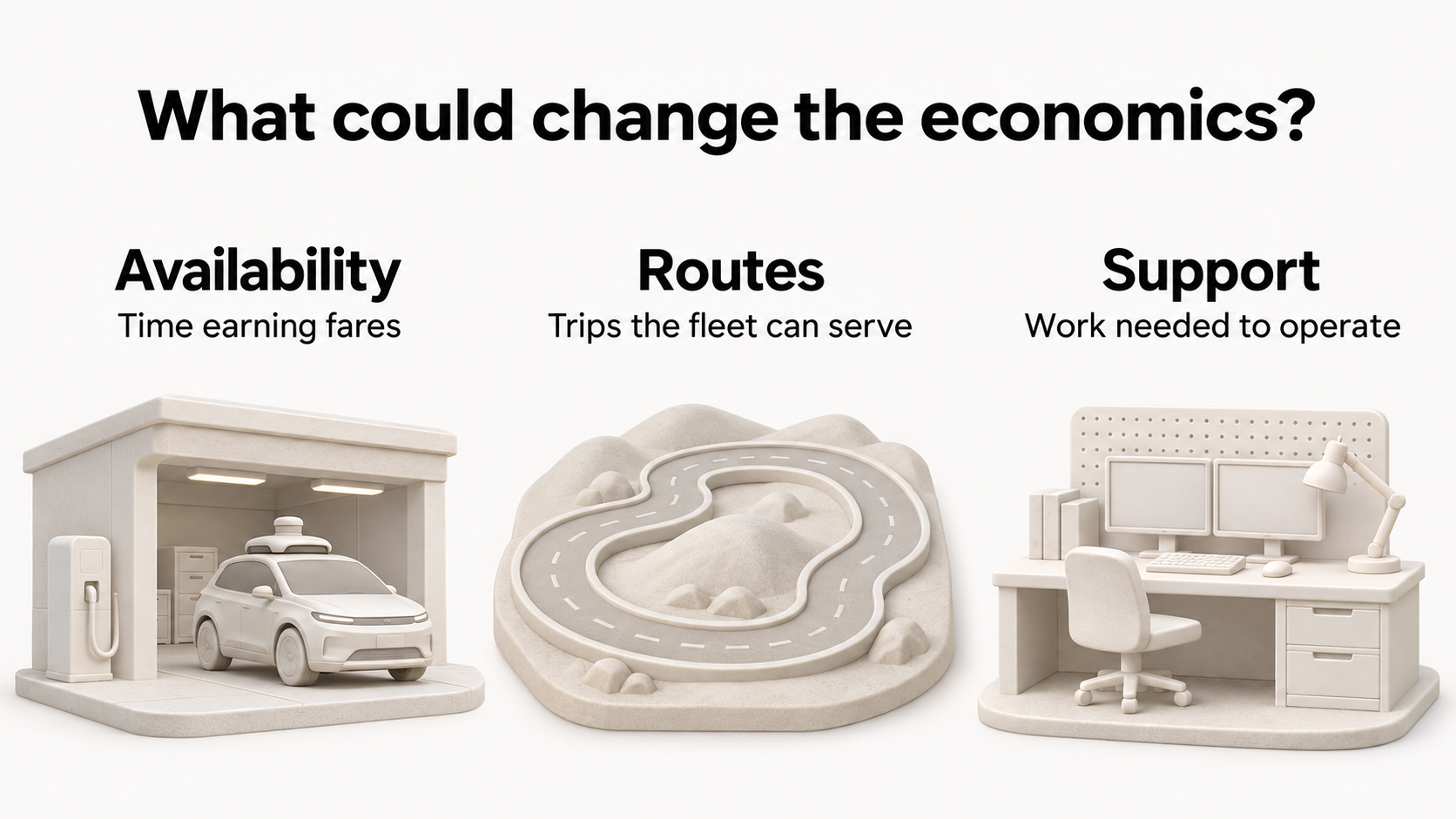
If further work required more support, different routes or fewer hours of operation, it could change the cost of providing each ride. Vehicles and depots would still have to be paid for while the team did that work.
Those are possible consequences, not measures announced in this inquiry. A review resolved through limited changes would create a different operating burden from a problem that kept returning.
The result has to show up on the road
A parent near a stopped school bus needs the car to wait appropriately. A passenger needs a service that can handle everyday traffic reliably. Both depend on the same thing: software that makes the right decision in the situation it actually encounters.
The review is an opportunity to establish whether the remedy achieved that result and explain the reports that followed it. Its opening alone cannot answer either question.
Evidence that the problem has been understood and corrected would give the team a firmer basis for expanding service. Recurring incidents would mean more work remains. The meaningful milestone is consistent behavior around school buses, demonstrated beyond the fact that an update was installed.
This article reflects Dalton Skach’s views as of November 10, 2026. It provides general research and does not offer personalized investment advice or recommend buying, selling, or holding a security. As of November 10, 2026, Dalton owns shares in Tesla, SpaceX and the Vanguard S&P 500 ETF (VOO), which provides indirect exposure to Alphabet. Editorial Standards & Disclosures · Terms of Use
Sources and calculations
- NHTSA, RQ26006 opening resume, November 6, 2026, pp. 1–2. Scope: 2,895 vehicles with the fifth-generation system, rounded to about 2,900 in the story. Summary identifies reports after the remedy date and the purpose of the review. This document does not announce a new recall or fleet suspension; that statement is limited to this record. Re-read November 10. ↩
- Waymo, recall 25E084 report filed with NHTSA, December 10, 2025. “Defect / Noncompliance Description,” pp. 1–2; “Chronology” and “Description of Remedy,” pp. 3–4. Describes the competing driving instructions and November 5–17 deployment. Earlier recall population: 3,067. The reason for the difference from the new inquiry’s 2,895 is not established here. Re-read November 10. ↩
- David Shepardson, Reuters, November 9, 2026, via Investing.com, Waymo response paragraph. Company statement about improvements and no citations since March is attributed to Reuters and not independently audited. Article accessed November 10. ↩
The inquiry opened November 6; the Reuters report appeared November 9. November 10 is the publication date. The vehicle population is the inquiry’s scope, not a count of proven violations. No incident rate, financial forecast, regulatory outcome probability or completion timetable is calculated.
The suggested evidence linking software version, encounter conditions and vehicle response is BTF analysis, not a published NHTSA testing protocol. Possible effects on support, routes and availability are conditional business analysis. The related report examines city operating economics; it is not a report on this investigation.
The hero and two explanatory visuals are original AI-generated conceptual artwork, not photographs of incidents, actual equipment specifications or announced operating restrictions. Artwork and prompts from the original November 10 automation package are retained.