Tesla Robotaxi 24/7: Can the Night Shift Pay?
By Dalton Skach · 2 min read
Tesla says its Robotaxi service now operates around the clock in every city where it is available. The company announced the change late on November 11, opening more hours in which its fleet can carry paying passengers.1
My read: this is a useful operating expansion, but its value depends on the fares those extra hours bring in. A longer service day can spread the cost of owning a vehicle across more trips. It can also leave more cars waiting for customers while the support operation stays open.
Tesla’s announcement does not disclose how many vehicles run overnight, their staffing arrangements or the economics of those trips. It establishes service hours, not continuous use of every car.
The opportunity is in the quieter hours
A passenger finishing a late shift has a reason to value a service that remains available after midnight. Consistent availability could also make Robotaxi a more dependable choice for someone who wants to use the same service at different times of day.
For the operator, the attraction is earning more from vehicles it already owns. If extra trips produce enough revenue after their additional costs, the same fleet can contribute more toward the business’s fixed expenses.
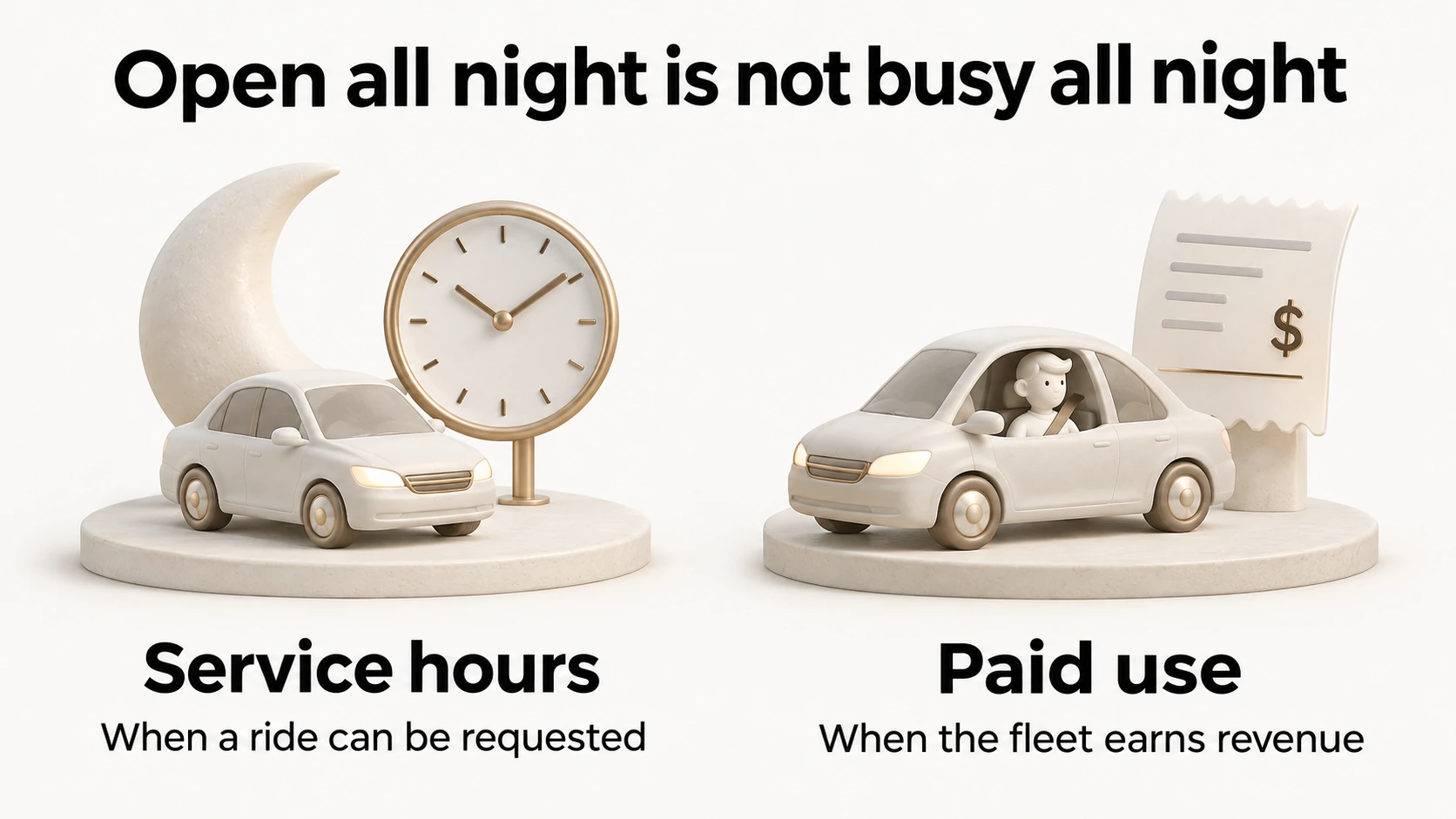
But demand has to be close enough to the available cars. Long empty journeys to collect scattered passengers would consume time and energy without collecting a fare for that part of the trip.
The fleet still needs a night shift
Vehicles need charging, cleaning and maintenance. Passengers may need help, and a vehicle may need someone to respond when a trip cannot continue normally. Keeping a booking service open does not make that work disappear.
The operating challenge is to rotate vehicles through that work while keeping enough available where customers want them. These are the demands of running a fleet, not a description of an overnight staffing plan Tesla has disclosed.
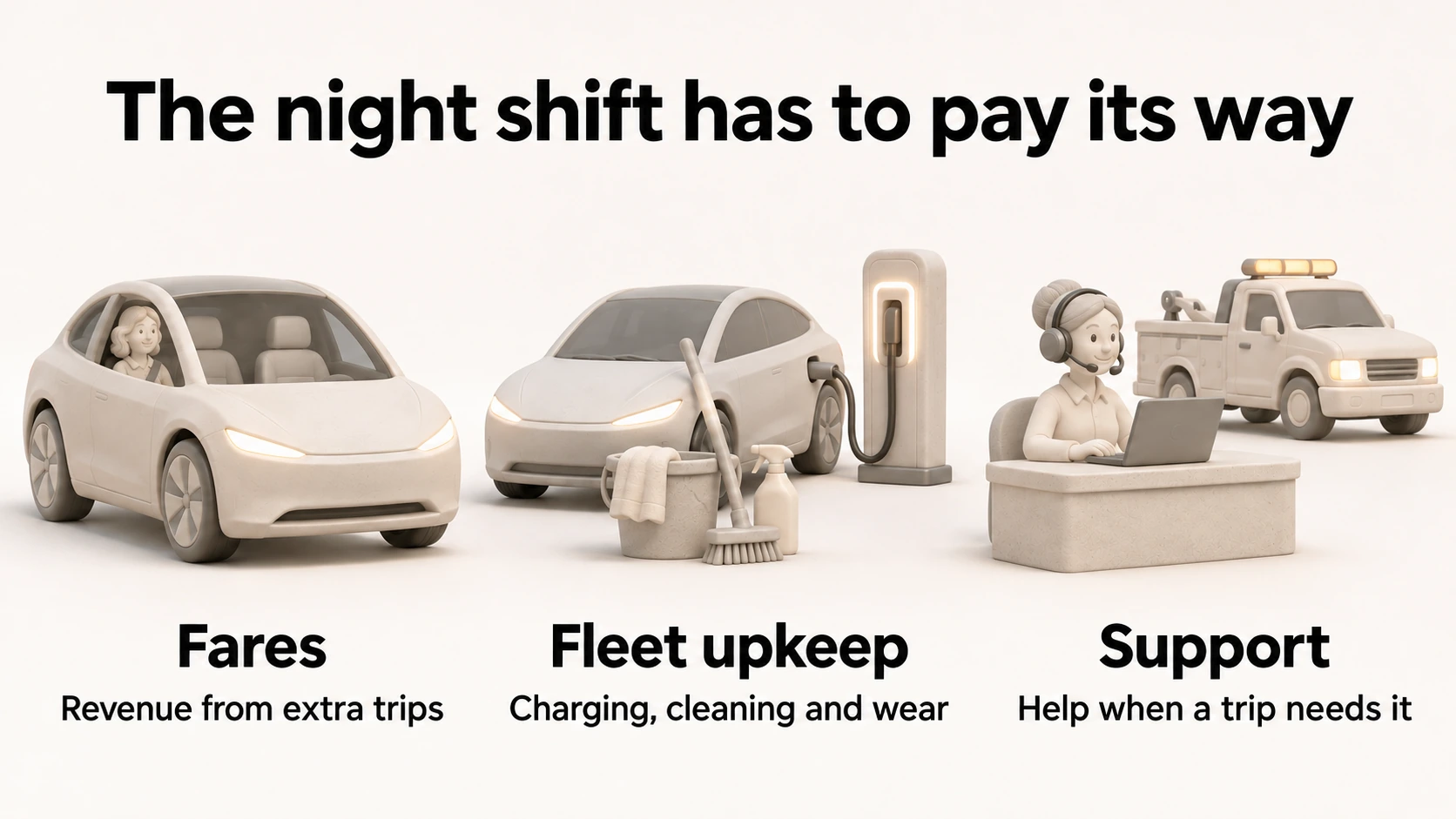
I would judge this expansion by overnight paid trips per available vehicle, empty miles, customer wait times and the extra cost of keeping the service running. More fares with manageable support costs would strengthen the case. Long waits alongside lightly used cars would suggest that availability has expanded faster than an efficient operation.
Twenty-four-hour service gives Tesla more chances to earn. The next meaningful milestone is showing that the night shift pays its way.
This article reflects Dalton Skach’s views as of November 12, 2026. It provides general research and does not offer personalized investment advice or recommend buying, selling, or holding a security. As of November 8, 2026, Dalton owns shares in Tesla and SpaceX. Editorial Standards & Disclosures · Terms of Use
Sources and calculations
- Tesla Robotaxi, original X announcement. Posted November 12, 2026 at 04:31:12 UTC, equivalent to November 11 at 11:31:12 p.m. Eastern. Original text retrieved November 12: “Robotaxi now runs 24/7” and “Every city we're available in.” This is a company statement about service availability, not independent confirmation of overnight fulfilment. ↩
Commercial consequences and the suggested operating measures are BTF analysis. No trip-volume, profit, staffing, safety-performance or vehicle-count estimate is calculated. The separate research alert about a five-million-mile counter is not used as evidence of paid trips or confirmed operating results.
The related report, Cybercab in 2027, examines deployment possibilities and return scenarios across U.S. states. Its utilization framework is relevant, but it does not establish the current Robotaxi fleet’s vehicle mix, overnight costs or performance.
Original AI-generated photographic hero and two sculpted-model explanatory images were created November 12, 2026. They depict imagined settings and analytical categories, not actual Tesla vehicles, facilities or staffing arrangements. Prompts and provenance are retained with the private review package.