Starlink’s Rooftop Radio Has to Beat the Cost of a Cell Site
By Dalton Skach · 3 min read
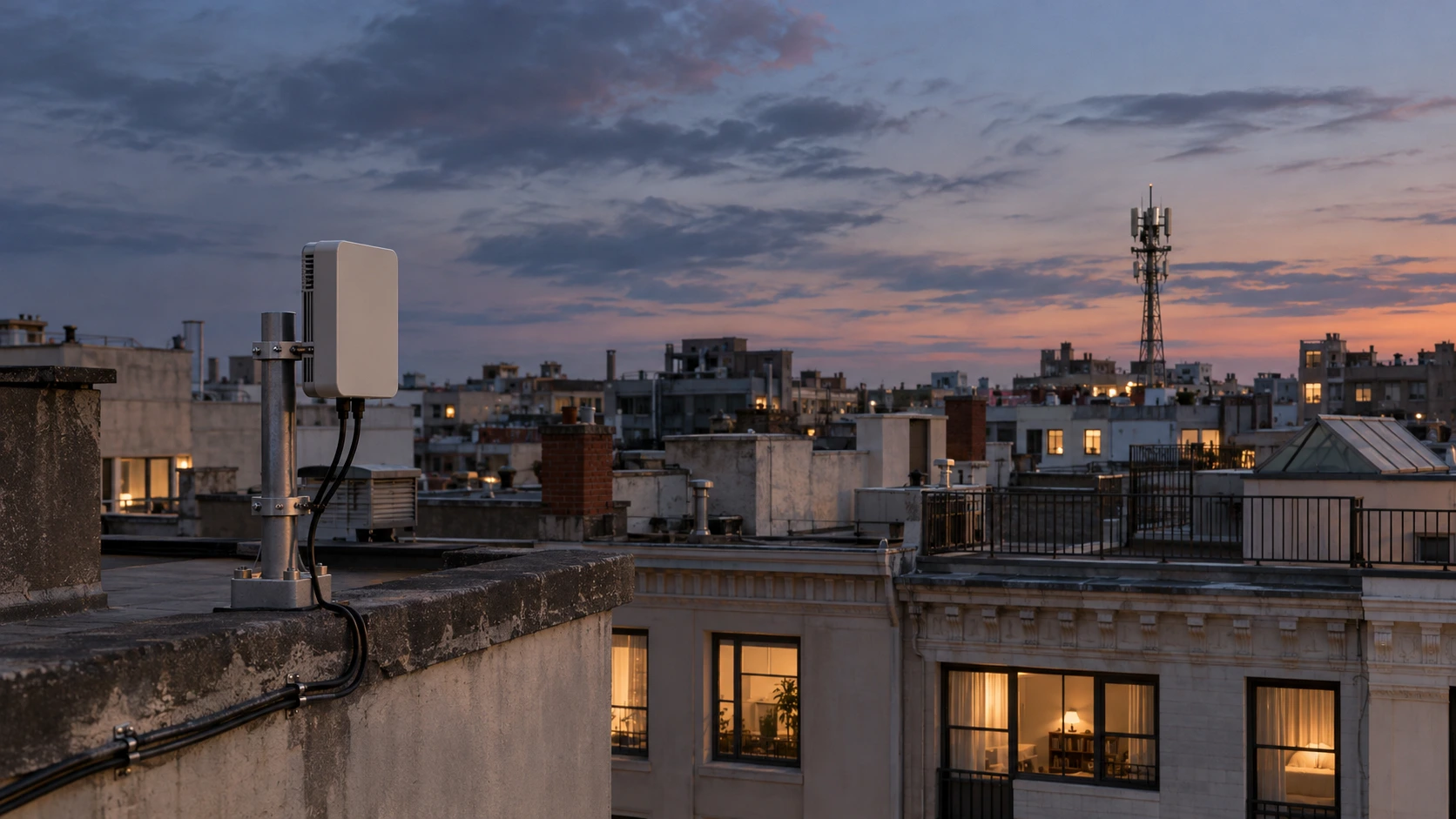
Elon Musk said at the November 18 DealBook Summit that SpaceX has designed a rooftop cellular radio to help Starlink Mobile reach phones indoors. He tentatively expects production in 2027.1
My read: this makes SpaceX’s mobile ambitions more concrete. But the breakthrough to watch is the cost of a working site, not the size of the box. A cheap radio matters only if it can be installed, connected and maintained cheaply enough to serve paying customers.
The ground network was already coming
On November 4, Qualcomm announced that its equipment platforms would support Starlink Mobile’s nationwide terrestrial 5G network, with rollout planned from 2027 across tens of thousands of sites over a multiyear agreement. That is stronger evidence of a substantial ground network than the rooftop concept alone.2
The two announcements suggest complementary layers: satellites for broad reach, larger ground sites for local traffic, and smaller rooftop radios aimed at indoor gaps. Their final mix remains undisclosed. The Qualcomm announcement does not identify its equipment as the rooftop device Musk described.
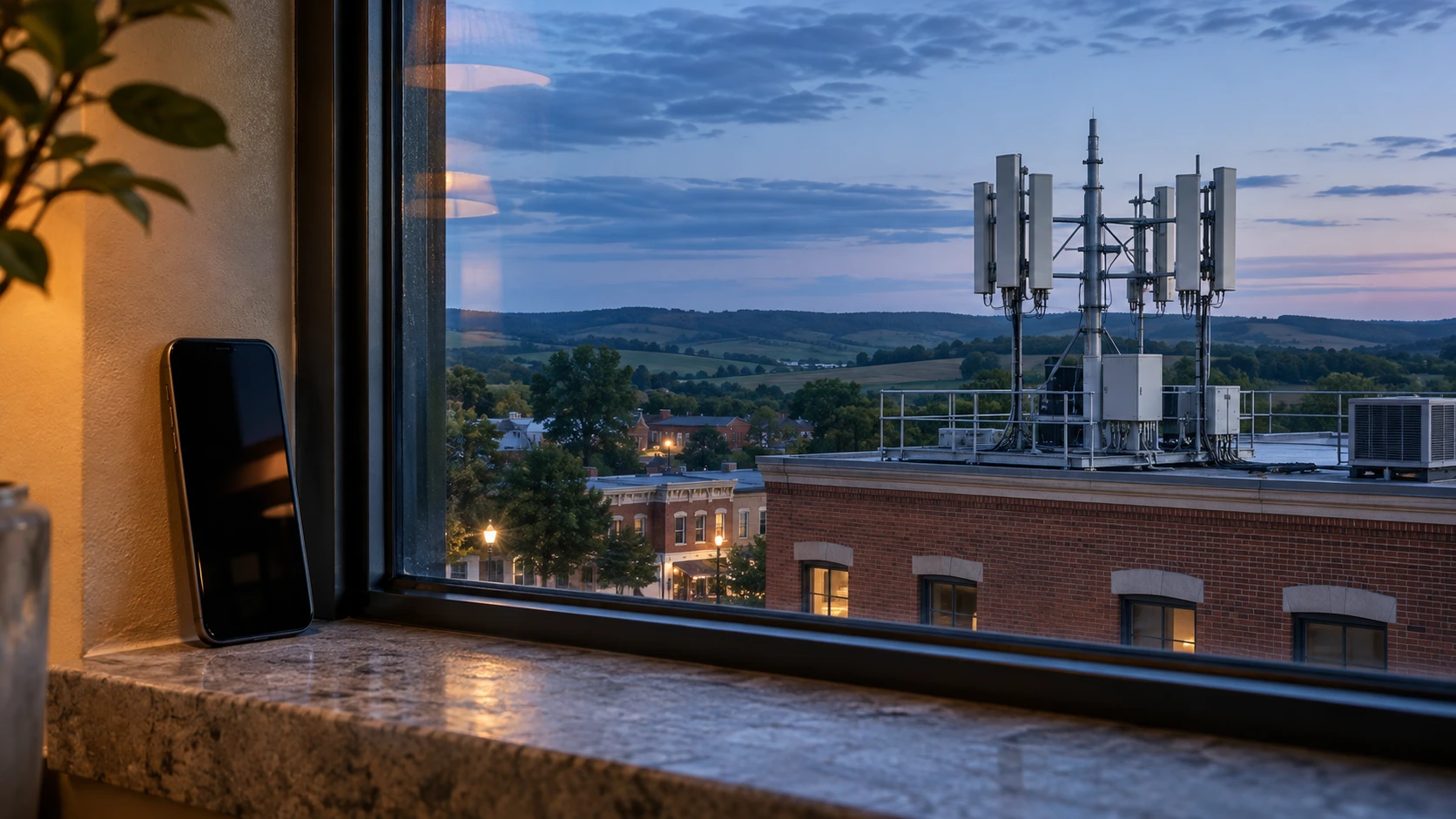
Musk’s explanation is practical: thick roofs can block satellite signals. Putting a cellular radio nearby could help. His suggestion that it might be bundled with a Starlink terminal leaves the connection to the wider network, known as backhaul, unresolved. It does not establish that every rooftop cell would use satellite backhaul.
The spectrum also needs careful wording. Grain announced an agreement to sell SpaceX its 800 MHz portfolio, subject to approval. The FCC’s November 10 notice accepted the transfer applications for review. That notice was not final authorization.3
A smaller tower still needs an operator
Rooftops could offer SpaceX more places to put radios. But each useful location still needs access, power, a reliable network connection and someone responsible when equipment fails. A low manufacturing price would solve only one part of that operating problem.
There is also a difference between reaching a phone and serving a busy building. Indoor signal tests would establish coverage. Performance when many people connect at once would tell us more about capacity and how many sites SpaceX actually needs.
For incumbent carriers, the competitive threat grows if SpaceX can make ordinary indoor service dependable at a lower total cost. The announcements reviewed do not yet provide rooftop pricing, measured performance or a firm commercial launch date.
I would watch the first installation terms, busy-hour indoor results and who pays for power, backhaul and repairs. Those details will show whether the microcell is merely smaller infrastructure or a materially cheaper way to build a phone network.
This article reflects Dalton Skach’s views as of November 21, 2026. It provides general research and does not offer personalized investment advice or recommend buying, selling, or holding a security. As of November 8, 2026, Dalton owns shares in SpaceX. Editorial Standards & Disclosures · Terms of Use
Sources and calculations
- New York Times, DealBook interview with Elon Musk, November 18, 2026, telecom discussion approximately 33:56–36:30. Read through the Elon Musk Archive transcript, telecom answer beginning “Well, I think we’ve got a plan.” The hosted original video was located but not independently played in this review. Transcript describes a design, tentative 2027 production, roofs obstructing signals, possible terminal bundling and dense-area micro sites. These are Musk’s statements, not independently demonstrated performance. ↩
- Qualcomm, SpaceX Selects Qualcomm to Accelerate Starlink Mobile’s Nationwide 5G Network, November 4, 2026, Highlights and High-Capacity 5G Built for Scale. Announces Dragonwing radio/baseband platforms, planned 2027 rollout and tens of thousands of sites over the agreement. It does not identify the rooftop hardware or specify its backhaul. ↩
- Grain Management announcement, October 8, 2026, opening paragraph; FCC DA 26-1218, November 10, 2026, page 1 and footnotes 1–2, WT Docket 26-313. The FCC text was read from BTF’s retained November 10 primary-document capture; a fresh direct retrieval returned an access error. The notice opens review with comments due December 1 and oppositions December 8; it does not grant the transfer. No subsequent grant was identified in the sources reviewed. ↩
Research cutoff: November 21, 2026. Event date: November 18. Network roles, cost categories and competitive implications are BTF analysis. No cost savings, capacity forecast or probability is calculated. The reviewed interview and Qualcomm release do not supply a rooftop price, measured indoor performance or firm commercial launch date.
Artwork: original AI-generated conceptual photography and two sculpted-model illustrations created for this draft on November 21, 2026 using the built-in image-generation tool. They do not depict an actual SpaceX product or installation. Full prompts and original files are retained with the draft.
Holdings: Dalton’s SpaceX ownership follows his standing instruction confirmed November 8, 2026, not a new confirmation.
Go deeper
Build or Buy examines how tower sites, radios and connections to the wider network fit into SpaceX’s choice between building infrastructure and acquiring an existing wireless business.