Can SpaceX Turn Stalled Data Centers Into an Advantage?
By Dalton Skach · 4 min read
A company starts building a data center, then runs into trouble. Could SpaceX buy the unfinished project, get it running and make money sooner than if it started from scratch? That is the opportunity investors are being asked to consider.
A data center is a building filled with computers, along with the electricity and cooling systems needed to keep them running. The powerful chips used for artificial intelligence are expensive. So are the buildings and power connections around them. A project can stall because its owner runs short of money, cannot secure enough electricity or is still waiting for government approval.
On November 9, Stocktwits, citing Investing.com, reported that analysts at the investment firm Stifel saw an opportunity for SpaceX to buy stalled data-center projects with access to power.1 Their idea raises a useful question: which problems could SpaceX solve by taking over, and which would remain?
Why SpaceX would want a data center
SpaceX is best known for rockets and Starlink satellite internet, but it also operates an artificial-intelligence business. That business needs computing equipment and places to run it. The company reported about $90 billion in cash and investments that could be readily sold at the end of September. It also spent roughly $48 billion on buildings, equipment and other long-term assets in the first nine months of the year, while its operations generated about $13 billion in cash.2
Those figures explain both the opportunity and the need for care. SpaceX has money to put to work, but it is already spending heavily. Buying someone else’s unfinished project would need to save enough time or money to justify the additional cost.
The $40 billion deal pays for equipment
SpaceX has also arranged a large equipment-financing commitment. In an October 26 filing, it described a planned deal in which an Apollo-managed entity would buy specialized computing chips, known as GPUs, and related equipment, then lease them to SpaceX. SpaceX would pay for their use over time, with expected principal payments totaling approximately $40 billion.3
At the time of that filing, the deal still had conditions to meet. Closing was expected before year-end, with equipment deliveries expected in the first half of 2027. The arrangement did not give SpaceX $40 billion in cash to spend on buying data-center properties.
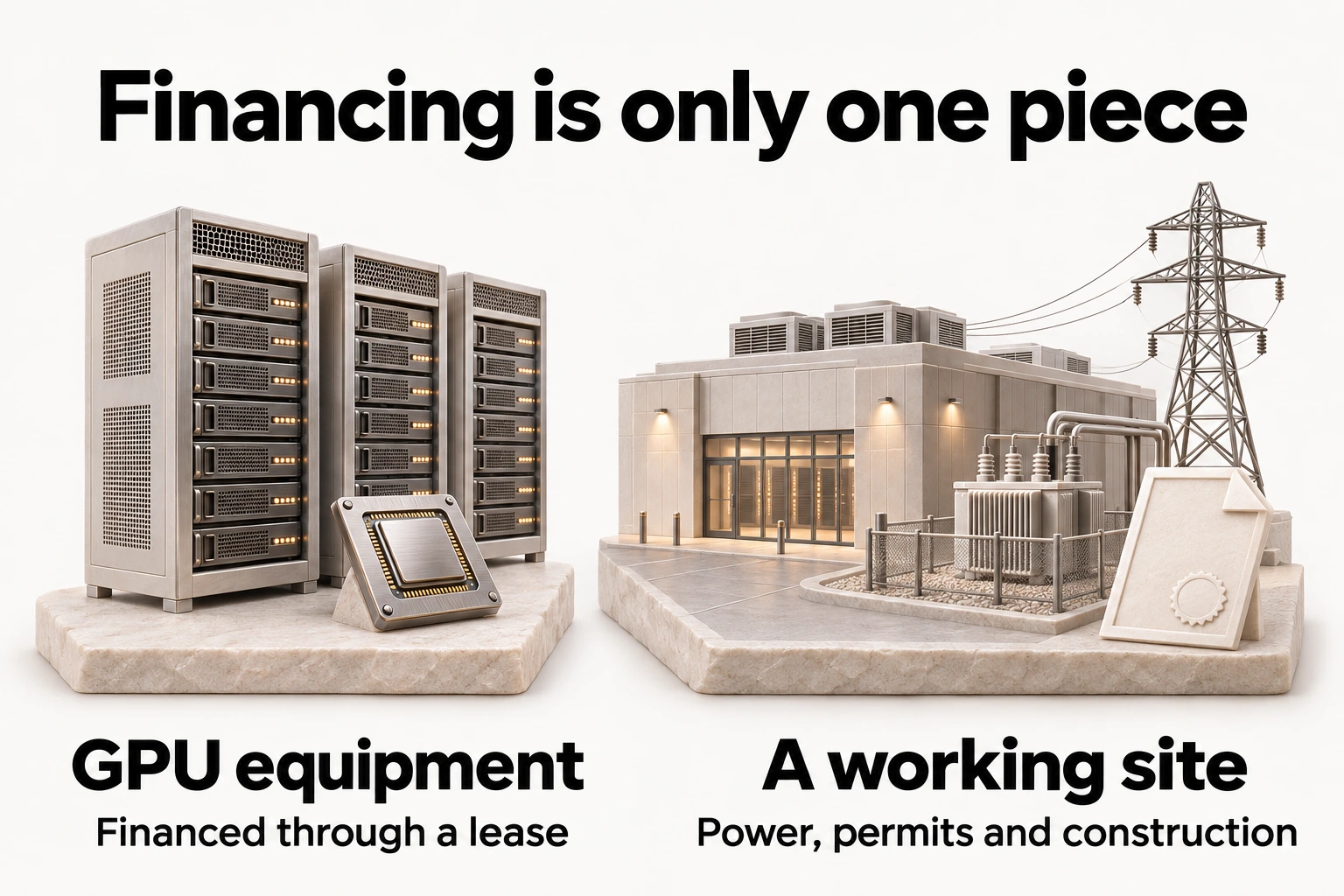
Think of the difference between financing kitchen equipment and opening a restaurant. The equipment matters, but the owner still needs a suitable building, utility connections and permission to operate. A data-center buyer faces the same basic distinction on a much larger scale.
Why a project stopped matters
Texas shows why money may not be enough. In September, Governor Greg Abbott directed the state’s environmental regulator to pause data-center permits while the electricity-grid operator reviewed proposed projects. The directive also addressed electricity costs, water use and effects on nearby communities.4 Governor-elect Gina Hinojosa has called for a pause until lawmakers put new protections in place. That is a policy proposal, so the rules under her administration remain uncertain.5
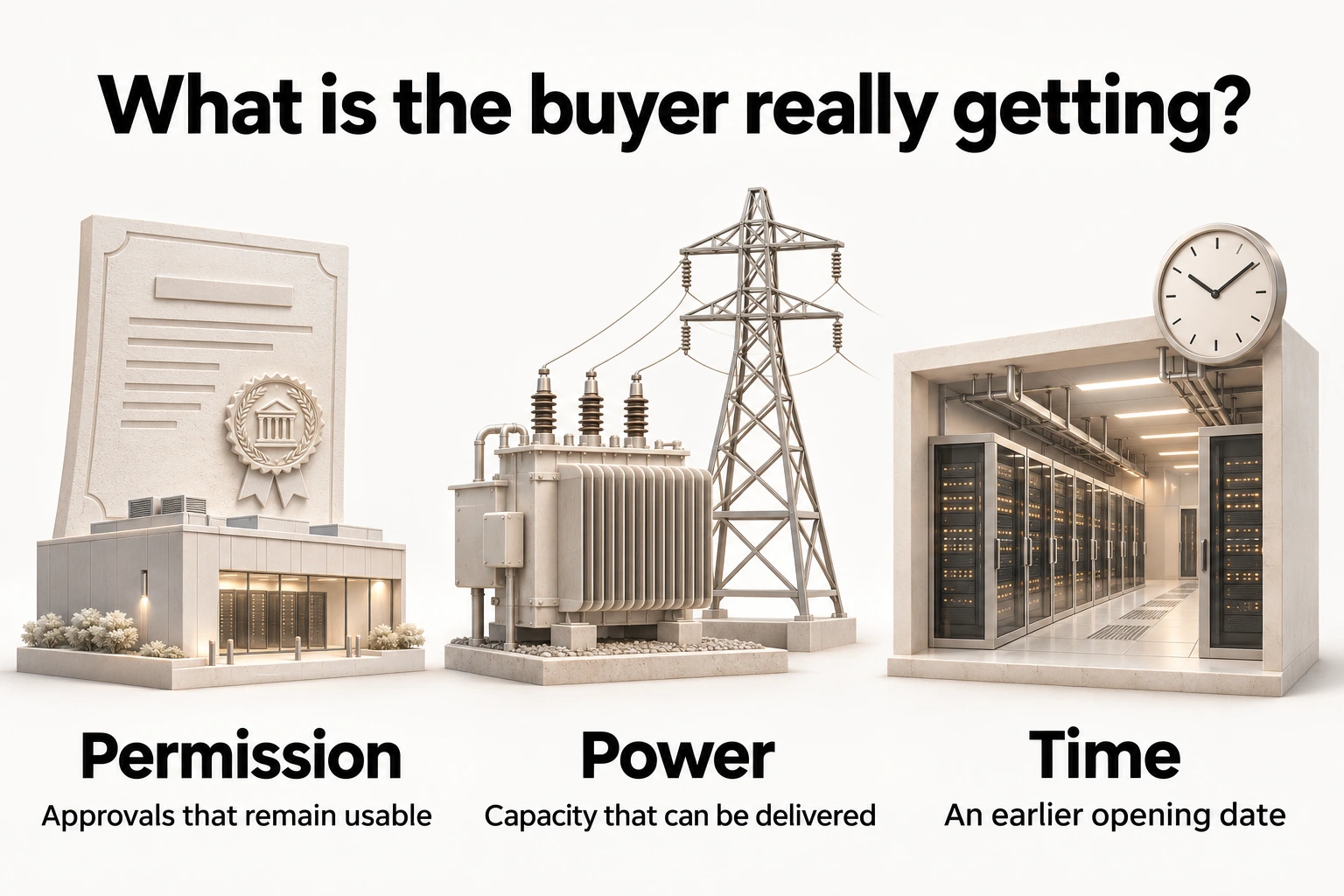
Consider two hypothetical projects. The first has the approvals and power it needs, but its developer cannot afford to finish construction. SpaceX might be able to supply the money and get it open. The second is waiting for permission to connect to the power grid. Buying that project would not, by itself, show that the wait is over.
This is why a low asking price is only the start. Before calling a project a bargain, investors would need to know whether its approvals would still apply after a sale, when electricity could actually reach the site, and how much work remained before customers could use it.
The investor takeaway
Buying a stalled data center could help SpaceX if it gets the company serving customers sooner, at a lower total cost than building a new one. But a cheap unfinished building can become an expensive purchase if its power or approval problems remain.
I would wait for a specific deal before assuming these purchases will increase SpaceX’s earnings. The evidence to look for is straightforward: the purchase price, the cost to finish, a reliable power supply, permission to operate and customers willing to pay. Those details would show whether SpaceX had bought a useful shortcut or taken over someone else’s delay.
This article reflects Dalton Skach’s views as of November 9, 2026. It provides general research and does not offer personalized investment advice or recommend buying, selling, or holding a security. As of November 9, 2026, Dalton owns shares in Tesla and SpaceX and has no holdings in Apollo. Editorial Standards & Disclosures · Terms of Use
Sources and calculations
- Arnab Paul, Stocktwits, November 9, 2026, 7:37 a.m. EST, opening and “Stifel Sees Opportunity Amid Data Center Hurdles.” Reports the acquisition idea, citing Investing.com. BTF has not obtained the original Stifel note and attributes the account accordingly. The supplied October 21 date is not the date of this coverage. ↩
- SpaceX Form 10-Q, quarter ended September 30, 2026. Filed October 22; accession 0001628280-26-066880. Consolidated Balance Sheets; Consolidated Statements of Cash Flows; Liquidity and Capital Resources. Figures in millions: cash of 51,294 + marketable securities of 38,561 = 89,855, rounded to about $90 billion. Operating cash flow of 13,097 and property, plant and equipment purchases of 48,069 are rounded to $13 billion and $48 billion. These are separate cash-flow lines, not a complete free-cash-flow calculation. Note 1 describes the Super Intelligence business. ↩
- Space Exploration Technologies Corp., Form 8-K, Item 8.01. Event: October 24; filed October 26, 2026. Accession 0001104659-26-118614; CIK 1181412; cover confirms SPCX. Describes equipment, conditional closing and delivery timing. This draft describes the filing’s terms; it does not independently confirm a subsequent closing. ↩
- Governor Abbott’s September 21, 2026 letter to TCEQ Executive Director Kelly Keel, pages 1–2, particularly the permitting pause and infrastructure, water and setback provisions on page 1. It establishes the directive, not the status of any candidate acquisition’s permits. ↩
- Hinojosa campaign, Data Centers, undated platform, opening paragraph; and Emily Foxhall, The Texas Tribune, November 4, 2026, opening and “Hinojosa’s plan for data centers.” Campaign policy and post-election reporting, not an enacted 2027 regime. ↩
Sources reviewed November 9, 2026. Acquisition cases and valuation questions are BTF analysis, not announced deals or company guidance. No acquisition value, project return, probability or share-price target has been calculated by BTF.
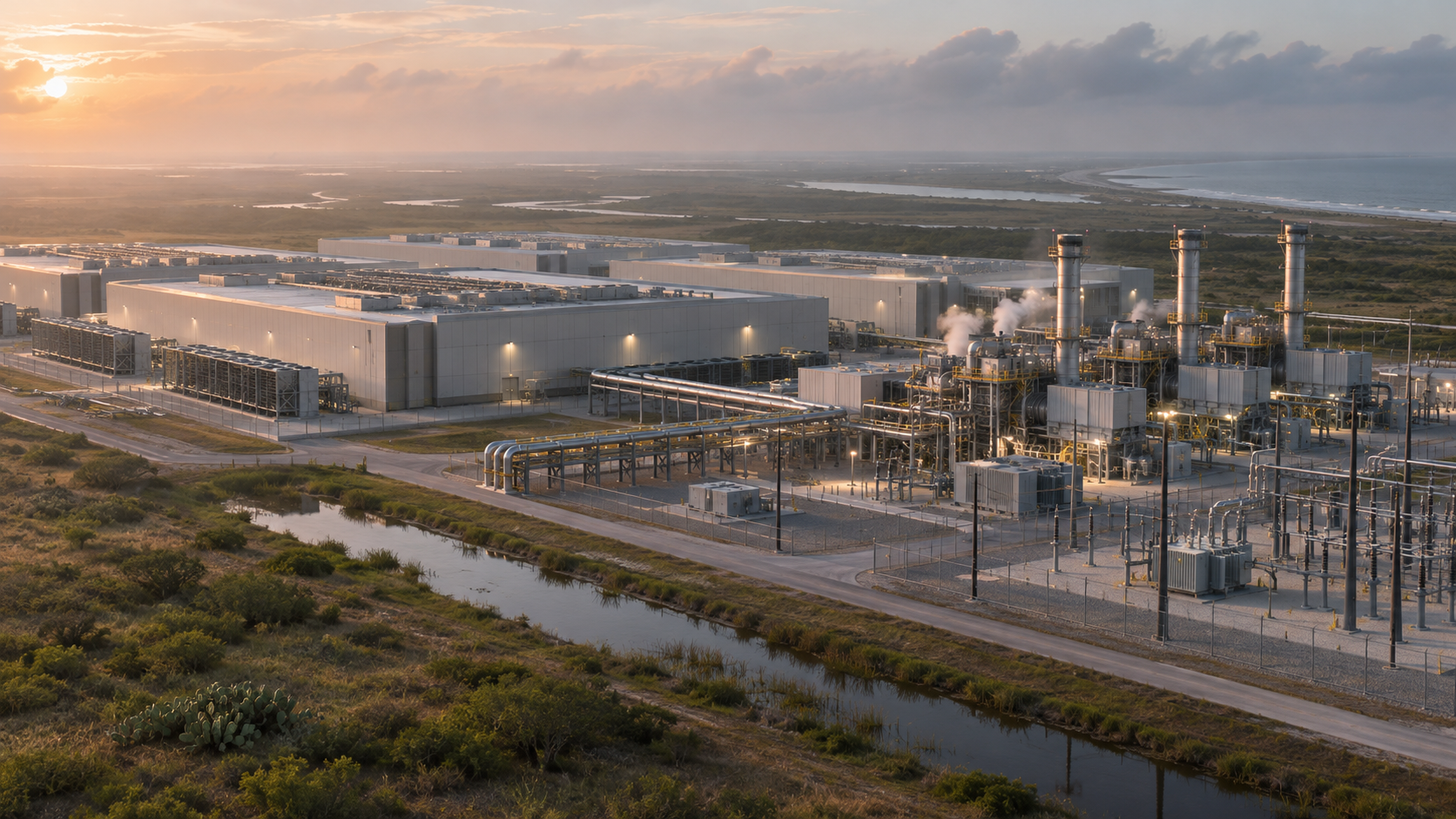
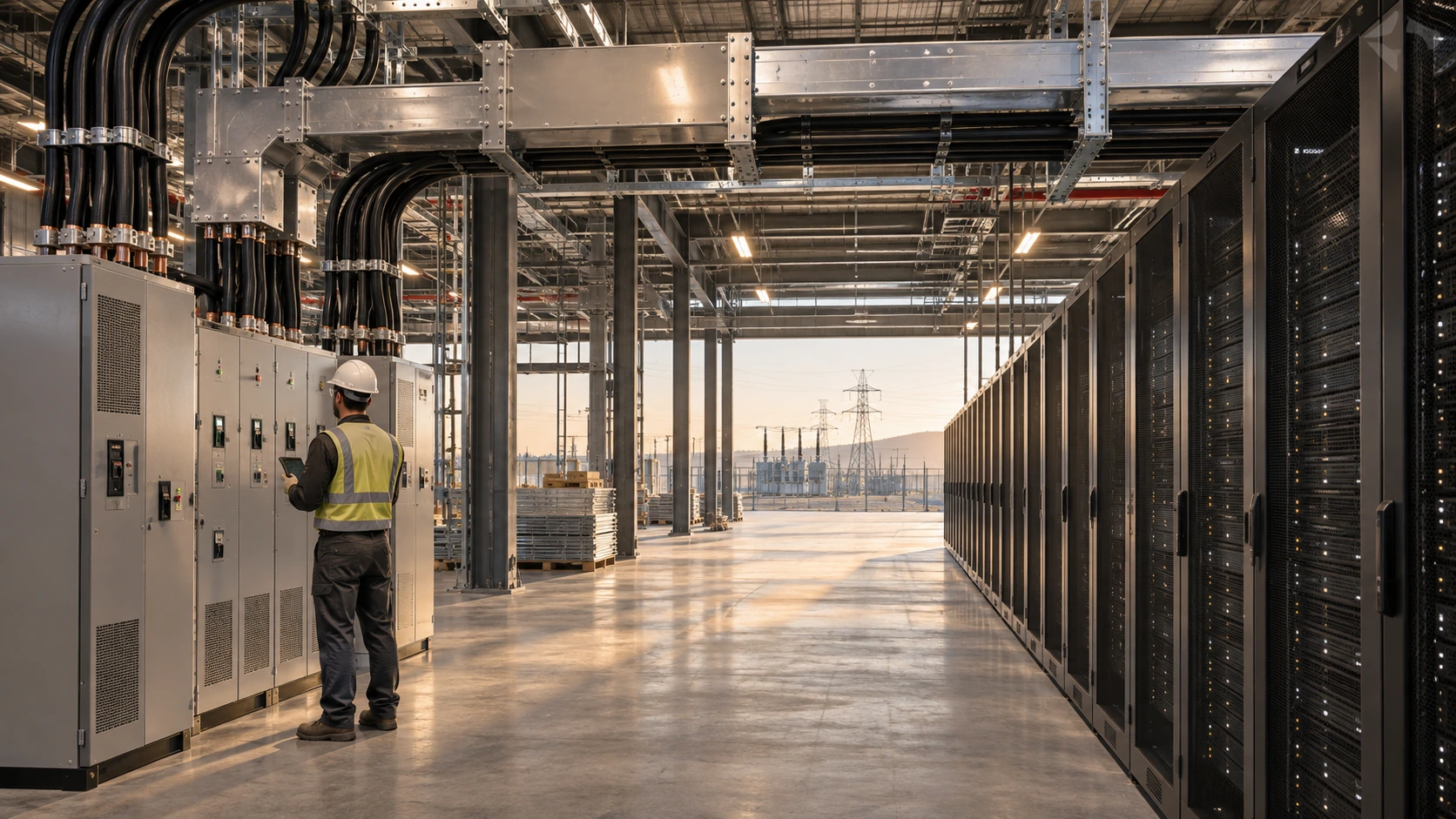
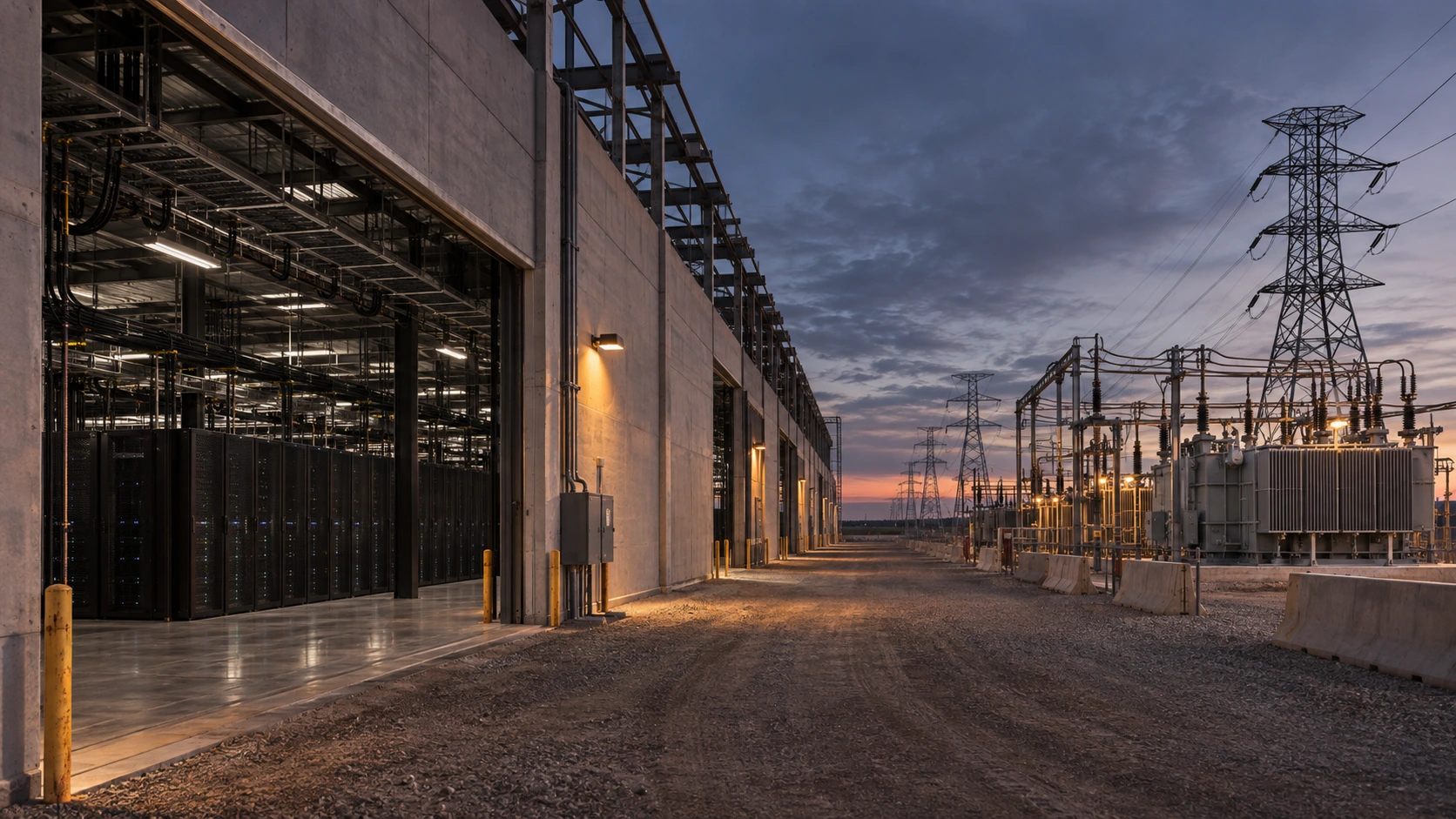
Hero and thumbnail are original AI-generated conceptual photographic artwork. Both explanatory visuals are original AI-generated sculpted models. They do not depict actual facilities, engineering specifications or regulatory approvals. Generation prompts and provenance are retained with the draft.