Musk’s Industrial Vision: What It Means for Tesla and SpaceX Investors
By Dalton Skach · 10 min read
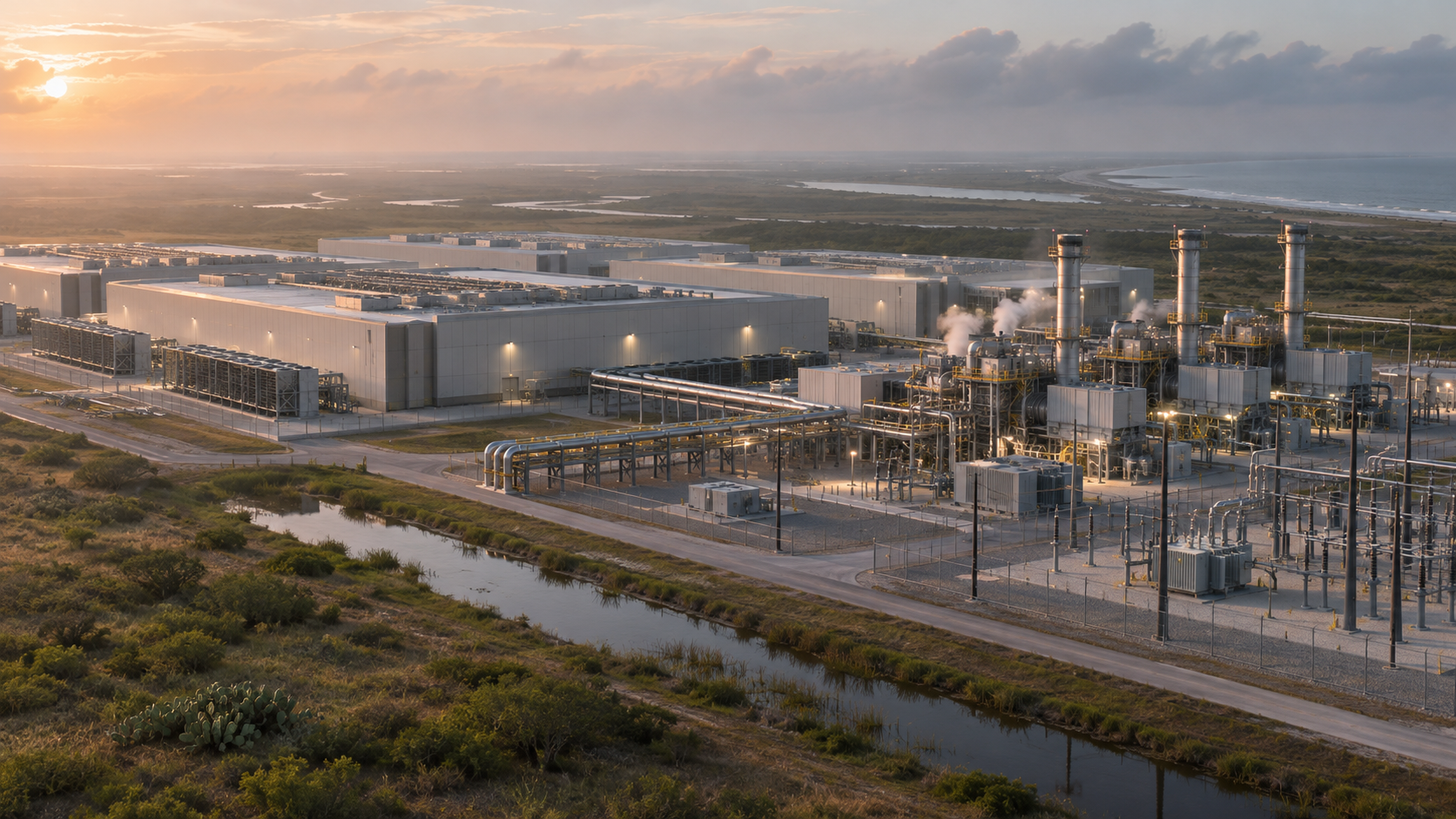
SpaceX’s next growth engine may look less like a launchpad and more like a room full of servers. In his conversation with Ron Baron on November 6, Elon Musk described a company trying to turn its ability to build difficult physical infrastructure into an advantage in selling compute. Across chips, data centers, satellites and robots, the investor question is whether controlling more of the production chain can turn technical progress into durable returns on capital.
The business is already changing
The 33rd Annual Baron Investment Conference ranged from chip factories to humanoid robots and computing in orbit. The topics form a connected industrial vision: make the chips, supply the power, operate the compute, move information and put intelligence to work. Its most immediate investment implication sits closer to the ground: power, construction crews and working data centers.1
SpaceX’s latest filing provides a useful starting point. The company, which trades as SPCX, reported $14.575 billion of revenue in the September quarter. Its Super Intelligence segment contributed $7.560 billion, or about 52% of the total. That segment includes infrastructure services alongside Grok, Cursor and X. The figure is broader than compute rental revenue, and Cursor’s results entered the accounts during the quarter.2
That changes how I would evaluate SpaceX. Launches and Starlink remain important, but a forecast now needs a separate view of compute demand, pricing and reinvestment. A successful rocket program does not by itself establish attractive returns on a data center.
What the revenue target actually says
According to the supplied archive transcript, Musk expected SpaceX to exceed a $100 billion annual revenue pace in December 2026. He then described exceeding $500 billion in annual recurring revenue in December 2027 as his best guess, explicitly distinguishing it from a promise. Baron’s broader discussion of $500 billion to $1 trillion should not be read as Musk promising that range of full-year sales.3
The distinction matters even if the business executes perfectly. A December exit rate describes the pace reached at the end of a year. Revenue for the year depends on the path taken to get there. Neither measure tells an investor how much cash remains after paying to operate and expand the business.
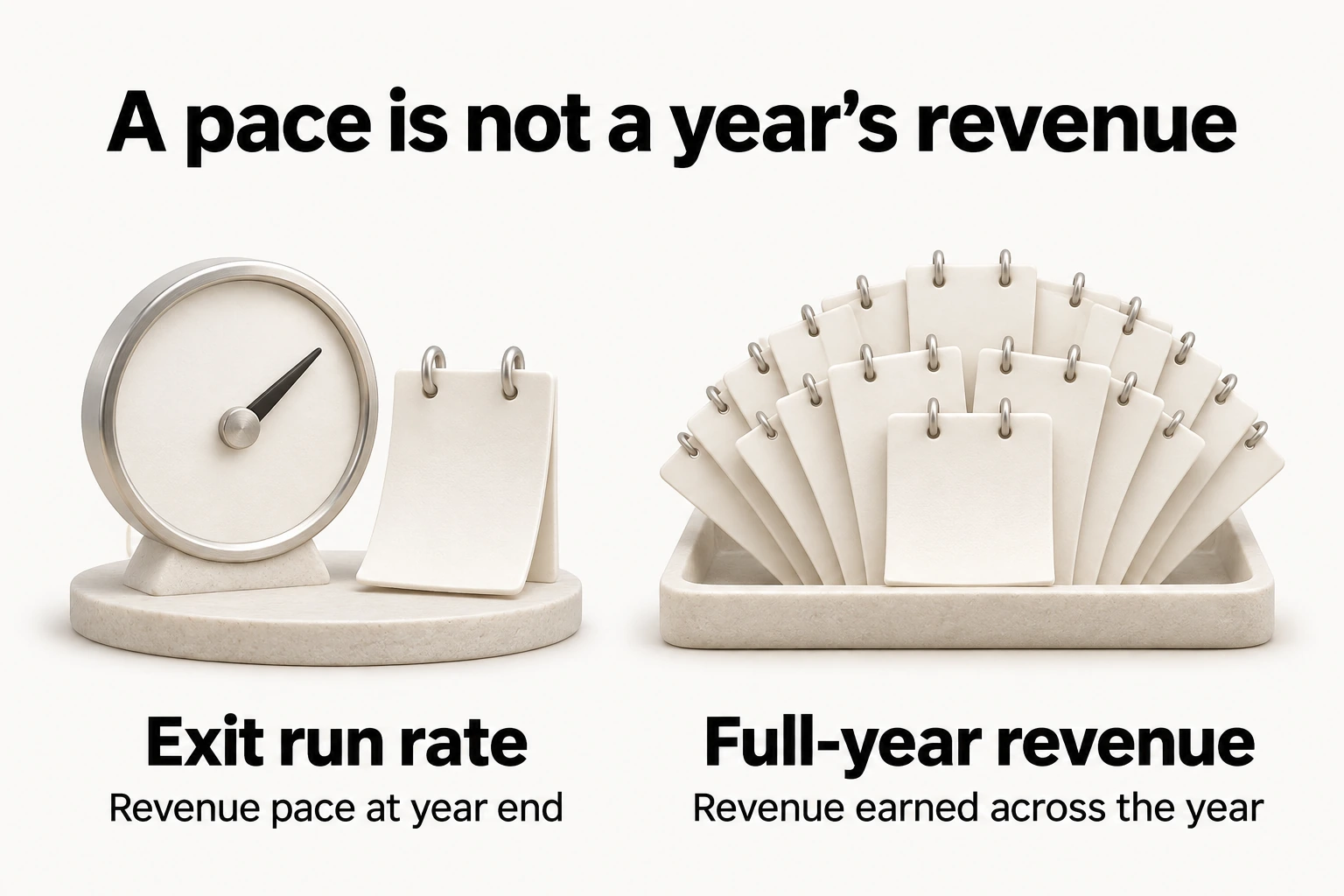
For illustration, assume an annualized revenue pace starts at exactly $100 billion and rises evenly to exactly $500 billion over twelve months. That simplified path produces approximately $300 billion of revenue during the year. A late surge would produce less; an earlier ramp would produce more. This is a timing example, not a SpaceX forecast or a reconciliation of Musk’s undefined recurring-revenue metric.4
The advantage is getting the machines to work
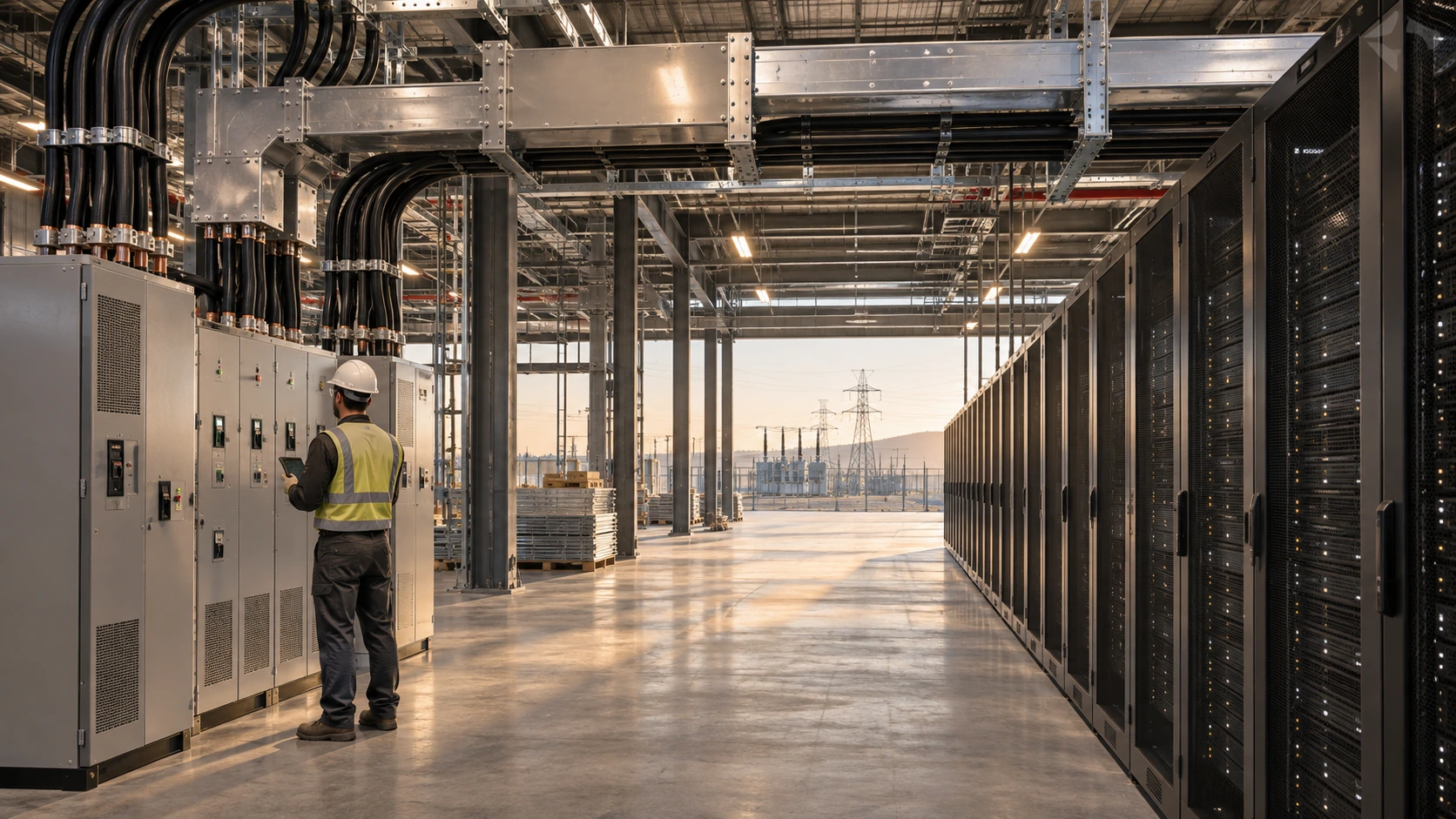
Musk’s construction argument deserves attention. In the archive transcript, he emphasizes the shortage of people who can complete physical projects and describes SpaceX’s experience building complex hardware as an advantage. Baron connects that capability to supplying compute to outside customers while capacity is available.5
If SpaceX can deliver powered, usable capacity earlier than competitors, it can begin earning revenue while others are still building. Internal demand could also give it more flexibility over where to deploy that capacity. Those are plausible advantages. Their value depends on whether customers pay enough, for long enough, to compensate SpaceX for carrying the assets.
The difficult question comes when scarcity eases. A facility can keep operating while the price of its output falls. Equipment may need replacement before the building does. Capacity redirected from an outside customer to an internal AI product may be useful, but the transfer does not create another external sale.
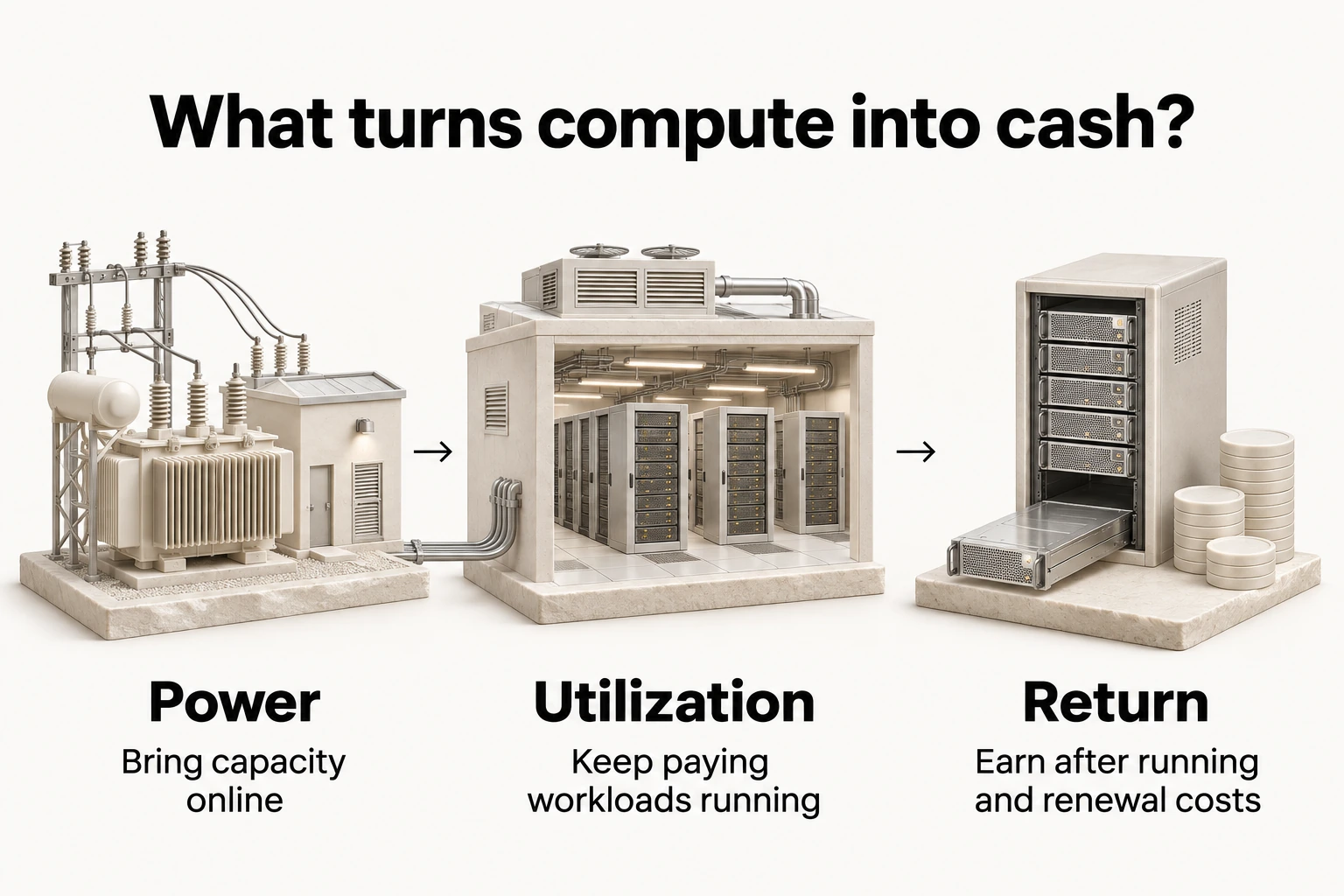
The capital burden is already visible. For the first nine months of 2026, SpaceX reported $13.097 billion of operating cash inflow and $48.069 billion of cash purchases of property, plant and equipment. Those are consolidated figures, not the economics of a single compute campus, and product rebates are reported separately. They nevertheless show why revenue growth alone cannot settle the investment case.6
Terafab is a bet on learning faster
The chip discussion reveals the method behind the larger ambition. Musk describes a research fab at Tesla’s Texas factory where different approaches to fabrication could be tested before moving successful methods into production. His emphasis is on shortening the loop between designing a chip, making it and testing the result. He also corrects Baron’s suggestion that nobody else is building American chip capacity, pointing to TSMC and Samsung.7
For investors, the interesting possibility is that tighter coordination could improve more than supply security. If engineers can discover problems earlier and incorporate fixes faster, the same calendar year can contain more useful development cycles. That would help explain why Musk wants control over infrastructure that another company might prefer to purchase from suppliers.
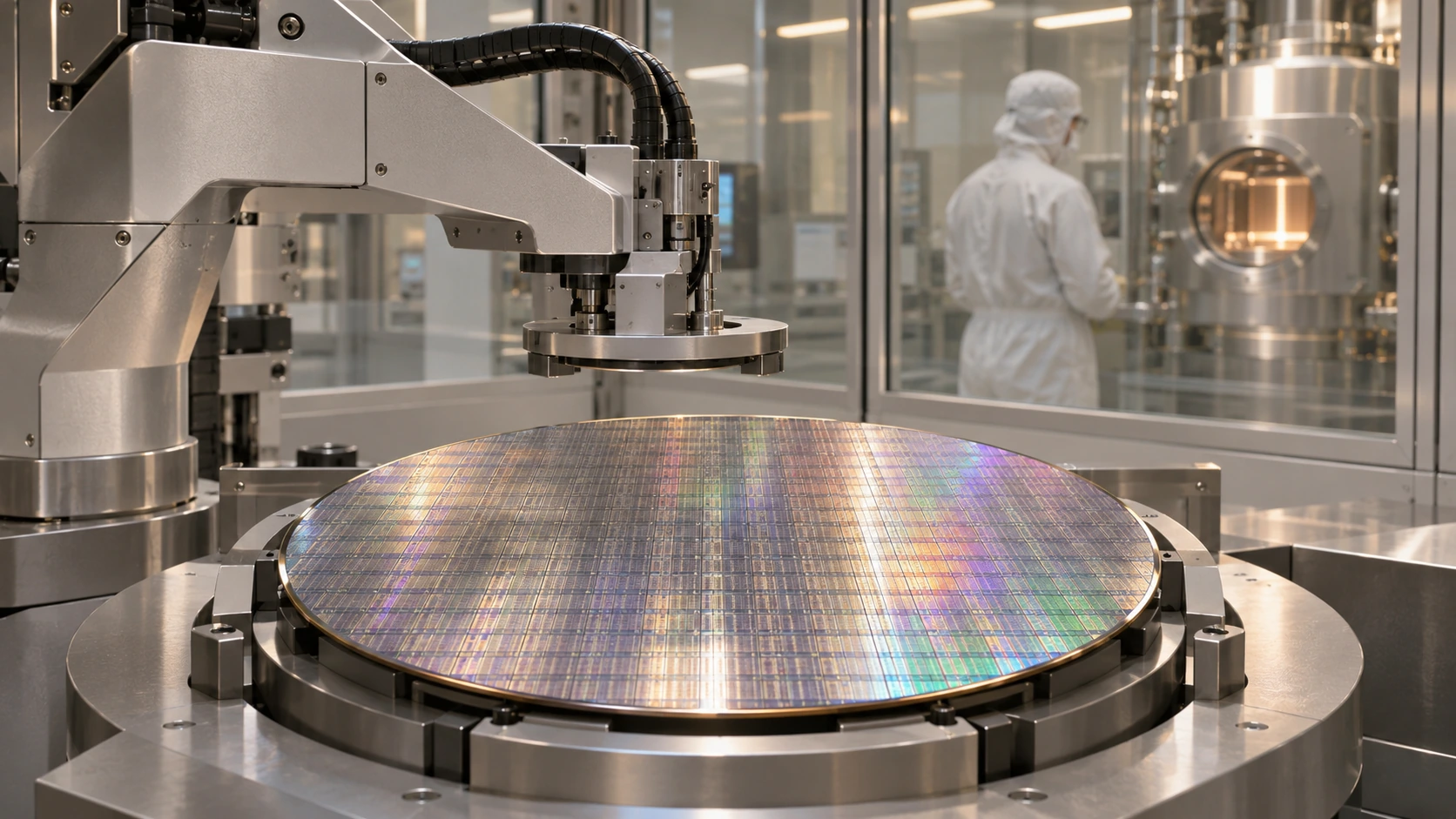
But faster experiments and economical production are different achievements. I would want to see which improvements survive the move from a research line to repeat manufacturing, how many usable chips emerge from each production run, and the cost of those chips after the factory’s capital expense. A shorter development cycle can be valuable even before it proves a cost advantage. It should not be assigned both benefits automatically.
The same distinction applies to the spending discussion. Baron introduces a trillion-dollar figure; Musk responds that construction would occur in phases. The exchange describes the scale of an ambition. It does not supply a funded annual spending schedule. The investable milestones are the results of each phase and the terms on which the next one is financed.
Starship changes the next set of possibilities
The orbital-compute discussion is an extension of that same effort to remove constraints. Musk argues that enormous additions to computing capacity would eventually run into limits on terrestrial electricity supply. In his account, lower launch costs and access to solar energy make space a potential location for the next stage of expansion. He describes an initial orbital-computer launch expectation in the third quarter of 2027, followed by a larger ramp, while qualifying the timing as a guess.8
Starship matters to this argument because the economics depend on repeatedly transporting equipment into orbit. Musk emphasizes recovering both stages and returning them to service quickly. He also identifies the orbital heat shield as a particularly difficult engineering problem. A successful recovery would be a technical milestone; a repeatable service with limited refurbishment would be a more useful economic milestone.
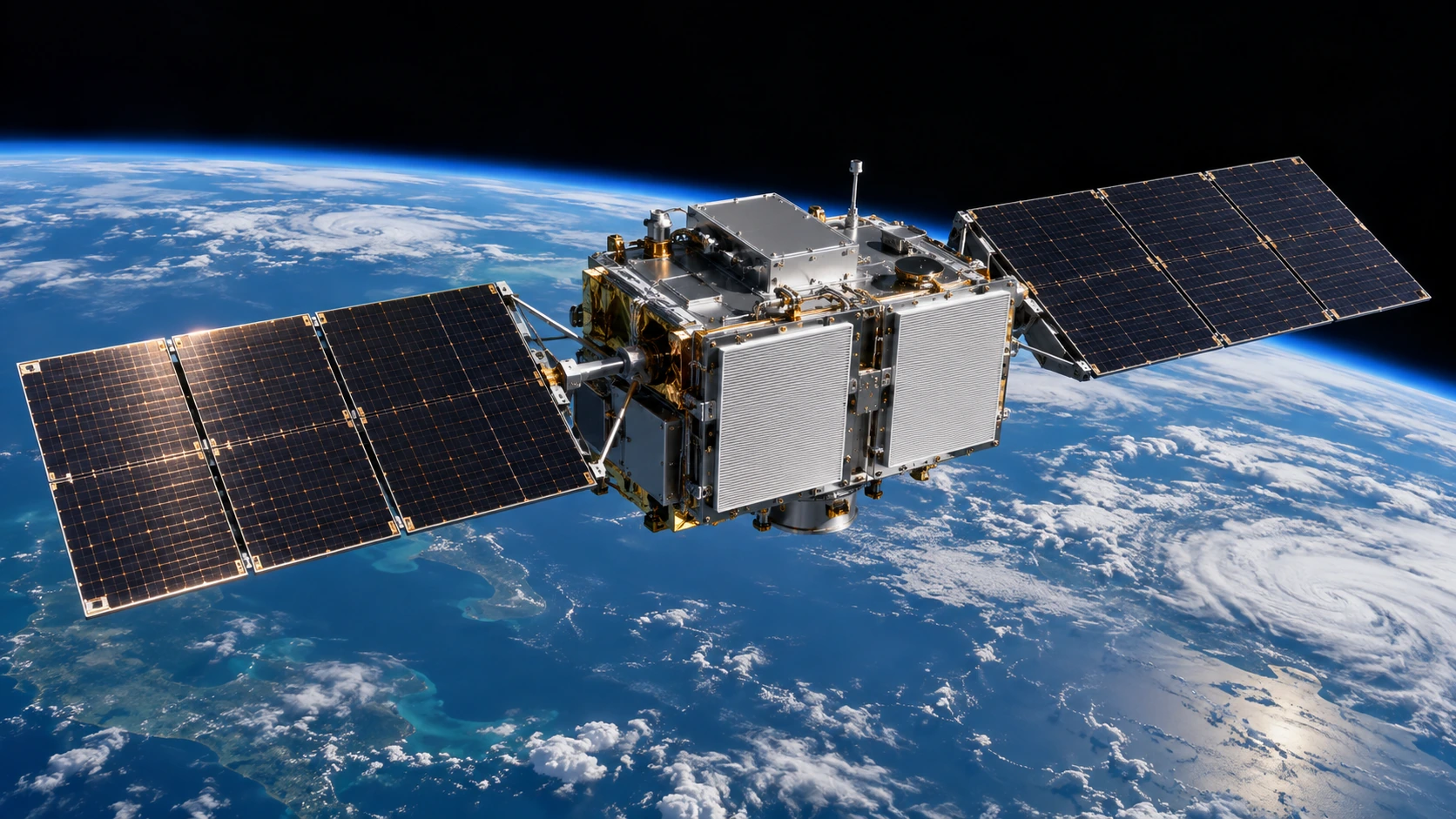
I would build the investment case in that order. First, establish repeatable launches and recovery. Then examine the cost and reliability of operating the computing hardware. Finally, compare delivered customer economics with the terrestrial alternative. Launch expense, power, heat rejection, communications, hardware life and replacement all belong in that comparison. Cheap transport alone cannot establish the cost of a useful computing service.
This creates a potentially valuable connection between SpaceX’s businesses: an improvement in launch operations could make another market accessible. It also creates a dependency. If rapid reuse takes longer than expected, the orbital-compute opportunity may move with it. I would keep that possibility separate from the near-term revenue case for data centers on Earth.
Starlink needs paying traffic, not just more traffic
Baron and Musk also connect a future of AI agents and robots to much greater communications demand. Musk describes improving satellite capability and expanding the network, while Baron sketches a much larger long-term business. Their shared premise is that machines could generate demand beyond what human internet use alone would suggest.9
The investor’s next question is where that traffic travels and who pays to carry it. More AI activity does not automatically translate into proportional satellite revenue. A workload can generate enormous traffic inside a data center or across terrestrial networks. Starlink captures value where its service is useful enough for a customer to pay for it.
That is why I would watch the mix of customers and the economics of serving them alongside the network’s technical capacity. Added bandwidth could support more customers, improve service or lower cost per unit. The revenue outcome depends on demand, pricing and the share of that capacity that can be sold. A larger network is productive capital only when the additional business justifies building and replenishing it.
The conversation’s most sweeping traffic projections are therefore useful as questions to investigate. I would not insert them directly into a Starlink sales forecast. The evidence needed is a bridge from new uses to contracts, customer spending and cash earned by the network.
Optimus moves the test onto the factory floor
The robotics exchange brings the argument back to Tesla. Musk envisions humanoid robots increasing productive capacity by working longer hours and, eventually, performing tasks faster. When Baron asks whether the robots would be sold or rented, Musk says he thinks rental is likely. That is an indication of his thinking, not a complete commercial offer.10
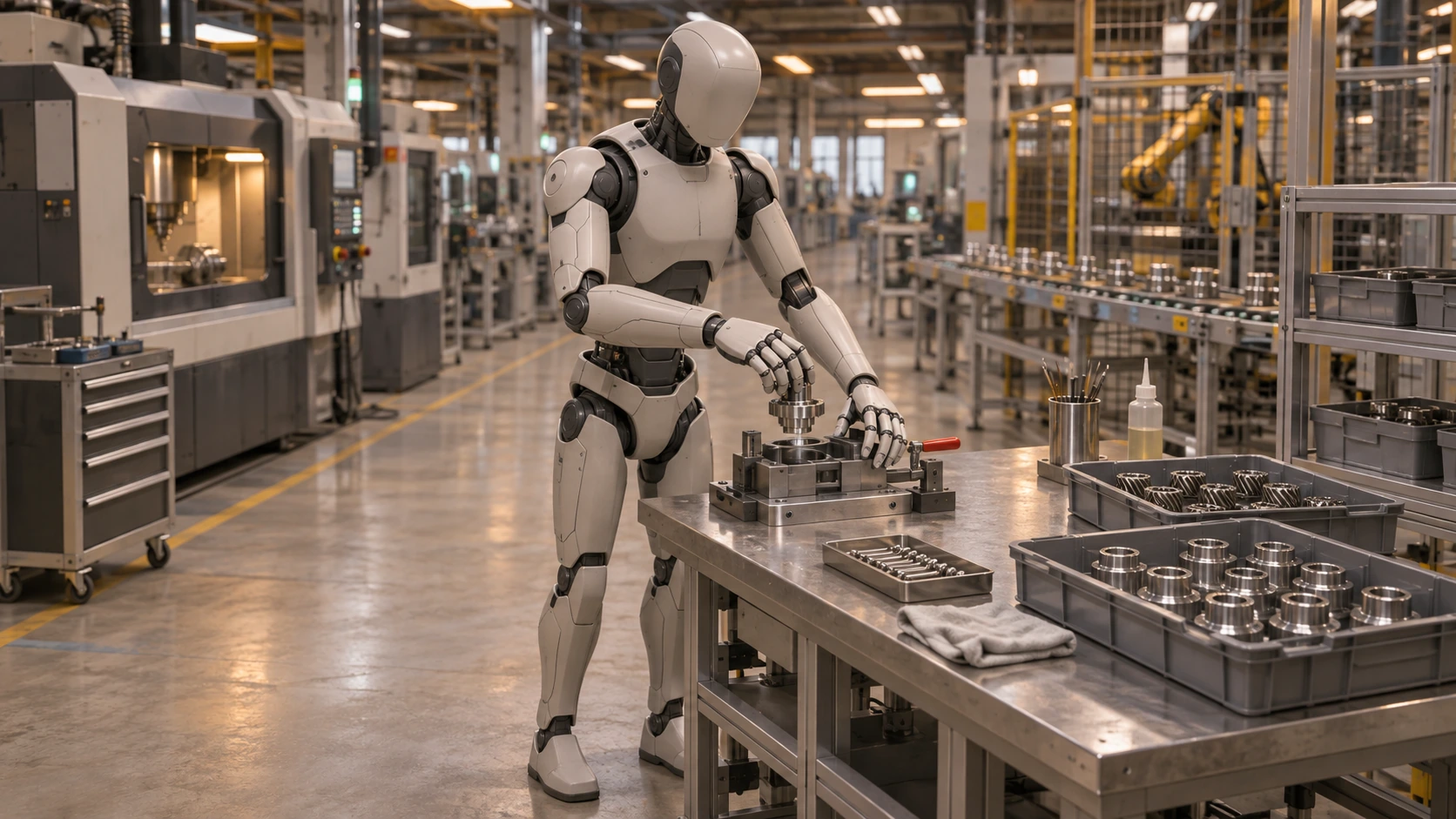
The economic unit I would follow is an accepted task or good part completed, with the supervision and downtime required to produce it. Hours available to work are only the starting point. A robot that needs frequent intervention may shift human labor into support rather than eliminate the expense. Conversely, reliable operation on a narrow, repetitive job could create a useful business before the robot can perform every task in a factory.
Rental would change the allocation of that risk. A customer could try the service without purchasing the entire machine. Tesla would retain more responsibility for financing the fleet, keeping it working and recovering its investment through recurring payments. Investors would need to evaluate utilization, service expense and customer retention alongside manufacturing cost.
That makes Optimus another version of the question raised by compute. Can the owner of a productive asset deliver enough useful output to earn an attractive return? Demonstrations and production targets help establish progress. Sustained customer use establishes the business.
One industrial vision, several investment cases
The interview’s closing discussion of abundance and much higher living standards helps explain the scale of Musk’s ambition. He sees digital intelligence and robotics expanding what the economy can produce. I read that as the destination he is working toward, rather than a timetable for a portfolio’s returns.11
The distinction matters because widely available, inexpensive intelligence could benefit customers while putting pressure on the price suppliers receive. A technology can transform the economy without every supplier retaining extraordinary margins. Investors still need to identify where a company has a durable advantage and how much capital it must commit to maintain it.
For an investor holding both Tesla and SpaceX, there is also an ownership question. Shared capabilities can be valuable without every benefit accruing to both sets of shareholders. The useful questions are who pays for an asset, who gets to use it and who retains the cash it produces. The interview’s connected industrial vision does not, by itself, resolve those terms.
The investor takeaway
The conversation strengthens the case for examining SpaceX as a compute infrastructure business alongside its launch and connectivity operations. I would give its ability to deliver working capacity serious weight. I would keep the December revenue targets as scenarios until reported results and customer economics support them.
The evidence that would increase my conviction is commissioned capacity matched to paying demand, durable pricing and cash returns that cover both operations and equipment renewal. Falling utilization, price concessions or spending that persistently outruns cash generation would weaken it. I would assess the longer-term opportunities against their own milestones: usable chips at competitive cost, economical repeat launches, paying communications demand and reliable robotic output. The opportunity is to turn control of difficult infrastructure into an economic advantage. The test is how much of that advantage reaches shareholders.
This article reflects Dalton Skach’s views as of November 8, 2026. It provides general research and does not offer personalized investment advice or recommend buying, selling, or holding a security. As of November 8, 2026, Dalton holds investments in Tesla and SpaceX. Editorial Standards & Disclosures · Terms of Use
Sources and calculations
- Baron Capital, 33rd Annual Baron Investment Conference, afternoon agenda and Elon Musk biography; conference FAQs, event date. Event: November 6, 2026. Published: November 8, 2026. The organizer’s page says recordings will be available in the coming weeks. The interview is not represented here as an official Baron transcript. ↩
- Space Exploration Technologies Corp., Form 10-Q, quarter ended September 30, 2026, cover, Note 1 (Nature of Business, Cursor Merger), and Note 3 revenue table, pp. 10–13. Signed October 22, 2026; accession 0001628280-26-066880. Q3 revenue: $14,575 million; SI: $7,560 million. Share = 7,560 ÷ 14,575 = 51.87%, rounded to 52%. SI includes advertising and SI Solutions & Infrastructure; it is not a pure compute-rental measure. Cursor consolidated from August 14, 2026. ↩
- Elon Musk Archive, Baron Investment Conference 2026 transcript, Musk’s response after Baron discusses SpaceX revenue and data-center rental income. Event dated November 6; archive publication time not independently established. Musk distinguishes his expectation from a promise and describes a December 2027 metric. The archive has spacing and transcription defects; no direct quotation or contractual definition of ARR is asserted here. Its embedded third-party video upload was identified, but an independently accessible video transcript was not obtained. The organizer’s recording was not available at publication; interview claims rely on the attributed archive transcript. ↩
- Illustrative timing arithmetic, BTF analysis: let annualized revenue pace r(t) = 100 + 400t billion dollars per year for t from 0 to 1 year. Revenue = integral of r(t) over that year = (100 + 500) ÷ 2 = $300 billion. This assumes a smooth linear ramp and comparable revenue measures, neither established for SpaceX. Musk’s thresholds are not substituted into an earnings forecast. ↩
- Same archive transcript as source 3, ground-based data-center discussion immediately before the revenue-target exchange. Musk discusses construction labor and physical execution; Baron describes renting available compute to other users. The claims are attributed, not independently verified campus economics. The assessment of speed, pricing and internal allocation is BTF analysis. ↩
- Same Form 10-Q as source 2, consolidated cash-flow statement, pp. 8–9, and MD&A cash flows, p. 54. Nine-month operating cash: $13,097 million; cash purchases of PP&E: $48,069 million; separately reported product rebates: $1,372 million. The article does not label their difference company-defined free cash flow or assign consolidated spending to compute alone. ↩
- Same archive transcript as source 3, November 6, 2026 event. Opening Terafab discussion, including Musk’s correction about TSMC and Samsung, research fabrication, iteration speed and phased construction. These statements describe the speakers’ plans and reasoning; factory status, yields, financing and cost advantages are not independently established here. ↩
- Same archive transcript as source 3, November 6, 2026 event. Orbital data-center and Starship exchanges, including the qualified third-quarter 2027 launch expectation, rapid reuse and heat-shield difficulty. Dates and economic advantages are attributed projections. The operating-cost checklist and staged investment assessment are BTF analysis. ↩
- Same archive transcript as source 3, November 6, 2026 event. Starlink discussion following Starship, including future satellite capability and AI-related traffic demand. The article does not adopt the attributed Cloudflare statistics or Baron’s valuation projections as verified facts. The bridge from traffic to paid network demand is BTF analysis. ↩
- Same archive transcript as source 3, November 6, 2026 event. Humanoid robotics exchange after the SpaceX revenue discussion. Musk’s rental preference is tentative. No robot productivity multiplier, price, customer contract or commercial deployment is asserted as an established fact. The task-level economics and rental-risk discussion are BTF analysis. ↩
- Same archive transcript as source 3, November 6, 2026 event. Closing questions about demand for intelligence, robotics and universal high income. These statements express Musk’s long-term vision. The distinction between economic benefits, pricing and shareholder returns is BTF analysis. ↩
Artwork: original AI-generated conceptual data-hall hero, semiconductor, orbital-computing and robotics photographic illustrations, and two sculpted-model explanatory images, created November 8, 2026 using the built-in imagegen tool. None depicts an actual SpaceX facility. Full prompts and provenance are preserved in the editorial source record. No visual supplies documentary evidence.