Why Grok Is Rebuilding While It Runs Late
By Dalton Skach · 5 min read
When a product is late, rebuilding the machinery behind it can seem like the last thing a company should do. Grok’s developers have done it anyway. When does fixing the foundation become worth making people wait?
What the team rebuilt
Grok is xAI’s family of artificial intelligence models. Those models generate answers and help software carry out tasks. Behind them sits another layer of software that helps the team teach the models and run them for users.
On November 10, Elon Musk said the team had rewritten its reinforcement-learning and inference systems in C and C++, replacing tools called JAX and SGLang. He attributed part of Grok 4.8’s delay to that work.1
SpaceX owns the AI operation, legally named SpaceX.AI LLC.2 The decision affects how quickly its team can improve Grok and how much computing it takes to serve customers.
Why accept the delay?
Musk’s explanation centers on what the new foundation will make possible. He acknowledged that Grok 4.8 was not yet exceptional, but said “the foundations are built right” and expected the model to improve substantially.1
That suggests a longer-term bet: spend more time rebuilding now so future improvements have a better base to build on.
The technical reason is less clear. His post does not identify a particular limitation in JAX or SGLang, or show which bottleneck the replacement removes. Faster development and lower running costs are plausible benefits, but their size remains unmeasured.
What custom software could buy
Existing tools give a team a head start. JAX handles mathematical computing used in machine learning. SGLang helps serve models efficiently, including across multiple processors. Both already support demanding workloads.3
An internal system offers a different advantage: the team can design around its own models and machines. In principle, that could help it:
- Run experiments faster. Generate and assess training responses with less waiting between steps.
- Use the machines more efficiently. Keep processors busy and reduce unnecessary movement of information.
- Change the system more freely. Adapt the underlying software when the model needs something different.
These are potential advantages of specialization, not results xAI has demonstrated in this update.
Think of a manufacturer replacing standard equipment with a custom production line. The investment can make sense when the line is used enough, performs better and remains manageable to maintain.
C and C++ give engineers detailed control over how computers work. But existing frameworks also use optimized execution. The new system still has to earn its advantage through its design and performance.
The model still has to learn
Better machinery is only part of building better AI. Musk also said the examples used to teach Grok had needed substantial cleanup.
The learning process has several parts:
- Pre-training: learn broad patterns from large quantities of data.
- Supervised fine-tuning: learn desired behavior from examples.
- Reinforcement learning: improve through feedback or rewards.
These stages can overlap and repeat. Musk said Grok 4.8 had completed pre-training and was in reinforcement learning, with evaluation scores improving. He planned a limited rollout to Bot users later in the week.
Inference means running a model to produce an answer. It happens when customers use Grok, and during reinforcement learning when the model generates responses to receive feedback.
That connection explains why the rewrite could matter twice: it could help the team develop the model more efficiently and reduce the work required to serve each customer.
Owning more means maintaining more
A custom system gives the team more control. It also gives the team more to look after.
New hardware, changes to the model and production failures can all require engineering work. Some of that work previously benefited from the wider communities developing the existing tools.
The business question therefore extends beyond the bill for the rewrite. Will the system make the next model easier to build? Or will maintaining it keep pulling engineers away from improving the product?
There is also a cost to waiting. Customers can try other products while the team rebuilds.
In a separate reply, Musk praised Anthropic’s Claude Opus 5.5 and suggested Grok 5 could surpass it in two or three months.4 That is his projection. Competing products can keep improving during that time.
The rewrite’s real test
Most users will never need to know which software runs underneath Grok. They will notice whether it finishes their work reliably and how long they have to wait.
Consider a coding task. A quick answer that needs three rounds of correction may consume more computing and more of the user’s time than a slower answer that works on the first attempt.
The useful comparison is the cost and time required to complete the same job to the same standard. Musk’s update supplies no measurements of the rewrite’s speed, reliability or running costs.
Rebuilding can be worth a delay if it removes a constraint the company would otherwise keep encountering. Grok’s team has taken that bet.
The payoff should become visible in better answers, more consistent improvements and less work left for the person using the product.
This article reflects Dalton Skach’s views as of November 10, 2026. It provides general research and does not offer personalized investment advice or recommend buying, selling, or holding a security. As of November 10, 2026, Dalton owns shares in SpaceX and the Vanguard S&P 500 ETF (VOO), which provides indirect exposure to Alphabet. Editorial Standards & Disclosures · Terms of Use
Sources and calculations
- Elon Musk, original Grok development update on X, November 10, 2026, 09:35:59 UTC, or 4:35:59 a.m. EST. Full post, all three paragraphs: rewrite scope, pre-training, SFT cleanup, RL, improving evaluations, planned Bot rollout and Musk’s assessment of the foundations. The interpretation of a longer-term development bet is BTF analysis; no specific removed bottleneck is established. Retrieved directly through Firecrawl on November 10. These are Musk’s statements, not an audit of the software or independent performance measurements. ↩ ↩ Motivation
- Anthropic, PBC, Form S-1/A, filed November 2, 2026, “Infrastructure Service Arrangements,” p. 176. CIK 2130357; accession 0001628280-26-068676. Identifies SpaceX.AI LLC, formerly X.AI LLC, as a wholly owned subsidiary of Space Exploration Technologies Corp. Used here for legal identity and ownership, not to forecast Grok revenue. ↩
- JAX documentation, “High performance array computing,” and SGLang documentation, “Welcome to SGLang,” “Performance & Runtime” and “Get Started,” retrieved November 10, 2026. Explain the tools’ functions and existing optimization capabilities. Neither source measures xAI’s replacement. The business tradeoffs and factory analogy are BTF analysis. ↩
- Elon Musk, original Opus 5.5 and Grok 5 comparison reply on X, November 10, 2026, 10:22:36 UTC, or 5:22:36 a.m. EST. Full reply. The two-to-three-month interval is Musk’s projection. It is neither an independently verified capability ranking nor a guaranteed delivery date. ↩
Research cutoff: November 10, 2026. The event and publication dates are the same. The planned rollout is stated in the full original post. The post says evaluation scores are improving, not merely that evaluations are starting. We do not characterize this as the first concrete Grok 4.8 update because this review does not establish that historical claim.
Analytical framework: total delivery cost per successful task equals the relevant serving expense, including failed attempts and retries, divided by successfully completed tasks. Engineering and maintenance costs must also be recovered when assessing the rewrite’s overall return. No numerical savings, probabilities, revenue forecast or share-price target is assigned.
Holdings context: Dalton’s SpaceX ownership was confirmed November 8 under a standing instruction. On November 10 he identified VOO as a likely source of indirect exposure. Vanguard’s September 30, 2026 VOO fact sheet, p. 2, includes Alphabet. No direct Anthropic holding or quantified indirect Anthropic interest is asserted.
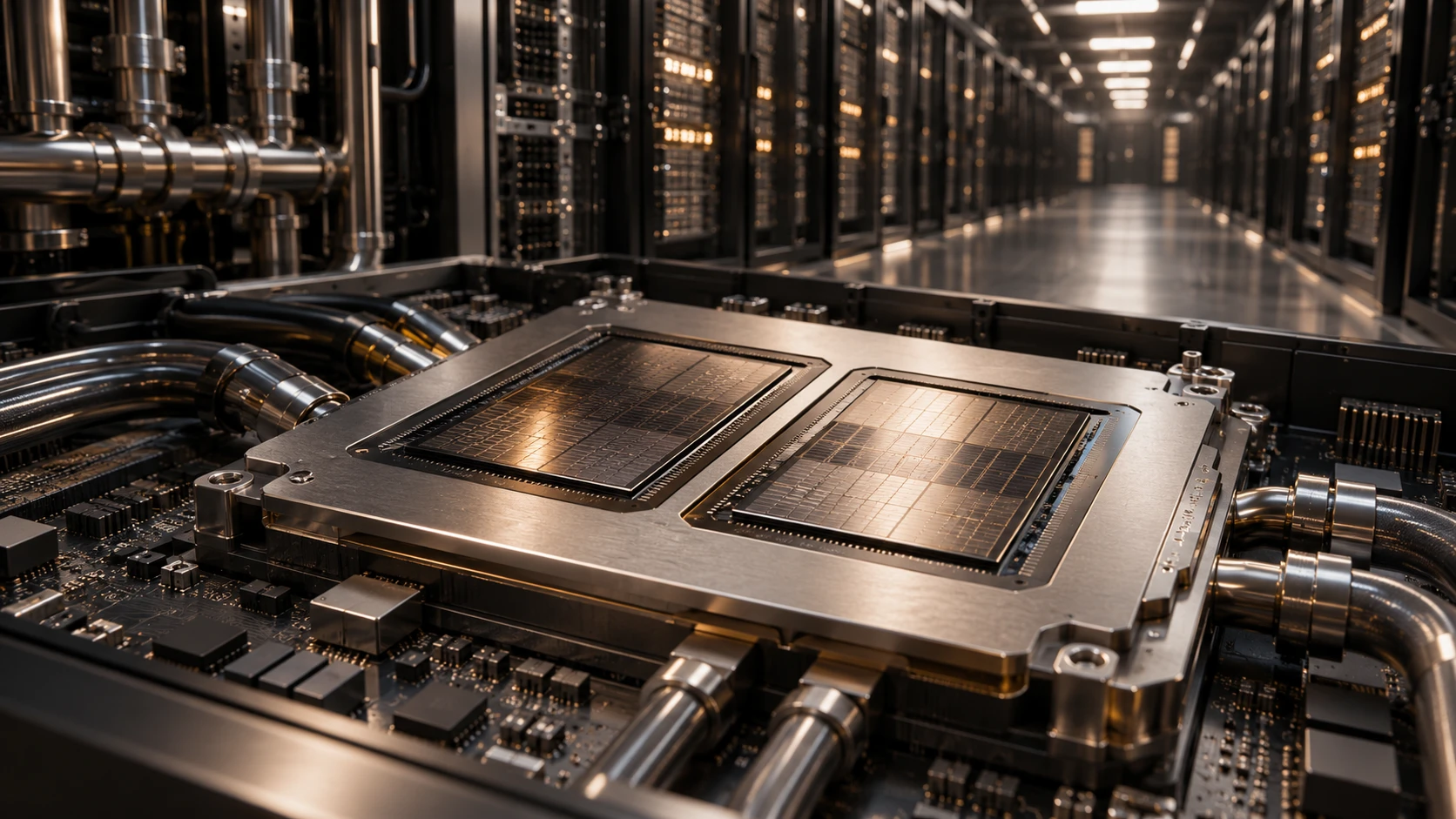
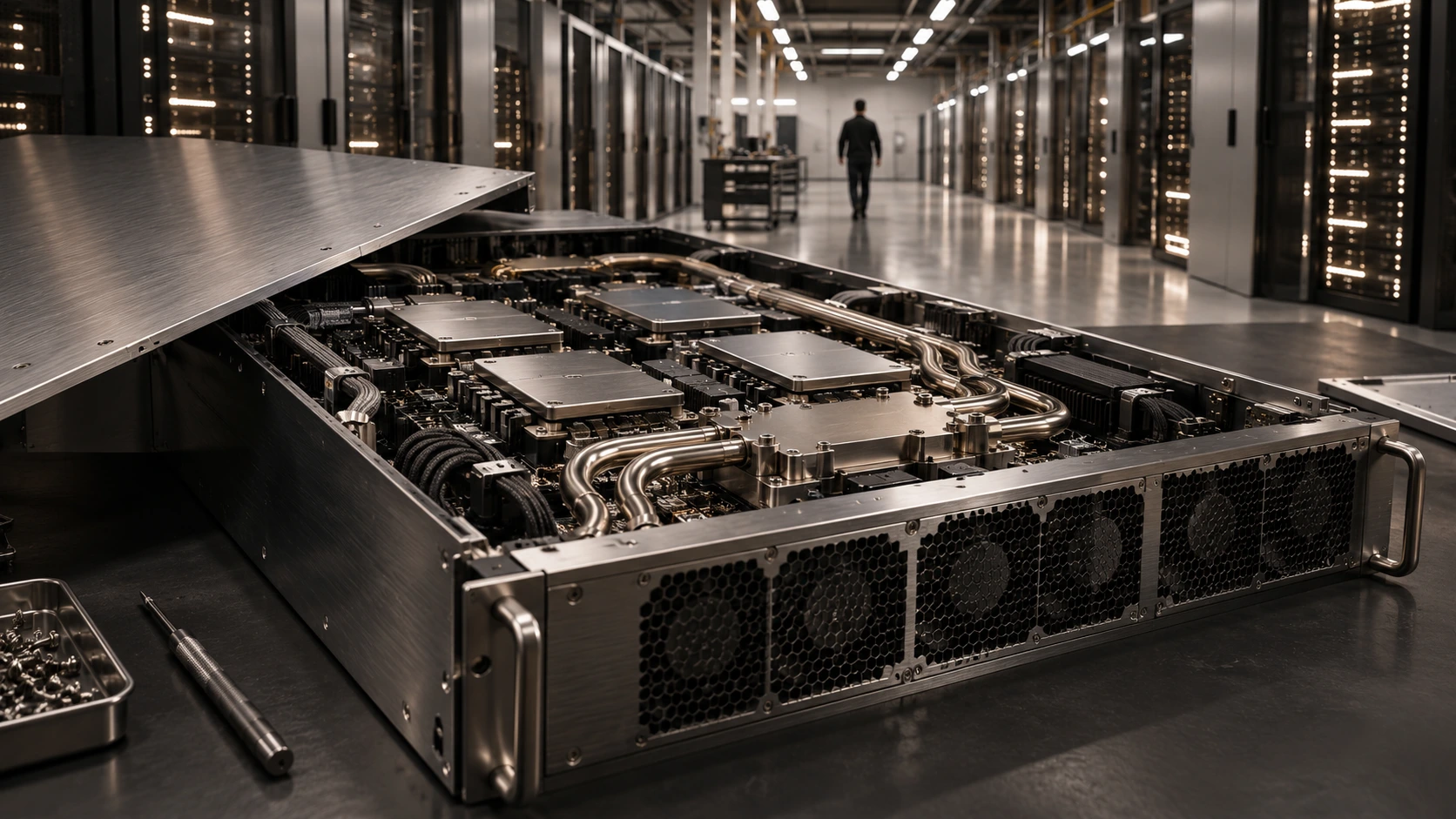
The hero and thumbnail are original AI-generated conceptual photographic artwork, not an actual xAI facility. The two body visuals are original AI-generated sculpted models, not documentary evidence or engineering plans. They illustrate learning stages and economic tradeoffs. Prompts, original images and source captures are retained in the working source record.