Google’s New AI Systems Raise the Stakes for Alphabet, Nvidia and SpaceX
By Dalton Skach · 8 min read
Google is making it easier to run demanding AI work on its own hardware. For Alphabet, Nvidia and SpaceX, the investment question is who keeps the savings when computing gets cheaper.
A bigger market for Google’s own machines
On November 9, Google introduced TPU 8tx and TPU 8i Max, two additions to its eighth-generation computing portfolio. A Tensor Processing Unit, or TPU, is Google’s specialized processor for artificial intelligence. The new systems target sensitive enterprise workloads and AI tasks that need to keep large amounts of information close at hand.1
The distinction between a chip and a system matters. Google has not announced two entirely new chip architectures. It has rearranged existing silicon, memory, networking and security into configurations aimed at different customers. That could let it respond to changing demand faster than waiting for another chip generation.
This development reaches beyond Alphabet’s own services. Google says it has nearly 100 TPU customers and now supports deployment into customers’ data centers. Its ambition is to supply more of the machinery behind other companies’ AI businesses. That challenges Nvidia’s opportunity to sell computing platforms and changes the alternatives available to SpaceX’s AI operation.
What the two systems actually solve
Training teaches a model its capabilities. Inference uses that model to answer questions or perform work. An AI agent may repeat inference many times while searching documents, writing code or waiting for another tool. Its economics depend on memory, response time and idle capacity, as well as processing speed.
TPU 8tx addresses confidential computing: protecting information while it is being processed, rather than only when stored or transmitted. Google combines its 8t silicon with AMD host processors and a lower-latency network. The potential customer is an organization that wants to run or customize powerful models without exposing sensitive data or model contents to the surrounding infrastructure.
TPU 8i Max addresses the “memory wall,” when processors cannot obtain information quickly enough to stay busy. Google puts two 8i chips in one package and says this doubles compute, on-chip working memory and high-bandwidth memory throughput relative to 8i. Think of giving a researcher a larger desk and faster access to reference material. A long context window is the amount of information a model can work with during a task.
Those specifications are not proof that every task will finish twice as fast or cost half as much. Google’s “up to 2x lower latency” claim for 8tx compares it with 8t, not an Nvidia system. Its previously announced 80% improvement in inference performance per dollar compares 8i with the preceding TPU generation. The November announcement supplies neither a universal competitor comparison nor customer pricing and delivery schedules for the two additions.
Alphabet has three ways to benefit
Alphabet can use TPUs internally, rent access through Google Cloud, and supply systems for customer facilities. These routes create different financial benefits. Lower internal costs can make Gemini and other services more economical. Cloud usage can generate recurring revenue. Customer-site deployment expands the addressable market, but equipment sales should not automatically be valued like recurring cloud consumption.
There is already financial evidence behind the commercial push. Alphabet’s October 28 results reported about $31 billion of third-quarter Google Cloud revenue, up 103% from a year earlier, and identified TPU systems sales as a meaningful contributor. Cloud operating income was about $11 billion. These results preceded the new announcement and cannot be attributed to 8tx or 8i Max.2
The opportunity is to spread hardware and software development costs across a larger customer base while retaining more control over the cost of Google’s own AI services. Confidential computing could help it compete for sensitive workloads. Greater computing density could help customers fit more productive work into constrained facilities, provided power and cooling can support it.
The financial test is cash generation after the buildout. Alphabet spent about $51 billion on property and equipment in the third quarter, against about $42 billion of operating cash flow. Those are company-wide figures, not a TPU project budget, but they show why technical leadership alone is insufficient. Investors need to see whether expanding demand ultimately pays for equipment, development and replacement.
Nvidia’s challenge is the cost of switching
Nvidia sells graphics processing units, or GPUs, together with the networking, systems and software needed to use them. A customer’s investment extends beyond the chips to engineering expertise and production processes. Google must make the whole alternative attractive enough to justify moving real work.
That makes the software announcements consequential. Google open-sourced TorchTPU on October 20, allowing developers to use PyTorch, a widely used AI development framework, on TPUs with minimal code changes. It also supports familiar model-serving tools. This can lower one obstacle to adoption, although compatibility does not eliminate testing, tuning, migration costs or operational risk.3
Nvidia is competing at the system level too. Its Vera Rubin platform integrates processors, networking, storage and security, and includes confidential computing. Nvidia’s May 31 announcement named SpaceXAI among adopters of that security technology. Google is entering an existing competition for protected AI workloads, rather than creating a category Nvidia cannot serve.4
The relationship is also cooperative. Google Cloud offers Nvidia infrastructure and is integrating Vera Rubin into its AI Hypercomputer. Nvidia’s Google Cloud announcement also describes generally available confidential computing on Blackwell-based G4 virtual machines. Alphabet can win cloud business even when the customer chooses Nvidia hardware.5
For Nvidia investors, the risk is that a credible alternative reduces the premium customers will pay for some workloads or captures a larger share of new deployments. That does not require existing GPU installations to disappear. Conversely, falling costs could expand total AI usage enough for Nvidia’s revenue to grow even if customers have more alternatives. Market share, pricing and total demand must be considered separately.
SpaceX is both a customer and a competitor
The connection is directly through AI. Space Exploration Technologies Corp., trading as SPCX, reports a Super Intelligence segment alongside Space and Connectivity. Its September-quarter filing describes enterprise computing infrastructure, the Grok model and the Cursor software development application. The Cursor acquisition closed on August 14.6
As an AI operator, SpaceX could benefit from a broader choice of capable hardware and lower prices for useful computing. The benefit could come from adopting an alternative or from stronger bargaining power with existing suppliers. But Google’s announcement does not name SpaceX as a TPU customer, and the records reviewed do not establish a SpaceX migration to these systems.
As an infrastructure supplier and AI product competitor, SpaceX faces the opposite pressure. A more economical Google platform could lower the price other providers can offer and improve the economics of competing AI services. SpaceX cannot assume that cheaper computing translates entirely into higher profits if customers also expect lower prices or more work for their money.
This matters when assessing new facilities. Power, buildings and chips create capacity, but their investment value depends on what that capacity can earn against improving alternatives. A facility can operate as designed and still deliver a disappointing return if market prices fall faster than its costs. Internal use must be evaluated through costs avoided and product economics, without counting an internal transfer as new consolidated revenue.
The relevant evidence is therefore productive utilization, cost per successfully completed task, prices realized from external customers and the cash needed to maintain competitiveness. A larger chip fleet is not a sufficient answer. The financing and replacement burden remains even when a newer competing system makes the same work cheaper.
Cheaper computing does not settle who earns more
A simple hypothetical shows the distinction. Suppose an AI service collects $100 for a fixed amount of work and spends $40 on computing. A 20% reduction in that computing bill saves $8. If the selling price stays unchanged, the amount left before other costs rises from $60 to $68. If competition instead pushes the price down to $85, only $53 remains. Hardware efficiency improved in both cases; the seller’s economics did not.
The comparison must also hold quality and response time constant. A cheap answer that needs repeated correction may cost more than an initially expensive successful task. For an enterprise deployment, the calculation must include power, networking, software work, idle time and replacement, not just a processor’s advertised performance. Confidential workloads add another requirement: the tested security configuration must match what the customer actually needs.
The investor takeaway
I would treat Google’s announcement as evidence that Alphabet is broadening its ability to compete for external AI spending. It strengthens the case for examining Google Cloud as a supplier of computing systems as well as rented capacity. It does not, on its own, establish a superior investment return or justify a higher valuation.
For Nvidia, the question is whether easier TPU adoption changes customer purchasing and pricing, while the overall market keeps expanding. For SpaceX, the question is whether savings on AI work outweigh tougher competition and the cost of its own infrastructure. The same technological improvement can help one part of a business and pressure another.
I would become more confident in Alphabet’s advantage with repeat external orders, comparable customer benchmarks and stronger cash returns after investment. I would become less confident if migration remained difficult, discounts absorbed the savings or competing systems matched the economics. For all three companies, the decisive measure is profitable work delivered, not the number of chips announced.
This article reflects Dalton Skach’s views as of November 9, 2026. It provides general research and does not offer personalized investment advice or recommend buying, selling, or holding a security. As of November 9, 2026, Dalton owns shares in Tesla and SpaceX and has indirect exposure to Alphabet and Nvidia through his holdings in the Vanguard S&P 500 ETF (VOO). Editorial Standards & Disclosures · Terms of Use
Sources and calculations
- Google, Our newest TPUs: 8tx and 8i Max, built for the agentic era, November 9, 2026. Announcement and publication date are both November 9. Sections “Building the computer around the chip,” “TPU 8tx,” “TPU 8i Max” and “Opening up TPUs to every developer,” plus introductory customer and baseline-performance paragraphs. Performance, customer-count and efficiency statements are Google’s claims. Twice the compute, SRAM and HBM bandwidth is not a verified doubling of application output. The announcement does not provide customer pricing or a general delivery schedule for these two systems. ↩
- Alphabet, third-quarter 2026 earnings release, October 28, 2026, opening financial highlights; “Segment Operating Results”; “Consolidated Statements of Cash Flows”; and free-cash-flow reconciliation. Quarter ended September 30, 2026. Issuer Alphabet Inc.; Nasdaq GOOG and GOOGL. Google Cloud revenue $30,709 million; operating income $11,121 million; company-reported revenue growth 103%. Alphabet operating cash flow $42,290 million less property and equipment purchases $51,355 million equals negative $9,065 million free cash flow. Cloud results do not isolate TPU profitability; company-wide investment is not a TPU-only figure. This source is an issuer earnings release, not a filing accession. ↩
- Google Cloud, TorchTPU is now open source: Run native PyTorch on TPUs, October 20, 2026. “Run PyTorch code natively on TPUs” and “Optimizing inference.” Uses the detailed announcement’s qualified “minimal code changes,” rather than assuming every existing workload runs unchanged. Migration economics are BTF analysis, not a measured customer saving. ↩
- Nvidia, Vera Rubin Ramps Into Full Production to Power Agentic AI Factories Worldwide, May 31, 2026. Opening platform description; “Secure AI for AI Factories”; “About NVIDIA.” Confirms Nvidia Corporation, Nasdaq NVDA, system integration and the company’s identification of SpaceXAI as a confidential-computing adopter. It does not establish a purchase volume, realized performance or current deployment size. Vendor claims are not independent benchmarks. ↩
- Nvidia, Google Cloud Vera Rubin infrastructure announcement, retrieved November 9, 2026. A5X integration and confidential-computing paragraphs. The retrieved body describes A5X general availability as forthcoming and G4 confidential computing as generally available. The article therefore does not claim universal A5X availability or treat planned capacity as installed hardware. ↩
- Space Exploration Technologies Corp., Form 10-Q, quarter ended September 30, 2026, filed October 22, 2026; accession 0001628280-26-066880; CIK 1181412. Cover page; Note 1, “Description of Business” and “Cursor Merger”; Note 20, “Cursor Merger.” Confirms SPCX, segment scope and August 14 acquisition closing. No Google TPU purchasing decision is inferred from this filing or Google’s announcement. ↩
Hypothetical calculation, not company guidance: initial revenue 100 less computing cost 40 leaves 60 before other costs. A 20% reduction in computing cost gives 40 × 0.80 = 32. Unchanged revenue leaves 100 − 32 = 68; a price decline to 85 leaves 85 − 32 = 53. Work volume and quality are held constant. This is not a full profit or cash-flow model.
Performance arithmetic: 80% better performance per dollar means 1.8 times the output per dollar under the stated comparison. At fixed output and comparable conditions, its reciprocal is 1 ÷ 1.8, or about 56% of the prior cost, not an 80% cost reduction. No such percentage is applied to any company’s total costs or forecast.
Sources reviewed November 9, 2026. Competitive effects and investment conclusions are BTF analysis. No market-share forecast, target price, probability or SpaceX hardware migration is asserted.
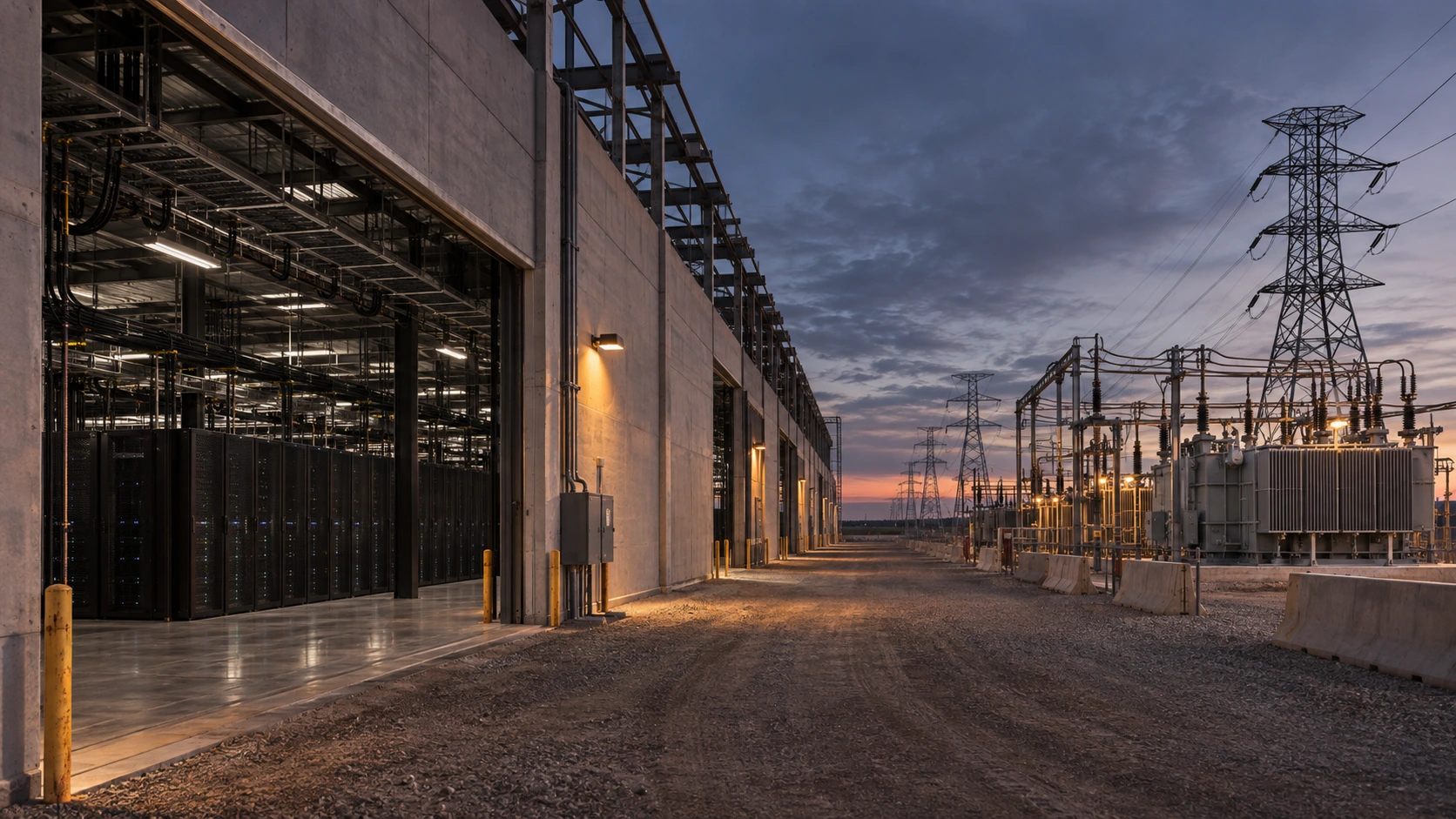
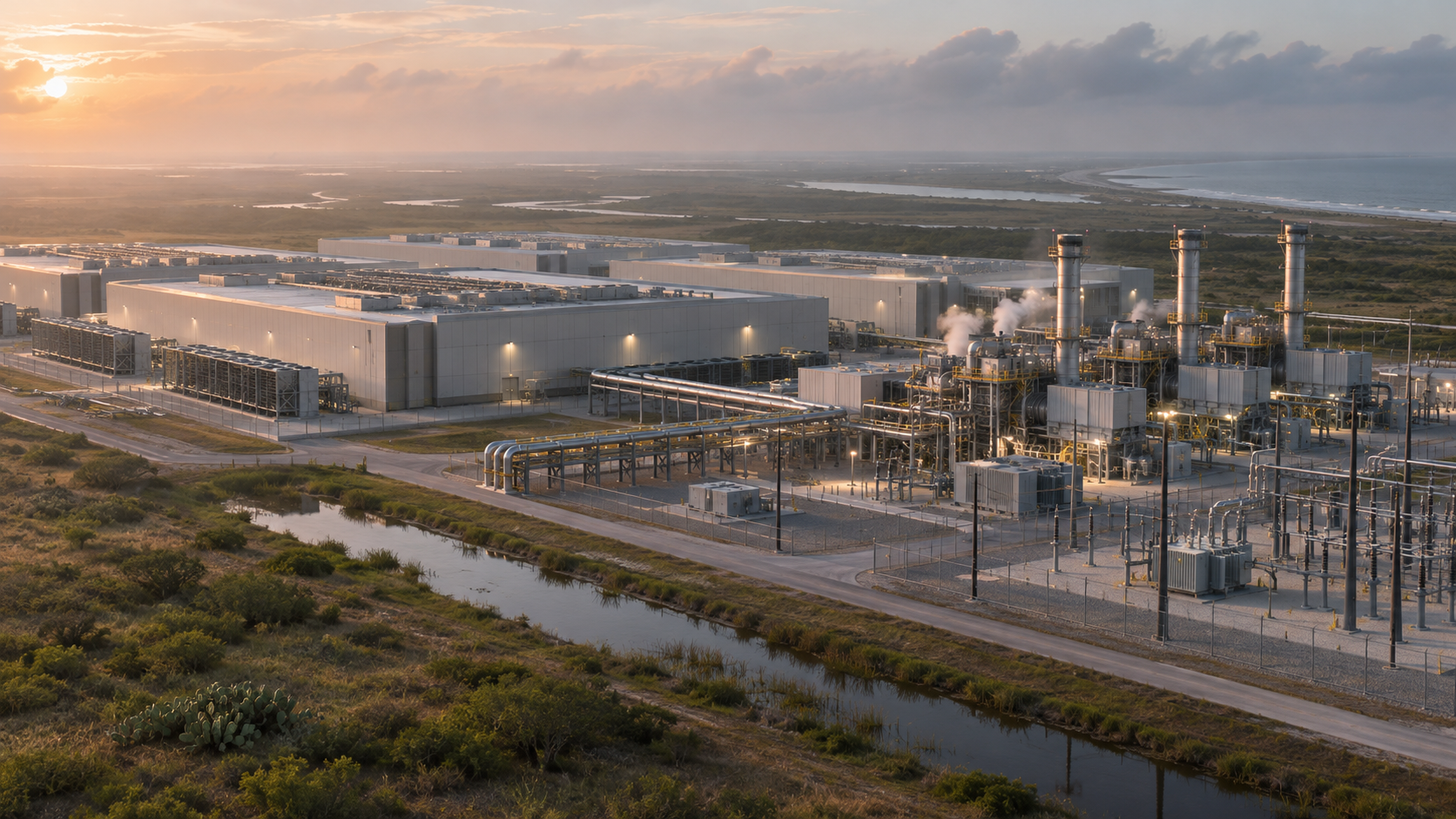
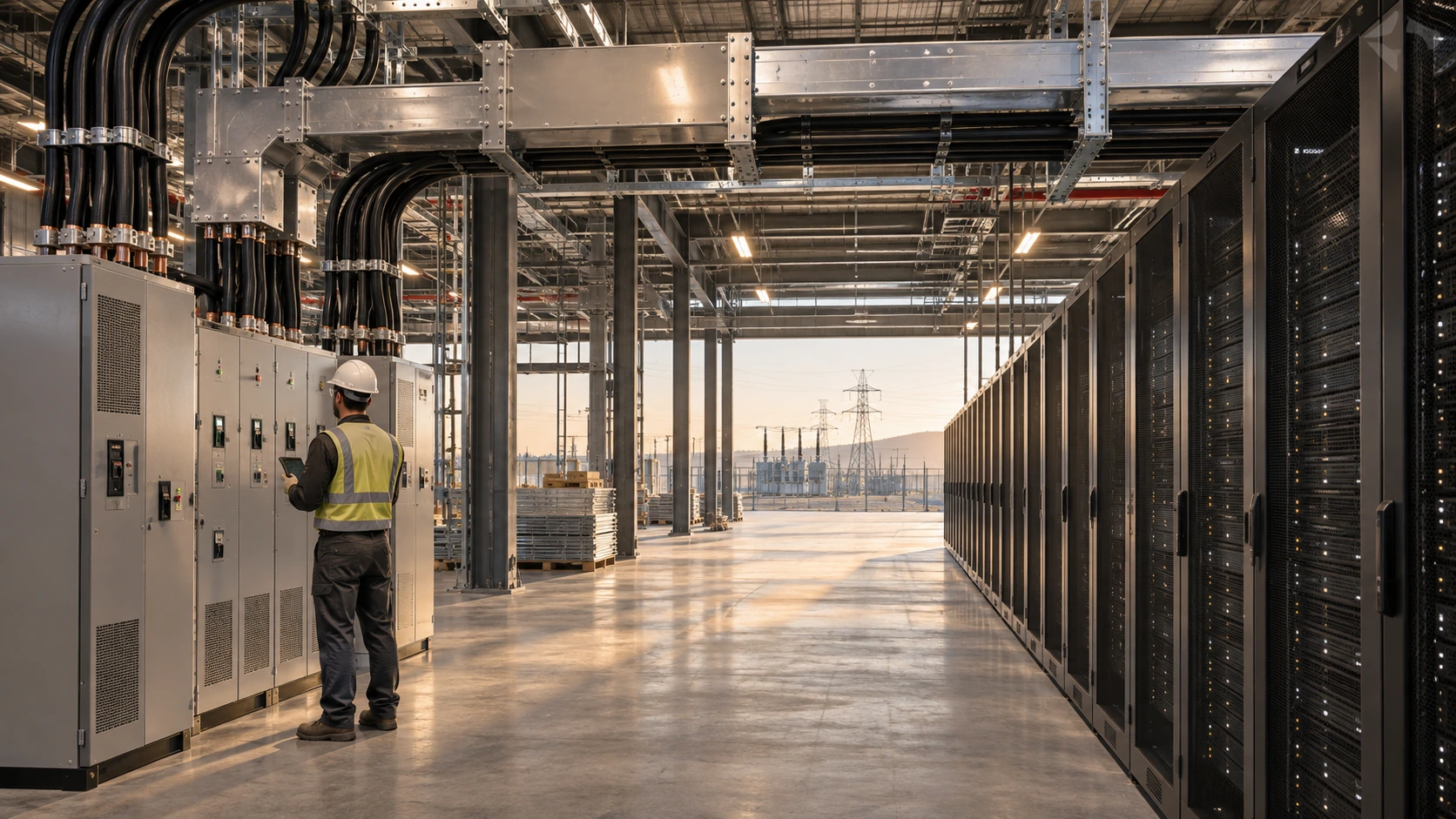
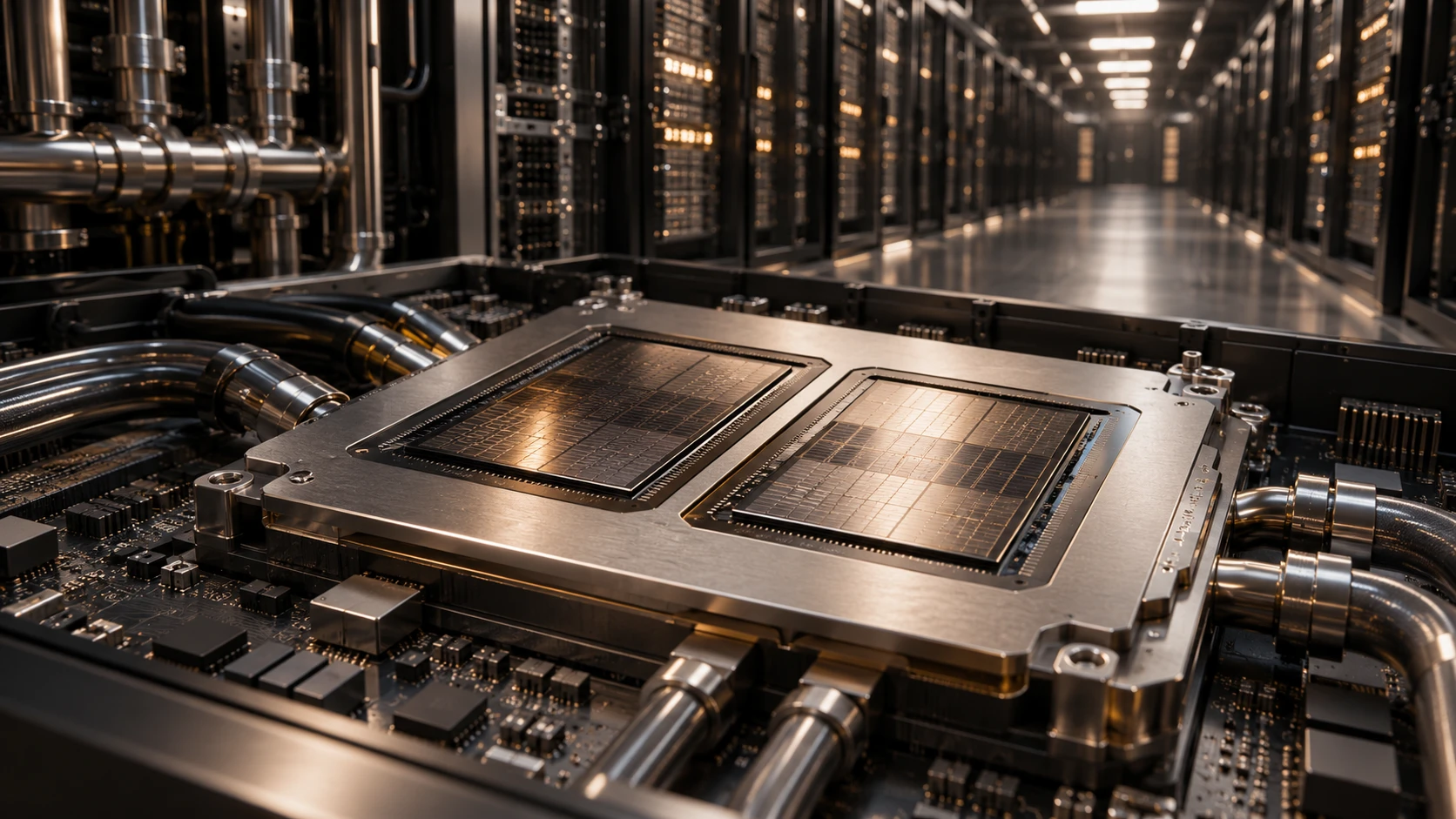
Hero and thumbnail are original AI-generated conceptual photographic artwork. Four body visuals are original AI-generated sculpted models. They are explanatory illustrations, not actual products, facilities, engineering plans or measured gauges. Prompts and provenance are retained with the draft.